The Eschaton and the Subtleties


AMEN

It’s good to say
It’s good to hold off some, too
Hold off as long as you can

Jim Bodeen
25 May 2015


LOOKING AT A MAP
TO SEE WHERE I’VE BEEN,

To see where my wife
has taken me. She is the navigator
using the new technology. Sitting
on the blue railing at the school

waiting for grandchildren
to come running out to meet me,
the man who moved into my old house
walks up, taking me away

from the blue line and the arrow
that says, You are here. He has taken
out the heritage roses, throwing them
with yard waste. He wants

to tell me of the community garden
he’s putting in. You must have a navigator
whether the starship is headed
for Sacramento or the Sierra Nevadas.

Your job is to follow her.
You go where she tells you to go.
I look up at the man telling me
about the lettuce and tomatoes,

smiling, affording me
this opportunity to praise his efforts.
The ones nearest the gate,
were Damasks, musky,

pungent—he might have seen
their bronzed hips, a second fruit,
really, in this rendering—Romans
covered the marriage bed

with their blossoms.
We live in different times.
It’s true, I miss the old maps
sitting between us, pulling over

at roadside, looking together.
Those maps, too, are gone.
May I follow her even against my will.
But here come the kids.

Jim Bodeen
22 May 2015


NOT ALWAYS SO

After a morning in the garden
do nothing slower

Jim Bodeen
20 May 2015


WAITING FOR THE SCHOOL BUS
AT THE MUSEUM

Back from the other side
with my brother, I’m in the park
where I spent all those years.
I’m writing in my notebook,
reading this book, gradually,
and somewhat against my will,
being pulled into this poem.

Waiting for Katie.
Being Katie’s grandpa.

Listening to Leonard Cohen’s
Souvenirs From the Grand Tour all morning.
Making copies for friends, trying to adjust
to being here, again—being here,
just that. Altered space, indeed.
This park. I grew up here, too,
running all those miles in circles.

Karen’s at Vonnie’s.
Chuck wakes in Overlake Hospital
and sends me a Helen Keller quote
on purpose. He gets these every morning,
sends them to me. My brother,
a spiritual guide. Almost fell asleep
at the wheel, but for the big honk
of the 18-wheeler on alert
for the likes of me. Chuck’s walking
and I’m asleep at the wheel.
Twice I fall asleep during the game.
Like it’s me waking from anesthesia.
I guess I am. I guess I am.
And now the museum.
Waiting for the bus.

After two days of rain in the desert,
the Yakima trees, yard, flowers
and bonsai look good. I feared
for that ginkgo left on the deck.
But oh the rocks, all that rain
falling on them from that great distance
had me in in serpentine river swoon.
Walking like this for eight months.
Nothing but walking. Useless
but for putting our feet,
one at a time in front of us,
except for Chuck, his one foot.
The walk is our practice.
The walking.
We don’t even need the knees,
Sonny Terry.
Sonny Terrie and Browni McGee.
You walk for me and I’ll see for you.
May Chuck get one more day away.
May we find home in all that we see
in front of our slow-moving feet.

I guess for me, moving to a basalt rock,
it has to be brought home every time.
Home. Making home. Home-making
as they used to say in school
showing us how to boil water.

This rock.
“Nothing has been apart from its existence in God,”
Belden Lane writes in Backpacking with the Saints.
“Everything in creation is hungry for relationship.”

“I saw how foolish I had been.”

Why not start everyday right here?

Reading that is dangerous.
Religious and mystical.
Earthy and prophetic.
Reading that is dangerous.

Sitting on a basalt rock.
Moved from the mountains,
placed here at the museum.
Reading the backpacking book
as the white-haired woman
walks up the steps
( I have white hair myself),
asking me if I’m waiting
for the tour, and why not
wait inside where it’s comfortable,
just as I’m reading this sentence,
“Challenging books lose their bite
when they’re read at home in comfortable chairs.
“Why don’t you come in and get warm? she adds.
I say to her, “I want to wave to the kids.”
I say to the basalt rock, ”For holding me,
for giving yourself up for our recent past,
for allowing yourself to be visible
as something other than what you are,
for being here—here’s the bus.”

For listening, Great and quiet one, for your gravitas.

Children’s underground is a bit much and we’re all
a bit outgrown from repeated visits, but yes,
“What do you have in canned goods?” I ask Kate,
adding that the grandkids would like
some of those hoarhound candy sticks.
Things pick up on the tour of historical Yakima.
Making apple boxes was an industry at each orchard.
Our guide stands between us and the famed apple box labels.
I take a picture of Kate standing beside the basque wagon,
remembering the night Karen and I slept in the one
restored by the Wyoming poet. Colors on those labels,
our guide tells us, tells of the quality of the fruit.
I didn’t know that I say, taking photos of orchardists,
our valley’s first Euro-American poets
naming the apples: Yakima Savage Brand, Pacific Chief,
Heap-Good , Eskimo Brand, Eatmor, Pom-Pom,
“Whay-me-le-poome,” and Don’t Worry Apples.
I stop, too, at the Hop Pickers Camp for my son,
reading to myself, “YOU HAVE BEEN WARNED.”
My son has taught me so much about the hops.
“A good crew could produce as many as 26 bales a day.”
The early Oldsmobile gets my attention,
remembering my mother getting one
with her driver’s license at 60, and Olds 88,
with the bumper sticker about being a North Dakota driver.

The woman in red takes the kids right by the printing presses
and the First Amendment on her way to the fire engine.
They’re both in red,  and here I ask her,
“Are you going to take the kids to the printing press?”
“Would you like to?” she asks,
and knowing I’m not the featured poet,
I say I would like that very much.
The 10x15 platen press from the Yakima Herald,
mirrors the Chandler-Price I picked up
from Selah, which, after being rescued,
became Blue Begonia Press, inked
only for the poem and its cotton witness.
On time limit, I talk only
about the Bible and the poem.
Beginning with letters, and letters pressed
into paper, I use the words
impress and impression, asking the kids
to spread their fingers and pressing them
into their hearts, asking them to repeat
these words: love, amor, heart, Corazon,
aprender, learn, and then, rapidly, repeating,
Tenemos, Queremos, Podemos,
each time making impressions on our hearts.
We have to, we want to, we can.
Kids loving the Spanish.
I don’t say what it is we do all this for.

And I’m no longer what I was.

It’s lunch time and we’re all third graders
in line for cones. Three lines,
strawberry, chocolate and vanilla.
I’m saying grace in the notebook.
Make me useless in all things, Lord.
This, my daily prayer,
and I’m such a slow learner.

Make me useless, Lord.

Coming from my background,
this is hard for me.
We grew up believing
work was our only way out.

There’s the famous story people still tell
about Mr. William Stafford, the poet.
How he’d read some poems and a fellow
comes up to him afterwards, asking him
if he could see one of those poems.
Mr. Stafford handed him a poem
that he took and read, and handing it back,
said right back to him, “I could
have written that,” and Mr. Stafford
replying with that great courtesy
he was famous for, “But you didn’t.”

Being useless is kind of like that,
but not. You think it would be easier.

It leaves you saying no all the time.
Saying no to everything, even charity,
if you can believe that. Saying no
to things you’d think you’d be good for.
Things others think you’d be good for.
But no, To be useless you must be
present to it, present all the time.

Eating these ice cream cones now.
Just this. Sitting on these planter boxes
where  roses are just busting out,
roses working hard to blossom,
me licking my cone, writing in the notebook,
kids coming up to me,
asking what I’m doing.
Two truths working here.
One truer than the other.
If I give the big one,
“Doing nothing,”       
I get myself in trouble
with this poem, lose the thread.
I say instead, “Writing this poem,”
and that’s an answer
kids can live because
they saw me doing it
in the museum.

Wouldn’t they like, someday,
to hear the larger truth?

Katie and I, we spend the whole day together.
Looking at things in this museum.
We’ve been here before.
She remembered coming in the wagon
when she was two. She and her cousin
used to give me the time of it, getting them home.
I used my phone in the museum
to take pictures of us in the reflections
of the glass. It made it look like
I was paying attention, too.
Strict attention.
Bowing before different rules,
the useless ones,
waving the children back on the bus.

And then to this day.
So much of it still here.
Not even close to being over.
All this music.

Jim Bodeen
14 May 2015


MORE THAN ONCE,

I have been taken
from the room

of the known
and the recognized.

Taken, in all instances,
during moments of fierce

applause. Perhaps
it has been on account

of the eschaton
having been activated

without my knowing.
Being taken like this

from poets and Christians,
different times, circumstances,

most alarming, isolating,
left altered and disturbed.

Men talking of the Mulla Nasrudin,
and the subtleties. There

were these three men
in an airplane…This, too,

was not the worst. No
matter how bad it gets

My mother’s presence
at the end telling me so.

What have you lost, Mulla?
My keys.
                
                  Did you drop

them here?
                    No. At home.

Why in heaven’s name
look here? Because

there’s more light.
Belly laughs

from delighted men.
Can I borrow your clothesline?

Not now. I’m drying flour
on the line.
                   How possible
to dry flour on a line?

Not so difficult, when
you don’t want to lend it.

Taken like that
from sanctimony

and greed, along
with accompanied lust for it all.

The eschaton is fact
visible over time, beyond cover-up.

This alone sustains me.

I was a dead man.
I did not die.

Jim Bodeen
10 May 2015


The Navigator


WALKING HIGH DESERT MUSEUM WITH KAREN

She says, Turn here, and I say,
Which way? We’re not yet
 to streambeds.

Watching her
with her camera
and smart phone,
composing.
The merlin falcon,
built for taking birds
from the air,
hitting speeds
of 240 miles per hour—
yellow feet—
day-time birds
have feathered feet
to quiet their approach,
sacrificing a bit of speed
to cut the sound.
Cars and electricity
the great killers of birds.
This is Karen the witness.

She is winding water.
She is the stream dropping
into flat country,
swinging from side to side.
She is a twisting loop
of meanders. Not from here.
The River Menderes in Turkey.
Ancient rooted River Maiandros
to the Greeks, doubling back.
Karen the river orphan,
depositing on one side,
scouring on the other.

Here she is again,
photographing mare and foal,
barbed wire sculpture, witness
to trees: water, air, and sunshine,
needing only these, the mother-root.
Here she is still water
holding water to her breasts
for those who thirst.
I follow her
as I am able.
This is Karen turning us.
“Turn here,” she says,
and I say, “Which way?”

Jim Bodeen
9 April—23 May, 2015


SHE IS THE NAVIGATOR

       —for Karen

of the Mothership, and when
she sees the sign to the Desert Museum
outside of Bend, images
surface. We were here

with our children, remember?
Weasels, warblers, beetles,
drawn here to this riparian
wonderland—habitat connectors,

edges. And she is drawn here, too,
a wonder to watch in her curiosity.
Where plant communities meet
is where she finds herself, orphan

mother of all, conduit and direct route
to and from. Edge’s dream,
one like her, going on,
navigating ways outside of words.

Jim Bodeen
28 April-3 May 2015


AND THEN IT WAS SPRING

Karen likes to walk in barefeet.
She didn't like the forest floor.
The two large Chinese pots hold
High Mountain Hemlocks
from Vancouver Island.
200-250 years old. They get their bark at 100 years.
Many of the rocks have spent part of their long lives
with our short ones. Tufa rocks
from Mono Lake in the Sierra Nevadas.

It was a crack house and it burned to the ground.
That I had a small role
in the burning of that house thrills
the storied soul. The last line
breaks in so many ways,
and I wanted neither
police nor theologians on my tail.

Jim Bodeen
3 May 2015


OFF PISTE AT 11,000 IN THE SIERRA NEVADAS

“There’s a pucker factor here,”
my son says. “But you’ll be ok—

It’s only the wind
trying to blow you

off the cliff.
Turn your skis

into what can’t be seen.”

Jim Bodeen
11 April—3 May 2015
Mammoth Mountain--Yakima


COOL THE WATER, WAKE THE TEA

Tell how the house burned
Without invoking revenge
How to strike the match

Jim Bodeen
2 May 2015

Tiny Leaves, Small Petals


BEGIN AGAIN

—In memory of Sharon Muth, bonsai instructor

“Jim, how long have you had that wire
on that Shimpaku Juniper?”

“A couple of weeks.”

“Take it all off.”

Jim Bodeen
30 April 2015


THE HAT HAD PROBLEMS

It wasn’t uniform, hospital CO said.
Get that hat off your head, Sergeant.
A colonel, but not a doctor, the CO.
And keep it off. That was how trouble

surfaced. MASH hospitals
couldn’t handle the number of casualties.
Two evac hospitals in Qui Nhon
over-run with our own wounded.

Fresh from the field. Choppers, 123s
coming in loaded, all hours. Kids
who arrived incountry last week, going out
now in body bags, evac’d to Japan

or straight to States, telling them
as they came out of surgery,
Tomorrow you’re going home, GI.
Home was a war zone, too.

Then his mustache was out of uniform.
A month into disaster.
No hair below the lip,
Cut it off, Sergeant, clean it up.

Chief of Surgery is a colonel, too. A doctor.
You will not cut that mustache, Sergeant.
You will continue to locate hospital beds.
You will let it grow. Curl it around your eyes.

Bone wax stopped bleeding in femur bones.
It saved legs taken out by AK-47s.
Keep that mustache above your lip.
That was enough for Spec 4 Lebonski.

This was after Private Dudley moved
into the ville to live with prostitutes. When First Sergeant
found out his pipe smoke was full of dope
mixed with cherry blend tobacco—

All right you fist fuckers, open those footlockers!
Hand over your dope! Give me that hat,
Lebonski said. He took it, Utility Cap
Cotton Poplin, Olive green, DSA-1-4962,

with earflaps, worn with creased front
mimicking the French Beret, painting it
competition orange, freezing its shape
as it was worn, in multiple layers of paint.
Spec 4 Lebonski returned it with a sign,
hand-lettered in style and colors of the Beatles
Sergeant Pepper’s Lonely Hearts Club Band.
He hung the sign reading,

Sgt. Bodeen, Med Evac—This way home.
He tilted the hat on the sign
the way the hat was worn. Home would take
longer than it took jets to cross the ocean,

bone wax would stop buku bullshit.
The hat, issued and outlawed,
became a guide helping him walk through doors,
showing him how to dress for the rest of his life.

Jim Bodeen
21 April 2015


THE HAT THAT WOULDN’T GO AWAY

It surfaced again after they moved,
when they left that house
after four decades. How had he been issued
that hat, anyway? In his duffel bag

from Basic, stuffed unseen
in Panama where he turned 21,
where he learned, too,
he could conjugate verbs,

and make real talk, after those years
as a half-assed student, agreeing every day
with the teacher that this Spanish
was a very stupid thing for him to try.

He looked at 70 now, looking at this hat.
50 years together. Living with immigrants.
It appeared in Viet Nam,
1968, after the Tet offensive. He’d been

on R&R, skiing in Japan. Zao.
Flying back into Tan Son Nhut,
airport under fire, he couldn’t get out,
back to the hospital at Qui Nhon,

where he ran the Evac unit.
Sergeant now. He was 22.
Six months of those kids
from the 82d Airborne, Fourth Division

First Cav. He remembered them as 18.
In and out of the country in two weeks.
Dumped from Helicopters at Khe Sanh,
Phu Bai, An Khe, Pleiku. Ashau Valley.

The two week tour. From Detroit and back.
Round the clock evacuation for six months.
For each GI, frag wounds to lost eyes,
these dates: DEROS, Date Estimated

Return, alongside the day of the bullet.
The shortest tour.
Hat he wears.
He put the hat on then.

Jim Bodeen
20 April 2015.


AMAZING

Number 9 on my granddaughter’s
soccer team is Amazing.
Amazing, drop back,
our coach calls.
Amazing, redirect.

That’s her name, my wife says,
and all I can see
is clarity,
and the faces of her parents,
word that moment
coming from their mouths.

Jim Bodeen
19 April 2015


THE HAT AGAIN

I wear the hat stranger,
but I am not a conductor.

I am the man stepping
into the car

to where

essential seats
have no numbers.

Jim Bodeen
16 April 2015


THE CONDUCTOR’S HAT

In the mountain shop
where souvenirs wait
to be rescued, this one,
Like the man helping
you get on the train,
my wife says. That’s it,
not a baseball cap,
uniformed, non-descript.
Anonymity
required of angels

Jim Bodeen
15 April 2015


Temple at High Camp


AMERICAN SONGBOOK

He hears the music
Father’s voice in his brother's
He doesn’t hear words


Jim Bodeen
27 February 2015


YOUR BODY FATHER, BEFORE ME AGAIN

To see your body, Dad,
after all these years
I was a boy
under 10
we were still in North Dakota
and here it is again
in the body of my brother
helping him
in and out of the shower
drying his feet
himself a man in his 60s
you in your 30s
when last I saw you
naked in the kitchen
where we took
our Saturday baths
You carried
the galvanized tub
in from the basement
Mom would heat water
Your wild nakedness
a sinewy mystery
what I see again
in your son
my brother
This is a Bible story
Genesis and birthright
a dream testament
visit and visitation

Jim Bodeen
24 February—27 February 2015


AS FOR ME IN ACCOMPANIMENT

walking with my brother
the privilege of it,
driving the car, following directions,
going where he asks me to go,
I, too, am in time and out of it,
listening to words more than speaking them
Becoming not becoming
what I hear
No there’s not much of myself
here, here fully present,
and whether
I’m lost or found
doesn’t much matter

Jim Bodeen
24 February 2015


WASHING YOUR SON’S FEET, FATHER

After the loss, more loss,
and then, the knee gone, too.

Held by cement. And anything 
can happen, Dad. Both of us,

two brothers, with this chance.
Our daily breath. Breaths.

The younger brother
has your body, Father—

your muscles and hairiness.
It is you I am looking at

across sixty years
when my brother comes

from the shower on crutches
for me to dry his feet.

I have our mother’s body.
its pale fleshiness. We are

older than you were
when you died

after the mountain blew.
Your cries from our childhood

live in us both. Fastening
the brace to the leg

lets us breathe again.
There is no language

for my brother’s loss.
For your son(s) weeping,

and joyful recognition
of your cleansing presence, yes.

Jim Bodeen
24 February 2015


BLUEBERRY MILK, AFTER MORNING GRAPE-NUTS
WITH RAISONS, AND COFFEE FROM KENYA

Spooning the milk at breakfast table
watching finches feed out the window.

She said to me, Ash Wednesday,
my husband came in late, sat

between me and our daughter.
He took his finger to her forehead,

'Let me borrow some of your ashes.'
She was six. The year that car hit us.

Jim Bodeen
17 February—22 February 2015


STANDING WITH THE NOTEBOOK ON THE MOUNTAIN


TEMPLE AT HIGH CAMP

Grandkids with parents
Most days that’s ok

Mom, Dad, call the shots
Grandpa’s mountain has fresh snow
This day’s skis don’t wait

Jim Bodeen
21 Feb 2015


MY WIFE RISING


ON THE FERRY BOAT

Versions of myself
in my brother and sister
Versions of mother

If I trusted more
my notebook I would be
much funnier guy

Jim Bodeen
19 February 2015


BELOVED UNDERFEET

Outlaw father still
Hunted exiled translator
Stumbling God-walk

Jim Bodeen
18 February 2015


WHERE NO ONE PAYS FULL PRICE

On Valentine’s Day I buy
my wife a new hat
to wear to the garden show
and then find another, more

elegant, and buy it too.
Two hats for the price of two hats.
Practicing my stealth, unmasked,
uncovered in the Empire.

Jim Bodeen
10-15 February 2015


SEASONS AND SEASONS OF VALENTINE LOVE

Walking books backwards
reading through glass
leaving everything as it is
the love we had
is the love that is.
Love-slammed 
shafts of light through darkness
come from stars.

Poets and the pressure on words
refusing to bear the weight of flesh.
Not in this condition. Uh-uh.

But words are breath and memory
sustaining love in rootedness and leaf-making,

So many beginnings.

Karen,
the two syllables and five letters of your name
sustain Courie shells from the Dead Sea.
A Viking, no more than an outing.
Home the maid went with hanging keys
and I followed her,
fates cutting the life thread.

We walk out of the house
this morning full of music
museums of quilts
threading every which way.

Jim Bodeen
7-12 February 2015


FIELD NOTES FOR A MAN AT 70

       —for Tom 

So the poet hops on one foot
putting on his shoes.
Whiskey Tango Foxtrot.
This proves his balance?

I’ve always liked him
for his lesser gifts.
For remembering
the widow’s anger,

missing her husband’s
pee stains around the toilet.
And one book title:
Not coming to be barked at.

Admiring his friends.
Wanting his own field guide.
Once, Tom, you turned
a poem into a wheel,

one turn of which
might be a person’s life.
He sold insurance.
You taught school.

Your place might be
quite a bit like his place.
His quite similar to yours.
Gospels of love yet to write.

Jim
29 January 2015


AFTER RISING AT 9 AM
MY WIFE POURS HERSELF A CUP OF COFFEE
AND SAYS,

I woke up several times at 4 am.

Jim Bodeen
27 January 2015


LOOKING AT A CEMENT MIXER
ENTERING THE HOUSE BUILDING SITE
IN EL SALVADOR, MY FRIEND
SNAPS A PICTURE WITH HIS CAMERA

I took a picture of that
because I’ve never seen
one of those on a Habitat build.

Jim Bodeen
17 January 2015

Caminando Con Regino Vasquez Part I


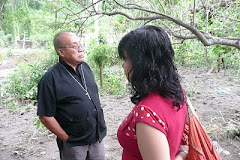
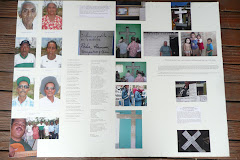
Regino Vasquez, companero, poeta, cantante, from Jalostotitlan, Jalisco. Regino was also a zapatero and a baseball player in his younger days. We met at Holden Village in the Cascade mountains and became friends. Here we met El Salvadoran Bishop Medardo Gomez. After Regino read my poem, The Subversive Cross/La Cruz  Subversiva, he turned it into the song recorded here. Also recorded in this video is the song Cristo Rey for Santo Toribio, patron saint of the immigrant crossing borders.


Regino Vasquez, de Jalostotitlan, Jalisco, cantante y seguidor de Santo Torribio Romo, desde el ranchito cerca de Jalos. Regino was a friend of mine and a follower of Obisbo Medardo Gomez, of El Salvador.

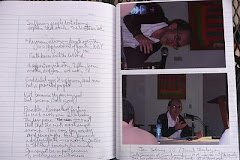
Salvador Navarro Navarro: Poeta de La Cuestita Part II


Oral historian and poet of the rancho, Salvador Navarro Navarro sits for an interview in 2008. Salvador remembers land reform of the Mexican Revolution and the building of the first rural schools. I came to know Salvador as an honorary part of the Padilla family from Yakima Valley in Washington State. Through the family, I came to be a member of the rancho's community. One arrives by taking the bus to Chavinda, which is the last stop. Chavinda is the last bus stop. You can hitchhike from Chavinda, or wait for someone in the plaza to take you the rest of the way.