THE DAY OF MY BIRTH, THE DAY OF THE BOMB
for Mayu Kaneko and M. G. Sheftall
●
He takes us back in time, to a time,
and then he takes us day by day,
he is introducing us to the people
and tells us what’s going to—excuse me--
He is taking me back in time, to a time,
and then he takes me day by day, preparing me
for that time, that day. I know, but I don’t know.
It’s still not yet, and then, just like that,
it’s the day before, and the day before,
Oh man.
This time happened 80 years, almost 81 years,
this day, that day, I mean. The day I was born.
It is summer, 1945. I have not been born.
My mother and father are living in a small town
in rural North Dakota. Bowbells. Burke County.
Diaspora.
He is bringing us,
he is bringing us to a certain day. He is bringing me
to a certain day, he is bringing us to a certain day,
a day in history that changed history, that changed
the history of who we are and what has happened
with, ok, with what was done, with what has happened.
I have not been unaware of this day.
I mean, my mother told me about this day,
the day I was born. I have not been unaware,
and I didn’t know, but I knew. I am a student
of history, I study words. I am a poet
and I have written my poems about this day,
this day in history. History that destroys history.
History of no history.
It is my birthday. My birth day.
The day is August 9, 1945. The time, too, recorded.
I will put it here, here where it is stuck.
The day I was born. I am coming to this day.
●
I am coming to this day, August 9, 1945.
I am coming to this day every time I go to the doctor.
The nurse asks me my date of birth before she asks me
to step on the scale. I used to say it all the time,
August 9, 1945. Do you know what happened on this day?
I still say it, but now I mostly say to myself,
Do you know Jim? Do you know what happened?
Today, this time, I was, by chance, at the doctor’s too.
I was carrying a book like I always do. I asked the nurse,
Have you had these scales checked?
I’m carrying M. G. Sheftalll’s book,
Nagasaki: The Last Witnesses. It’s new.
Released August 5, 2025. My copy arrived
first week in January. Today is March 18, 2026,
and I have been living with the book
for just over a month. Time is speeding up.
Just last week it was the first of August.
It seems like, seems like, I mean.
Then it was the day before, August 8.
I had the pattern. Sheftall had given me
the pattern and I had internalized it.
August 8 was its own nightmare.
It had its own way, its own time.
Frenzy and quiet both. Tomorrow
my mother would give birth. Tomorrow
the world would change.
I didn’t know any of that.
●
Bowbells, North Dakota,
stuck up in the rural NW corner
next to the Canadian border,
a small farming town.
Scandinavian and German immigrants.
Dry land farming. Winter wheat.
Oil hadn’t yet been discovered.
It was either before or after the war.
Look back and it’s all story.
Families went to church.
Men dressed up on Sundays,
wore hats and they all smoked.
I hadn’t been born and then I was.
Here’s a sidetrack about cigarettes.
From today at the doctor’s.
Past history. Have you ever smoked?
Cigarettes. A long time ago.
When I was in the Army.
The nurse asks, Did your Dad smoke?
It’s all bad, she says. She told me
about pregnant women who smoked--
and their babies in the womb.
All the mother had to do was think
about lighting that cigarette--
that baby would tighten up
before she lit the match.
The fire. Smouldering
in the tobacco.
Getting ready for the breathing
with no oxygen.
No oxygen. Right.
Say it’s August 8, 1945.
I’ll be born tomorrow.
If what the nurse says is true.
I’m already not innocent.
●
Dear Professor Sheftall,
Nagasaki, the Last Witnesses, first purchase of the year. All I needed was the title. Read Part One
that first week. Incendiary Prelude. First pieces. Shitamachi Girl. High City Low City. Tokyo first. Young Man of Promise, No Civilians in Japan. I knew. Still too close to the holidays. Too exhausted to be fully present. Underlined images: Cognitive dissonance, candidate cities for atomic destruction. Kyoto’s horrendous optics. A million wooden houses burning. Incinerated in place. Dehouse. And, looking back, the paragraph on page 48 describing Curtis LeMay. [I don’t know where the book will take me, I write in the margin, but I’m taking this paragraph with me now—and write it out in my notebook.] Louisiana sheriff and Maytag repairman.
I put the book down. Between then, and picking it up in February, two books. Biography on poet Jim Harrison, Devouring Time, and a gift book from another friend, The War Within A War: Black Soldiers in Vietnam. I’m a Vietnam vet, buck sergeant at the 85th Evacuation Hospital, Qui Nhon, 1967-68. Tet. I’d taken an R&R to Japan in January and skied Basho’s country at Zao. When we landed back at Tan San Nhut, Tet was underway. How would we get back up North? Where were we?
I’m writing from the Church library. My wife’s ringing bells. Choir practice. I drive her here. Write letters. Last week reading Wil Haygood, also with a new book: The War Within a War: The Black Struggle in Vietnam and at Home: This was Vietnam. This was the war where it was time to speak one’s mind, writing to him in a poem, We wore uniforms with unseen stripes.
The Last Witnesses. Hibakusha. What makes a witness? What makes the last one? Hibakusha asks the question. Nagasaki. These are radio accounts. What Lord Byron asked, Don Juan traveling in 1821, declaring:
For ever since, immortal man hath glow’d
With all kinds of mechanics, and full soon
Steam-engines will conduct him to the moon.
The road to Nagasaki delivers vocabulary. We incinerated in place and 80 years after, it’s easier to deny than incorporate. For this is your work, Professor Sheftall, and we bow before your assignment. We get to know Kiridoshi Michiko, who watches the sky over Shitamachi. She tires of the sirens and sleeps. When she wakes up, the Shitamachi half of Tokyo will be gone. You will take her to Nagasaki where we will watch her, 15. Togitsu Road is unpassable. This sea of fire. She hears her best friend, Honda Sawa, calling her name, and walking together, find ground at the cemetery of Shotokuji Temple, where she imagines her headstone written with the date, August 9.
Things are not so simple now for an 80-year old American born on this day. John Hersey had given us Hiroshima in 1946, and introduced us to Hibakusha. And more, even Michiko’s name has changed us—some of us: Michiko Nogami, wife of American poet, Jack Gilbert, gave us her name. Their life together gives me familiarity of the heart that slows me in my reading. Gilbert’s poems, The Great Fires, are part of what I carry into The Last Witnesses, Michiko Is Dead, the name of the Gilbert poem as a near my 81st birthday, trying to understand, Nagasaki.
My reading is a one-legged Torii Gate. All of my images come first from Sheftall, It’s sentence-by-sentence slow-go, repeatedly going online, looking up places, placing stones in margins of the pages, mapping a path to keep from getting lost.
●
Thumbing through underlinings.
A different kind of work now.
Slower, absorbing.
Two other Urakami landmarks.
Urakami Cathedral, Nagasaki School of Medicine.
Forty thousand Kirishitan
Michiko had no intention of being immolated.
Stimson’s intervention to spare Kyoto.
And this marginal note: Did Cormac know this via dolorosa
when he wrote The Road?
Sister Itonaga Yoshi, 22, the most promising novice.
Yoshio’s younger brother, 16-year old Gunge
the Mitsubishi torpedo plant in Mori-machi.
Shinagawa-sensei, a calligraphy teacher.
Morale-boosting pabulum.
Do you know how much your airplane costs?
He knew Fat Man inside and out.
Hey, I forgot my fountain pen!
11:02 local time. A living totem pole.
A bare-breasted woman and two naked young boys.
A Japan without an emperor was utterly unthinkable.
What about Iran without an Ayatollah?
A stark memorial of August 9, 1945, surviving faithful
Whole neighborhoods had slid down the steep western sloope
Karan-karan to emulate the tinny rattling of dice tumbling
The response did in fact safeguard the emperor’s fate
Any familiar jawline or cheekbone
Kano Michiko-san...age 96...resides full-time...Odawara assisted-living.
Since the 1955 dedication of Nagasaki Peace Park.
Hagai’s Hibakusha memoirs, Natasaki no Kane—The Bells of Nagasake
Crimes against humanity.
Again as a librarian.
100 mourners and a few Buddhist monks.
It takes a tough man to make a tender story.
●
Sidetracks and lost pathways, Professor Sheftall—how we got here. Midwest migration. Our family left North Dakota when I was ten, part of the diaspora, and we arrived in Seattle in 1956. Small town country boy in city schools in Seattle. Two years of community college. I’ll know Catch-22, Martin Luther King, Jr., and Catch-22 before serving in the army.. I’ll be a student in New Orleans trying to write poems when Hurricane Betsy washes us out. I’m a reader. I’ll be a GI with the medical service corps in Panama before I know how to dress. I’ll try to adjust again in Panama, and will volunteer for Vietnam in order to get a month in Seattle trying to repair my busted relationship with Karen in 1967. I turn 23 in Vietnam. American soldiers we evacuate will be 18, 19, 20. North Vietnamese soldiers in the hospital wards will be younger, 14, 15, 16, Wrapped in gauze. They were underneath the bombs dropped by B-52s.
I come home from Vietnam in August, 1968. Marry Karen. Go back to school.
We’re in Washington State. East of the Cascade Mountains. Yakima. Conservative. Identify with immigrants. Part of La Raza, los Mexicanos and Chicanos. Connected culturally to Seattle. And Seattle with Japan.
In 1992 Mayumi Kaneko comes to Yakima through the Yamate Exchange program and lives with us in our daughters’ senior year in high school. She calls us Mom and Dad. She will become our daughter. Our twin daughters stayed with her family in Yokohama. Mayu returned to us as recently as post-Covid. Karen is a fabric artist. Mayu’s mother sends her a box of silk. Mayu is part of this story. Her work.
What began as one thing become another.
A birthday. A day in history. The already and not yet. The time between, and then, the time between. The arrival of names. Becoming familiar. Hints of awareness. And then, awareness. A little bit at a time. The each time of it. Checking in at the doctor’s office. The nurse asking, Date of birth, indifferent to response. No longer asking, Do you know what happened? Never indifferent.
To be born on this day.
On her last night with us, Karen in her chair, Mayu asks, Can I give you a massage, Mom?
Mayu is a nurse. She has told us about the aging population, the people she loves. She calls her special place a cafe—but it’s not. So much more. It doesn’t quite translate. But it’s a center for her people. She tells us the story of Kurikindi. Her story. It’s a story of the people she cares for. It’s an old people’s story. It’s a fire story. It’s personal. To Mayu. To us. She gives it to us. And we’re working around language. She feels the loneliness so much. And there’s so little she can do. Trying to tell it to Americans. She has so much to give, but when she tries to say it this way, she no longer sounds like herself, and tries another way. It’s not about her English, either. Her English is always good enough. But she has to make her story so much bigger than she can tell it, bigger than her cafe which is not even a cafe, it’s an afternoon tea sanctuary. A story of the world. She talks instead about the size of the fire and its magnitude. She talks about the tiny bird. The bird that can carry but one drop of water. One drop. The tiniest bird. Can you understand, Mom? she asks Karen. Dad, can you understand how big the fire is? She tells her story of fire from the rain forest in Ecuador. That’s where we locate it. Mayu knows of my interest in poems. She knows where she puts the fire. Her telling is as far from her country as it can be. She is telling it from the rain forest and she is trying to make me see one drop of water. She wants me to know how big the fire is.
And of course. Putting the fire in Ecuador throws me off. Off course it does.
It’s Wednesday, again, Professor Sheftall. Bell Choir practice. While I had planned to drive Karen to practice, and write in the library again, I had to make a run to the hardware store, and didn’t make it home in time. I’ve been thinking about Mayu’s story all week, her work with the elderly in Japan. In her telling of her patients—also her elderly customers—her focus with us has always been on their loneliness. The isolation. But there is also a fire in her story, a big fire, and her bird, Kurikindi, the hummingbird, carried water, but only in the tiniest amount. All the water the bird could carry. Imagine Mayu massaging Karen’s legs while she tells it. I’m sitting across from them listening.
I’ve opened your book to Rendezvous in Kōenji, as I’d planned, the pages in a frenzy of underlined passages and marginal notes, combining dictionary work and spontaneous details hurriedly made. Heiwa Boke. Mass historical amnesia. Paz a cualquier precio. Dips into Spanish. Peace senility. Peace idiot. Complacency. Loss of danger to stupor. One-legged Torii Gate.
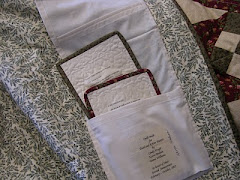
When Mayu returns to Japan she sends tea and cookies. Her mother sends a box of silk. Kuri Kindi stays with me, and I try to put it her story in a poem to thank her. Karen sews the poem into the silk and creates a small collage with the poem on it. Kurikindi is in the title. A hummingbird carries a single drop of water. A conflagration of beauty surrounding us. We send poems and tea back and forth between us in slow mail. We begin a series of dreamscapes on silk. Mayu helps us find a Japanese calligrapher who will help us in collaborative ways to bind us together.
Karen had this dream. We wanted to put it on silk. We asked for what we needed. Calligraphy. Japanese and English. Kanji. Kurikindi. Mayu and her Mom. Karen’s dream, told while returning from the bathroom would be a poem as soon as I wrote it down. I knew that. We needed a Japanese artist and calligrapher. It would be a collaboration taking more than a year. Karen would assemble the parts, sewing, designing, choosing different scraps of silk. This would be an art show crossing the ocean again and again.
Daughters who take stories to heart. Childhood bullying experiences about the dangers of radiation in your book, Professor Sheftall. In North Dakota, students never crawled under desks for shelter. Involvement with Kōkyukai, the Japan Confederation of A- and H-Bomb Sufferers Organizations. This sentence—about its near-demise: “One threat in the 1980s was the advanced senescence and mortality of the first-generation leaders who founded the organization as 1950s...”--was this the odd trigger to Mayu’s story in my first reading of Nagasaki: The Last Witnesses?
It’s the final noon Lenten service at Central Lutheran. Next week is Holy Week. Leaving the chapel, on my way downstairs for a piece of bread and a bowl of soup, I tell my friend that I thought 180 days of Lent would be about right for me. Only 180? he said. Well, I’d go further, but I don’t want to be guilty of exaggeration. We use a liturgy composed by Marty Haugen. We are led by musicians who transport us. It’s too beautiful. My own addition to the 40-day journey is to resume daily studies with Thomas Merton. For the past two days he’s been writing on St. John of the Cross. “We do not even have the consolation of beholding a personal disaster.” We’re a month into a war with Iran. This morning I turn the page to Christian Culture Needs Oriental Wisdom.
I discover Merton in a used bookstore in Ellensburg, Washington in January, 1969, four months after returning from Vietnam. I’d been married for two months. I wouldn’t realize the details of his death in 1968, until 1975, studying contemporary prayer with Brother David Steindl-Rast. I’m using a worn copy of the 1944 Thomas Merton Reader. Last week I’ve given my last Merton book, Dialogues with Silence to an artist friend of 50 years. A Taoist. His wife is dying. I’d copied pages of it into the notebook before hand. This one, one sentence, “We lift out eyes to You in heaven O God of eternity, wishing we were poorer, more silent, and more mortified.”
I’ve held onto books selfishly before. I knew what I was doing. We’ll try for coffee again tomorrow. We were planning for it this morning, and it didn’t work out.
Hansai setsu. Burnt Offering. Atonement. Dr. Nagai. The altar of sacrifice. Hot glass. Several years ago, my sister shared with me her experience of walking on burning coals. Somewhere near the end of your book I smiled when you let your readers know that...this time you had a better seat. Thank you, Professor Sheftall for that one. It’s not the only telling jewel. Your footsteps, too. Oh, here’s one, from the soup table today. The son of the woman who made the bread has just been accepted for the Peace Corps in Peru. I said that I had just ordered him Pablo Neruda’s Heights of Macchu Picchu in a bilingual edition. She said, “Oh, Keenan’s in Japan. He’s in Kyoto.” “Today!” We talked about Kyoto, you on page 111 Henry Stimsom and General Leslie Groves.
Karen’s late returning from Bell Choir. Staying home has given me an extra hour, maybe more. I didn’t get to Mayu’s story, her importance in our lives. It’s been good, though. At least I felt like I was writing a real letter, not a report for an old professor. There’s one, my Romantics professor, God father of our daughters, 93, still with us, a family treasure.
Days seem better when I’m carrying you around.
●
What kind of ancestors do we want to be, the sign at the Bonsai Museum asks on our walk to the exit, after we have looked closer at the rescued trees. Around the time of the Japanese silk arriving from Mayu’s mother, spring and summer 2021, I take two of our oldest grandkids to Seattle separately to the Pacific Bonsai Museum for World War Bonsai: Remembrance and Resilience. American Gis brought home bonsai trees from Japan at the end of World War II. Japanese-Americans interred in detention camps practiced bonsai. But the art was also dangerous following the war, and many Japanese had to abandon their bonsais.
After Pearl Harbor Japanese bonsai artists stop practicing out of fear, and abandon their practice. Their art would be seen as anti-patriotic. They hid treasured trees. They threw them away. Some planted trees in the ground with the hope of reclaiming them some day. Perhaps. Some of these trees are here now. I’m looking at them. They tell their stories in new ways. My 17-year old granddaughter and I have photos of ourselves wearing Covid masks in April, 2021. I return to the exhibit with another grandchild.
In Tokyo Bonsai artists were accused of being anti-patriotic. Nurseries were required to grow vegetables instead of trees. Japanese Americans are being rejected and disowned. They live in Yakima Valley. We teach the book by Jeanne Wakatsuki, Farewell to Manzanar to students. Karen and I spend a day at the detention camp museum on Highway 395 in California. Hand-rubbing stones. Suiseki. Shikata ga nai. It can’t be helped.
I take a bonsai workshop potting a Japanese Black Pine.
The silk, Karen’s dream, her fabric art. Mayu. Her mother.
Bashō’s journey to the Far North. Mayu sends me a silk banner with his haiku.
●
I’ve asked Mayu for help. Told her about your book. She sends me this.
Hi, Jim. My limited English isn’t good enough to express myself properly, so I used Google Translate to write this.
Having worked in geriatrics for many years, I have had the opportunity to hear countless stories about the war. I didn’t just listen; I absorbed these stories as if they were entrusted to me. All my patients suffered from dementia. They were unable to dress themselves or even manage their own bodily functions. However, they remembered the events of the war as vividly as if they happened yesterday. It was the most painful, and at the same time, the most intense period of their lives. After the atomic bombings of Hiroshima and Nagasaki, Japan, reduced to rubble, was able to rebuild and rise again thanks to the strengths of today’s elderly, who endured the suffering, poverty, despair, and loss of war. Those who were teenagers and in their twenties at the time, built the Japan of today.
August 15th is the anniversary of the end of World War II in Japan. Every year on that day, the Emperor delivers a speech. Many television programs commemorating thos who died in the war are broadcast. I ask my patients, “Where were you on the day?” And the elderly patients with dementia light up and tell me their stories.
I also heard the story of a man who had been guarding MacArthur when he was stationed in Yokohama after the war. There was also a man who fought in the fierce battles of the Philippines and, upon hearing the news of the end of the war, said, “I wanted to fight more.” And there was a woman who said she went to a temple every day to pray for the war to end as soon as possible.
Was is a battle of justice against justice. Both Japan and America had their own sense of justice and cause. I think both the Japanese and Americans were desperately trying to survive, believing in a better tomorrow.
Japan is currently an aging society. And we also face the problem of a declining birthrate. The younger generation is burdened with a heavy economic burden to support the elderly. There are many in the public who hold exclusive views, believing that national funds should not be used on the elderly, who have short life spans, but ratherf on children who will build the future of Japan. I provide nursing care to the elderly who supported post-war Japan with a sense of gratitude.
Dad, Mom, thank you for always thinking of Japan. At Yamate Gakuin, where I attended, 400 students paired up in twos to experience home-stays in America. Are there still people today who maintain such heartfelt connections and exchanges? I haven’t heard of anyone around me doing so. I believe that meeting Jim and Karen, and conecting with theBodeen family, is a gift from God and a light that illuminates my life. With love from Japan.
At the close, Mayu places a red heart.
●
From your Epilogue, Professor, M. G. Sheftall.
This is the other side of Konpira.
“After Norio’s graduation from the elite Kyusha University...followed in his father’s footsteps...a zymologist...he never told his employers, colleagues, or other acauainances that he was a hibakusha, and he never talked about his Nagasaki experiences with his wife or children until he was well into his seventies.”
This, too, is negotiated memory.
Emphasis on listening, oral histories, becomes part of my inherited work, a gift. In both the African-American, and Latino-American cultures in Yakima, I have been blessed by people taking me into their homes—and being in their homes has been the singular way that trouble has lifted me into another way of being, of understanding myself.
Testimony and testimonios, central to both cultures have taken me into homes and told me one thing: Listen. Listen and write it down.
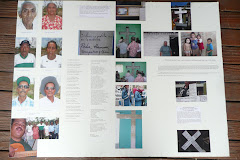
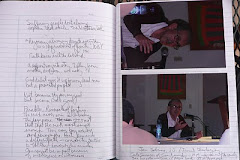
First in the African-American community, following a school-wide book challenge, the NCTE gave our English Department an award for Intellectual Honesty. I had a new camera. When I returned, my friend, and parent of one of my students, Gil Chandler, said, I’m going to take you into the homes of the ancestors, to take some photographs. When we got to the houses, Gil said, Jim’s going to take some pictures and do some interviews. Gil said there would be six or seven homes. There were 36 or 37.
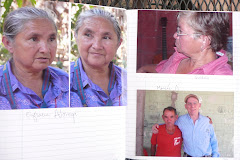
In the Latino-American community, testimonios was the word used for documenting the lives of the immigrant community. Students speaking English at school, Spanish in the home. Parents from Mexico or Central America with limited education. In these homes, photographs are common, written stories, rare. Testimonios.
In both African-American homes, and Spanish speaking homes, the same thing. Photographs are every where, but written stories nowhere. Even names of persons in early and rare photographs are unidentified. We make a family tree. We name the cemeteries where the grandparents are buried.
●
Back from the grocery store, I have put away the oranges, In 133 days it will be my birthday. On August 9, 2026, I will be 81 years old. I was born 9 August 1945. In a sense, I am one who was born into the story. Now I have witnessed Mayu massaging Karen’s feet. I have heard her call Karen Mom. I have listened to her Kirikindi story until I could understand some of what can’t be understood.
Has Mayu not been my nurse? She has told us the largest story, one of the largest stories ever told. I have read Nagasaki: The Last Witnesses.
One night Karen returned from the bathroom telling me of a dream. It’s a dream of something we are working on together. From this fragment, we took some silk from Mayu’s mother, and with Mayu’s help, found the Japanese artist-calligrapher, Kyoto Kurotaki, and crossing the ocean by mail, wrote the dream out in silk in two languages. Kurikindi. A single drop of water.
My birthday. I have been carrying around M. G. Sheftall’s just published, Nagasaki, in one way or another since January, 2026, the day it arrived. My birth day. I’m not part of any remembrance committee. Grateful for this book, this cultural festival coming my way again.
Here’s what we’re working on. Something new from something already begun.
Somewhere in the Christian part of the story Sheftall tells, I ask Karen to bring in the left-over silk from Mayu and her mother. Yes, Karen says, we can do something more with the silk. I showed her drawings from my notebook. The one-legged Torii gate, the shattered bell. We’d forgotten that there was left-over silk printed with Karen’s dream poem already printed. We could add, Nagasaki to the dream? We can, Karen says, we can. In some new ways. And that’s where we are. Dreaming, collaborating, Making a new world. From a birth day for a birth day. A Nagasaki day for a world on fire. Mayu. Ink. Salt. Fire. A drop of water, and a bird. Doubly blessed by book and cultural exchange.
Jim Bodeen
10 April 2026


 Posts
Posts




















No comments:
Post a Comment