SHE
DESIGNS THE NEW ROBE
A
vest with a high neck, Japanese lines.
And
she buys him a wool hat, black fedora.
A
Stetson. ceremonial, for his 81st birthday.
9
August 1945. He wears it, as it hangs
in
the closet, For underneath, in the brim,
He’s
tucked Ortega y Gasset,
And
the uniform of the mustache
From
1968, he wears it stashed,
Everywhere
he goes. He was the evac man
At
the 85th Evac Hospital, Qui Nhon.
His
mustache, the full bird colonel said,
Not
uniform below the lip. Cut
It.
The other colonel, full bird, too,
In
charge of surgery, says, Sgt Bodeen,
You
will not cut that mustache. This
Is
bone wax, It stops the bleeding. You
Will
wax it, let it grow.
Your
mustache will continue its work
As
it curls towards your eyes.
To
this day, that’s how he wears
His
uniform under that hat.
Waxed,
above and below
At
the same time. If you look close,
A
bit uneven on one side.
Jim
Bodeen
24
September 2026
VIETNAM VETERAN CAPS AT TIETON VILLAGE PHARMACY
I always have to
ask,
Where were you?
When?
The unit comes
without asking
But I have to ask
because at the 85th
Evac Hospital
where we were during
Tet
say when
these questions
still say,
We’ve been asking
about you
Jim Bodeen
26 October 2023
WHAT I KNEW BEFORE I WENT THROUGH THAT ARMY GATE
I knew Dylan. I knew my Dylan.
Free Wheeling. The year I graduated
from high school. I knew that
listening in my friend's bedroom.
I knew Dylan through the Ballad of the Thin Man.
Something's happening here,
and you don't know what it is,
Do you, Mr. Jones. I knew that
and knew that then.
I knew Dylan was the one.
I knew that when the green bus
went through the gate at Fort Ord
on 1 November 1965. Being on that bus
was the worst thing ever. I knew that.
KnowBody didn't
have to tell me.
I knew Beckett. I knew Krapp's Last Tape.
Spool. I knew the meaning of the absurd.
Sitting in that classroom, listening to the sound
of spool, I knew that I could get this.
I didn't know the meaning of the absurd.
Brother David would teach me that later,
"a" without, "surdus," sound,
without sound, I can't hear it. He would show me that
after I came back from war.
I knew Stopping By Woods on a Snowy Evening.
From here I knew winter solstice
and how to break the iambics in reading.
I knew how to read it. I knew it was winter solstice.
That our work was just beginning.
I knew the lamb and the tyger.
I knew the Chimney Sweeper.
I knew Yossarian. I knew Catch 22.
I knew how many missions you had to fly.
I knew Doc Daneeka. I knew it was some catch.
I knew Philip Wylie's essay, Momism,
and I thought it was about me and my mother.
I knew Ray Charles. What'd I say? Every night, I
I knew about Birdland. And found it at 16,
before I knew how to shift and start on Seattle hills.
I knew how to say, This is it.
Take these chains from my heart. Each link
mapping my way to the world. Set me free.
I knew how to work.
I knew Goethe. I knew Sophocles.
I knew I didn't belong in the pulpit.
I knew about notebooks.
I knew about how fast the mind can change.
I knew Sinclair Lewis and Main Street and Elmer Gantry, and
Babbitt.
And I knew, It Can't Happen Here.
I knew Mark Schorr's biography on Lewis, and I saw Lewis'
town
with my grandmother in an Austin Healy Sprite.
I never knew high school. I knew that.
I knew that didn't fit.
That journalism teacher made a difference.
There were writers for the school paper
who knew things I didn't know. I wondered about that.
I knew I could work, and did. I
knew 60 hour work weeks.
I worked every day of the Seattle World's Fair.
I knew about Martin Luther King.
I knew Joyce, but I didn't know it all.
I knew about segregation and knew which side was right.
I knew about leaving. I knew it cost. I couldn't see the
price.
And I couldn't say it.
I knew about failing in school. I knew about Hurricane Betsy
in New Orleans.
I knew the Fantastiks. I knew the song and I lived out the
script.
Try to remember and walking away from Karen.
I knew Karen.
I knew Hemingway, John Dos Pasos, and F. Scott Fitzgerald.
I knew You Can't Go Home Again.
I knew photosynthesis.
I didn't know about logic. I didn't know about syllogisms.
That this was beyond me, I was pretty certain.
I knew some history. Western Civilization. Men like Rasputin.
Where did they come from? Here, I knew,
one could question God. Some Shakespeare.
I knew Edward Bellamy
and Looking Backwards.
I knew about all this, and I didn't.
I knew I could never be without this.
Could I do this, was the question I dared not ask,
but it was my question
I knew Barry Goldwater and I knew Governor George Wallace.
I didn't know what I believed on my own.
Barry Goldwater said, Look at what Johnson did:
He picked Hubert. Governor Wallace said,
Come down and see us. We got lots of cops and dogs.
I knew Black Like Me. Remember thinking, I could do this,
too.
I knew these things when the bus went through the gate.
I knew I wanted to be a poet, but didn't have any poems.
I knew it was about civil rights, but didn't know how to get
there.
I knew New Orleans. Betsy--the hurricane. Lake
Pontchartrain.
I knew those recruiters in the French Quarter during the
World Series.
I knew these things before that bus went through the gate.
Jim Bodeen
November, 2017
READING LETTERS FROM THE VIET NAM WAR
FROM 50 YEARS AGO BETWEEN KAREN AND I,
I COME ACROSS THE LETTER TO KAREN, WRITTEN
THE DAY AFTER MARTIN LUTHER KING'S ASSASSINATION
Opening these letters I didn't know what I'd find.
This one, beginning 6 Apr 68, from a stenographer's
notebook, page torn from ring wire, inserted
upside down into typewriter, Hi love. Anything
here? I'm wondering, the date not triggering
the war mirroring ours, in America. I write
from the 85th Evacuation Hospital,
Qui Nhon, South China Sea: After Tet,
when we had our turn in Hell. Language
of the times, to Karen: ...terrible
about
Martin Luther King.
Last night I sat in
with four colored guys
and on the radio
we listened to the
eulogies and sorrow
expressed concerning
the assassination.
These guys were hurt
pretty hard and they
are not going to take
it lying down. They
are young and militant
and deserve
the rights that we
have. They are going
to riot all over this
summer. I don't know
how bad that it will
be. I want you
to be very careful. We
can do more
for civil rights by
just being ourselves
to all of the people
that we meet.
That's what the letter says. No changes
in spelling or punctuation. That's it.
Who I was at 22. In June, Bobby Kennedy
will be shot as we prepare to rotate home.
What's still to come
walking into November, 1967.
Not as many folks around as I ask
my question: Where
were you in 1968?
Believe me, politicians emptying
the treasure chest for the powerful
know their numbers. So many touchstones.
I cite two every chance I get: Gary Snyder
in Mountains and Rivers Forever, this:
Then the white man
will be gone.
His follow-up. White man is not
a racial designation, but a name
for a certain set of mind--when
we all become born-again natives
of Turtle Island. James Baldwin
before and after: No
label, no slogan,
no skin color...The
Price of the Ticket.
As long as you think
you're white,
I'm going to be forced
to think I'm black.
It is the unalterable
truth. All men are brothers.
A painting of Coltrane hangs in my room,
inspired by A Love Supreme, painted
by the artist Rex DeLoney, given to me
when he went home to Little Rock.
A love supreme. Acknowledge it,
bright paint. When my friend dies,
what I send his son. When I'm alone,
what I listen to at night. Returning, then,
some of us didn't go back to that country.
Jim Bodeen
15 November 2017
*
There was also this:
BUT WHAT TO DO?
I told the chaplain,
Get me out of this place.
I can't do this.
He wore Captain bars
saying,
Call me Chaplain.
What's going on?
he asked.
I don't believe in this,
Get me out.
What don't you believe?
he asked.
In any of this,
I said.
Each week
we did this.
I don't believe
in your basic training,
or your war.
The last week
he said,
We're Lutheran
and we believe.
Like it was a song.
There ain't nothing
you can do.
We believe,
and that's how
I surrendered.
Did that chaplain
re-direct me
to medical service?
Is that how
I got there?
I would never know.
that question
haunted me then.
52 years later
it's still un-resolved.
It is the shadow
in every act
of resistance.
*
WHEN TRUTH SAYS NO
Pastor's voice says Yes
My No too soft to be heard
Exile's railroad walk
Jim Bodeen
November, 2017
THE SCHOOL IN THE STEPPING STONES
Block by block through the Imperial City.
Tagged by medics when they were brought in,
the words for where, "...Near Hue,"
during a firefight. We were south,
in Qui Nhon, the evac hospital
that took GIs hit during this particular
Year of the Monkey. January 31, 1968.
I'm skiing in Japan on R&R
a resort called Zao, near
where Basho walked on his way
North. Ignorant of Basho,
ignorant of Hue, but those mortars
hitting the airfield on my return
remain with me still. Basho
where I walk, black pine, rock,
running water, book.
Ink in every book. I stood
on the citadel eight years ago,
returning, trying to imagine
revolution with modern weapons.
Impossible task. One who stood
with us in the rain, fell,
broke her ankle.
Tourist evac'd from the Sacred City.
My job in Qui Nhon.
Trying to imagine.
Moral injury is language
we use today, listening now
to casualties from all sides.
Jim Bodeen
9 August 2017
LETTER TO MARK BOWDEN REMEMBERING
THE 85TH EVAC HOSPITAL IN QUI NHON,
DURING AND AFTER TET, 1968,
DURING AND AFTER READING HUE,
1968
At the dentist's this morning, nitrous oxide
and Bob Marley, loud, with headphones,
while receiving three internal fillings under gums
the day before my 72d, born the day
Fat Boy drops the bomb on Nagasaki,
I stop at the counter before a box of dark green
plastic soldiers. Toy soldiers. GIs.
Take your pick and remember our soldiers, the sign says.
Two choices: One about to throw a grenade,
the other with a machine gun. There's no medics here,
I say to the secretaries, who respond, They're out working.
I wasn't there but I was.
I was there, but I wasn't.
And now I'm there again
in all that immersion and intensity.
Beside myself yesterday after putting your book down.
I ran the evac section at the 85th Evac Hospital.
Not marines, but GIs. Book in hand
through the house. To bathroom, on the stool,
brushing teeth. Near Hue reverberates,
I couldn't have made that up.
Storyteller rides the helicopter.
Evacuation becoming skin one grows into.
War continues, and continues to move.
What part of me is made up?
What part of me is real?
Paperwork on each GI off chopper or plane,
one sentence what happened, one description of wound,
name, unit, DEROS--so we knew these kids
hadn't been here long enough to know where they were.
In and out of Incountry. Two week tours.
Fragments and fragmentation. Bang.
Over and over. Over and into our lives.
Get it right, get it down. Go look.
Talk with those who can talk. Find their next place.
Let them know, when and why.
This way home.
50 years later. In Hue. With Hue. This way.
An Khe, Khe Sanh, Phu Bai.
Bullet counts.
Chu Lai, Pleiku, Cu Chi.
Like moments falling from the sky.
Where was he going? That man? That one against the sky?
Do you know Robinson's poem? Do you know Yusef's Facing it?
Taking pictures of paragraphs with my IPhone:
two paragraph descriptions of John Olson's photograph
on pages 511-12. That kind of writing.
Alvin Granthem's story. Boucoup thanks.
For the fuckups, For getting them right. God bless.
Clueless in the land of lost hope. Pick your context.
There it is: a primer on composition.
How and when to repeat. Hold back and let the reader in.
Echoes of Vonnegut.
And so it goes.
Outline maps of the Citadel. Nobody's photo gets this one.
My wife took me back just after Barack's election.
From the bottom up. If I haven't lived this way,
there's no fish to talk about. The photo of Westmoreland
coming through the hospital. Did I carry
my short timer's stick on that salute? Did I make it up?
Why do you call him Westy?
Does your edge diminish your word? The only sliver
in 500 pages. The only one. I look up cordite.
Look at your sorry ass. Hold on to their belt. TFP.
God bless Big Ernie! I could do another
couple of hundred pages. Need to.
How I got here? I'm a lefty. It makes all the difference.
OMG as the kids say, the Abrams quote.
Poor bastards everywhere.
Jim Bodeen
8 August 2017
P.S. The Mourning Headband wraps around the burning moon.
LINES FOR THE GINGER MAN, LINES FOR ETERNITY:
REMEMBERING SERGEANT MAJOR THOMAS PENDERGRASS
He flew to Seattle to be with me on my birthday.
50 years ago tomorrow. Career soldier.
The Ginger Man, Hemingway. James Jones.
Father, too. Like Writer-Dad.
Pendergrass by the Hemingway statue in Pamplona
in the black & white photo in my hand.
But before that. SFC Pendergrass,
already in Panama, when I arrived.
I was 20. And how lost?
Heaven help the ginger
man.
He gave me that book.
The Ginger Man: I'm
sick of people.
The less I have to do
with them
for the rest of my
life the better.
I don't care if I die.
Had I found
that book? Pendergrass put it in my hand.
And then brought James Jones'
From Here to Eternity. Just months
before, in basic training, I was locked
into my uniform by Army chaplains,
saying, We believe in
this war.
P-Grass, drinking 15 cent beers with me
in the Em Club while I learned
my way in the government hospital.
I hadn't only lost as a pacifist.
I'd lost Karen by being a fool.
I found myself in Robert E. Lee Pruitt, Jr.
Pendergrass cancelled his own writing
to listen to mine. I memorized Stevens
and Eliot, reciting; I found the difference
between triage and evacuation. Only way
to Karen went through Viet Nam.
We could drive. With orders, in a VW
through Central America--crossing
into Mexico from Guatemala on a Sunday.
Border closed until we paid la mordita.
Seeing Oaxaca from the South.
Where are we? The career soldier
would get us to Texas, where we
would both go home. But this soldier-
writer GI, would fly to Seattle,
50 years ago today, to be with me,
with Karen, with family on my birthday,
my 22d, born the day Fat Boy
dropped the bomb on Nagasaki,
making me sicker now than it did then.
Mom and Dad were at that dinner.
But it was the soldier who flew
with me to California to ride the 747
to war. Heaven help
the Ginger Man.
Get out and push like the rest.
The war would come to us at Tet
at different places. Evacuation
would become sustaining marrow.
Evolving, organic. Hand carried,
hand delivered, by a soldier carrying books.
Jim Bodeen
8 August 2017
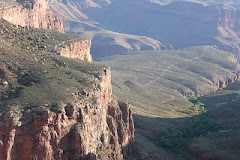
HIKING NORTHERN LOOP TRAIL
COWICHE CANYON, 14 NOVEMBER
2017
I. Ears for What's
Coming
During the day-to-day life,
not just hours on the trail
solid with your trekking poles,
There ain't no man righteous,
no not one, Dylan live
from 1979, in my head
heading out. Sunny,
cold and windy. Photograph
sage on top before descending
to Cowiche Creek. Intersecting
creek and trail in canyon,
eat just-picked Yakima apple
down to seed caves, then eat
the seeds, all of it, watching
two hawks circling sky
shelling peanuts into paper bag
before starting back up.
A Merton quote from one friend
exploring Chuang Tzu's letter to Wu:
One thing is necessary. Merton quoting,
What is your original face before you were born?
And then an advent poem from an old pastor friend,
with a line from Barth,
with Jesus saying
the divine life is all, Without you
I do not care to be the Son of God.
Brilliant Barth. My defensive question
surfacing between steps, Did Barth
make it easier for professional clergy
to get rid of Bultmann? I don't know.
I call the hike a Van Walk for Morrison,
then after I unpack my lunch on a rock
above the canyon, change it, now
Van Sandwich. Sending an image
on my camera phone to a friend,
he writes back, Van Louse Stairway.
This every day music every day.
Below this rock
the bridge is out.
Counting syllables
fresh ground peanut butter
and apricot jam sandwich.
II. 50 Years Ago This
Day : The Battle of Dak To
I've been incountry at the 85th Evac Hospital
3 months,
a quarter of a tour, 90 days
to prepare for November
and the 33-day battle of Dak To.
Torn-up eyes and uniforms
mirroring what can't be said
coming off stretcher after stretcher
from chopper and planes.
Intimate stuff. Kon Tum Province
in the Central Highlands
in a series of never-ending battles.
Initiated again, emotionally shut-down
nurses lead medical teams
through acts of love, passion
unleashed and without measure.
Training and practice
enters collective primitive.
3 Nov 23 Nov, 1967 then, starting then.
Intimate in the
Central Highlands of South Vietnam.
The 110-hour fight for Hill 875.
Border battles to distract American
and South Vietnamese forces away from cities
in preparation for the Tet Offensive.
Today it can be seen on the Internet.
Search and destroy.
4th Division where my friend was
and the 173d Airborne Brigade--
Westy's fire brigade shot up bad.
Intense fighting until the NVA
seemingly disappeared.
On one day November 23,
the day I would be married
the following year,
107 dead, 282 wounded.
The 4th Division too, my best friend's location.
So many different casualty counts--
here's one--208 dead, 645 wounded from the 173d.
Friendly fire alone killed 41 GIs on November 19th.
Earle Jackson, 173d medic who served on Hill 875:
"There is something gut-wrenching
about severely wounded men
that I will never forget.
It is that most become delirious and almost
always cry to their mothers."
All of this coming through us in men's eyes,
dead trees embedded in fear-filled faces,
torn and bloodied fragments of uniforms,
battle images that will make our country
one of the casualties. Wild terrain,
half the mosquitoes in the world
and a million leeches on sharp ridges covered with double
and sometimes triple canopy jungle
Dak To Vietnam photos,
Trees without limbs.
Tree trunks of a holocaust, a memorial in themselves.
The black and white photos in the museum in Saigon.
The dead journalists.
Reliable ferocity. Dante's 3d Circle of Hell.
Karen takes me back for our 40th Anniversary
ten years ago today, 50 years ago, too, from today.
These are facts, and some of them, partially mine,
partly collective, adhering to each of us,
counting 50 years from that day to this one,
on a hike, eating apples. The love those nurses
gave to those incredibly young men
passed through us that November,
some like me, accessing possibility
beyond anything we had been known.
Cost and blessing in clothes giving
themselves away each day
from hospital wards to sky flights,
up the Northern Loop Trail
of Cowiche Canyon.
Jim Bodeen
14-15 November 2017
I made every mistake.
I walked into this.
I crossed into this on my own.
Every failure, mine.
To get to here.
71G40.
What I didn't understand was everything.
So here we are, Karen and I.
Blowing the horn I was given to blow.
Word.
We're fifty, and past 50.
Counting ways to be 50 for some time.
For some time. I'm in no hurry.
orneriness.
Ornery.
Not really. No. The boat's already
rocked me to sleep. The ferry
carried me. These poems--
these poems can write themselves.
They are. They're never going to end.
Mr. Bodeen, back in the day,
in Vietnam.
I know that. Say,
and people hear chopper blades.
I was on the ground.
Three stripes. The only Non-specialist
MOS in Medical Service Corps.
Get things done. Blue collar
non-issue hat. Anonymous,
except for the word.
Becoming that one.
at birth. Mine to wear.
Mine to be. Said or unsaid
rocks and trees. Found ones
lying anywhere. Picked up
and carried. Emptied,
emptied out. Buddhist practice
in a boy from North Dakota.
Round the clock practice.
that never closes. That comes up, too.
Like washing dishes, folding clothes.
Taking people to the next place.
Stuck repetition maybe.
Final, without, Noself.

From Left: Ken Burns, Lynn Novick,
Tim Egan
WE HAVE THESE DAYS
Mid-afternoon, walking waterfront
Seattle with Karen. Leaving conversation
on war in America. Where to, Karen?
The ferry, she says, leaving Vietnam
behind for sunshine. Sig used to buy a bag
of shrimp for us to eat on the ferry.
Want some now? No. We're leaving
the premier of Ken Burns'/Lynn Novick's film
Vietnam, ten years
in the making.
The Ferry Tacoma. Walk-ons.
Oh, the ferry is moving. Jubilee again.
50 years from the summer of Love.
Our summer. Good morning, Vietnam.
We have these days.
We have these days.
Burns says it couldn't have been done before.
Ten years in the making. 18 hours of film.
I remember thinking as a kid, Karen says,
that I could swim to the island. It's not that far.
Karen was 12 that summer
she lived on Bainbridge. Six grade?
Seventh? I step out to buy a bag of popcorn
and a diet Coke. The mountain's out now
and Karen steps out to take a picture of Rainier.
This day, fifty years ago, we drove Seattle,
a honeymoon before marriage,
between Panama and Vietnam, July, 1967.
Summer of love, summer of leaving.
Both of us 22. These days, 72.
45 years ago, in Berkeley, Linda Ronstadt
opens for Jackson Brown I didn't know.
Ronstadt, no stone pony. Jackson singing,
My baby's feeling tired in the morning,
she's having trouble fitting into her jeans.
Walking out of the drug conference to hear
a song change my life. My son, 3, says,
Dad, don't buy me a book. I get him
two feet of Tootsie Roll. Karen's pregnant
with twin daughters. Tomorrow I'll buy her
the earth mother dress of many colors,
one that anticipates a silk kimona brought home
by GI husband-to-be dressed in fantasy.
Karen and Jim Bodeen
These days. Just what did Ken Burns say?
And Lynn Novick? We sit at table
with man and wife, Michael and Donna,
He tells me of the wound after Tet,
January, 1968. Where were you?
He asks. Qui Nhon. 85th Evac Hospital.
I was evacuated from there. You went
through me, I say, telling him about
the painted orange hat on the nail.
This way home. You wouldn't have seen that,
I say, we came and got you.
So good to meet you this time, he says. Thanks.
Enrique Cerna from Wapato, sits at table,
voice of PBS. We have these days.
Timothy Egan, dust bowl writer,
with that book on Edward Curtis, Shadow-Catcher,
asking Novick and Burns, What if JFK had lived?
What would he have done? Eagan asks.
We kept historians out, Novick says.
We listened to voices of those who were there.
I can't answer your question. Burns talks history
from top down, bottom up, and from all sides.
Triangulating. But we have these tapes
from the White House. Kennedy
controlled the on-off button.
Johnson and Nixon forgot the tape was running.
They knew they were there, because they put them there.
Because we have them, we're more sympathetic--
at least to Johnson. He agonizes. Nixon calculates.
Nixon and Kissinger ask one question,
What will this cost us?
After applause, photographs.
Nobody hurrying. I step to the side
of those with cell-phone cameras,
stand alone, until Burns looks at me.
We're meeting for the first time. Eye to eye.
I whisper, Thank you. Burns points at me,
whispers back. It's time to get off the ferry--
Karen tries to remember a Mexican place
with an Anglicized name. Her aunt and uncle
would drink there. And smoke.
She sees a public map, finds Hidden Cove,
Rolling Bay where her dad lived.
Where we went after Vietnam
Was your summer on the Island good?
No. Mom hated it. Sig's experiment.
What did you do? Did you make out with boys?
Jim, I was 12. I ate. Came home heavy.
Sig wanted to move up here. We rented
our house to a Russian couple.
The woman asked Mom, How
do you wash these windows from the outside?
Mom said, I don't. Jubilee images
tumbling from Karen's brain. Oh my gosh!
she says, It was Grey's Anatomy cast
on the beach! How do you know?
Facebook friends know these things.
Talking and walking in Winslow.
Back on the ferry, Karen says,
We were still in school when we moved here.
Sig and I would walk on the ferry, and walk off.
He'd go to Schwabacker's to work,
and I'd catch the city bus to Hamilton School.
By yourself? Alone in Seattle?
And you'd come back here at day's end--
meet up with Sig. Must have. Can't remember.
July is Jubilee all month. I leave
for Vietnam in two weeks. Each day
for the next year, 50 years. These days.
Jim Bodeen
26 July--28 July 2017
THE END OF CONVERSATION BEGINS HERE,
HERE BEING THE VIETNAM WAR,
NOTES AND FRAGMENTS
FROM KEN BURNS, LYNN NOVICK, TIM EGAN,
KARL MARLANTES, ENRIQUE CERNA
AND TABLE TALK DURING THE PREMIER
OF VIETNAM, THE
NOVICK-BURNS FILM
TEN YEARS IN THE MAKING
I. The Luncheon
Conversation
We believe, Burns says, that America's
involvement in Vietnam is the most important event
in the second half of the Twentieth Century. Our
courageous conversation began in 2006.
The current White House is obsessed with leaks
like drunken sailors. History doesn't repeat itself,
but it certainly rhymes. This was a decade of agony.
It went on because it seemed easier to muddle through.
We hope to show you today, how we set the table.
Lynn Novick adds, Our country is awash
in un-processed trauma. Our efforts here
try to show there's no one truth in war.
Tim Egan, moderating asks about
grotesque inequality. He asks if this film
attempts to change the narrative of the country.
In a democracy one adds, you only have
so much time to win the war. New scholarship
over the past 40 years provides the distance
needed to have the conversation. We forget
that Ho Chi Minh was once a pastry chef in Boston.
Keep historians out. Talk to people involved.
You can find the evidence to find
what you want either way, Novick says.
The war took on a wisdom of its own.
Burns compliments. There was not
a governor on the engine of their enthusiasm.
Everything is available, Novick says.
Remember, Burns says,
There were three nations. Now there are two.
II. Conversation After
the Film's Premier
Public Broadcasting convenes the conversation.
Investing in talk that makes us smarter as a nation.
Ken Burns confronts disunion, and lack of civility,
claiming it began with the Vietnam War.
He says, PBS has been his home for forty years.
But he's not that old!
Nine-Inch Nails and Yo Yo Ma
contribute to the music.
120 pieces of music in these 18 hours of film.
They ask the artists and the bands
for permission to use the music.
To an artist, every one said Yes.
Burns calls it the best music
in the history of the world.
Jimi Hendrix's family is in the audience tonight.
Is Burns excited about this?
Lock the doors, he says.
We're going to show all eighteen hours tonight.
You'll get out of here sometime tomorrow afternoon.
He outlines the format: 9 clips, 52 minutes.
Then Karl Marlantes with he and Novick,
Enrique Cerna asking questions.
We see Marlantes' unit on Hill 484.
We hear him talk about ghosts and ancestors.
Bring them out and embrace them.
Everyone in the theatre, my generation,
give or take, with crossover.
Many with wives, husbands.
Ones who came home.
A kind of synchronicity with anyone
sitting next to you.
Different than being at the Wall.
Something happening. Something to carry.
Jim Bodeen
26-28 July 2017


 Posts
Posts





















No comments:
Post a Comment