The Calling, A Poem by Jim Bodeen
at Des Lacs Lakes National Wildlife Refuge, Kenmare, North Dakota, the poem was written and delivered during deep roots travel with the Duende. Bowbells, North Dakota is the vortex. Isolated journey, mano a mano with the spirit world of the child. God-present.

Twice on Sunday: Worshipping in Bowbells, No Dak

SUNDAY IN BOWBELLS, NORTH DAKOTA.
I WORSHIP TWICE: FIRST WITH THE METHODISTS,
AND THEN AT BETHLEHEM LUTHERAN,
WITH THE LUTHERANS, WHERE
I WAS BAPTIZED 70 YEARS AGO
They were both good, let me tell you that up front.
And they both put me in tears. That, too.
People remembered my family in both houses,
and that floored me. There was the same Gospel
from Mark, James and John both elbowing
others to sit next to Jesus. And while I’m warming up,
let me not compare, because Shakespeare says
comparisons are oderous.
Truththroughhumor.com
Once again, I think this is too much.
It’s not even Gospel to worship twice.
Sitting here like Lear says,
as one of God’s spies. Early in the service,
during the greeting, saying my name,
Jim Bodeen, the older woman’s face lights up:
Oh my God. We know your family.
We’ve been your family. I’m Pauline Hermansen.
When was the last time you cried shaking hands?
I take notes on the sermon. It’s that good.
Husband and wife, Pastors Marilyn & Eugene Moeller
back and forth in the pulpit.
Jesus always has a 3d class ticket.
The ones who ended up beside him were criminals,
not James and John.
Speculating some, Pastors say maybe
one disciple died of natural causes.
Methodists aren’t afraid to say Social Justice.
Still, the morning belongs to Pauline.
We were your family. That’s bold.
There’s others. Gary and Rosalie Melby.
Marlen Jacobson. Marlen thanking me for coming back.
Yesterday they took down the hardware store.
Saturday nights it was elbow to elbow on Bowbells streets.
Now it’s all gone. Palmer Nelson
used to keep the bar open until midnight,
and then give away tricycles for everybody’s children.
Two men. One boy stayed. One boy left.
We share silence for losses on both sides.
At coffee, a table full of women my age
remember my Grandpa.
Charlie Homiston, Chief of Police.
The women say, He was so good to us.
We used to chant:
Charlie Chicken, Howard the
Coward.
Not to their faces of course.
Those two cops loved us too much.
Howard was Howard Cory.
I’ll come back to the Methodists
if there’s anything left in tank. The social Gospel.
Their Jesus, and that third class ticket.
Lutherans
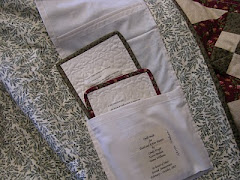
have some surprises, too. Quilts hanging
on the back of every pew. This is the Sunday
of the blessing of the quilts. World Mission.
Women wearing t-shirts, Live Generously.
Sanctuary full. All ages. Lots of children.
I tell Pastor Michon Weingartner, I was baptized here,
Bethlehem Lutheran, 1945. I’m itinerant.
Everything about me is interim.
The Godof the rural Church told me to return.
We left in a bad
time.
I let the camera run during her service.
I want Colleen and Kelly, friends in Yakima,
quilters, to see these quilts.
Pastor Michon serves two congregations.
Bowbells and Kenmare. Rural ministry.
Two communities. Two confirmand groups.
Doing the same thing twice.
Blessing quilts and quilt makers.
Her people share the word.
She tells me what’s good about both.
And what’s hard.
She guides me to the oil and back. I see
how oil can make things difficult
as well as pay bills. She talks about
some things in Rugy for country ministry.
Whenever I say country people
I thinkof Flannery O’Connor. At the end
of worship, there’s a potluck of slush burgers,
and I eat two. Salads made with farm cream.
Juneberry Crisp. Juneberries from Tasker’s Coulee.
And all kinds of people from my family.
Colleen Peterson, and the Peterson house
in Flaxton. Here to hunt from Wyoming.
All the Peterson boys, and all the stories.
Wayne, Gary, Kennie, Allen and Norman.
A book for each boy. Candles and blessings.
Home that confirms photographic memory
in a rural child’s life. One man says,
It’s the family picnic that kept stories alive.
After the family picnic was gone there was no way to keep
track.
Vickie Clark and Rolf Aufforth, Wayne Olson’s wife.
Wayne’s home with his cows. He loves those cows.
Using Mom & Dad’s name, Wayne & Lucille.
Asking about my brother and sister: Chuck and Vonnie.
Other names Karen gets and I don’t.
Then this, and Karen’s got it on film:
Walking out, greeting people,
I turn to the woman behind me. Joan Christiansen,
she says, and I say my name.
She says, Oh no. Like, For God’s sake:
My name is Miss
Knoke. I was your 4th grade teacher.
We’ll return to the Methodist Gospel another day.
Jim Bodeen
with Karen Bodeen
Bowbells City Park
Bowbells, North Dakota
17 October 2015

Completing the Work
DELIVERANCE
Driving all week to get here
it doesn’t take five minutes
for questions to surface,
lining up like ghosts at Christmas.
This is the hall of innocence
before the oil boom dreamtime child.
Tell me, confuse the time. No one
knows you here, you claiming
need for undercover.
I notice you didn’t stay under long
before coming up for air.
You thought you’d take
a few pictures, make a report?
The word redemption surfaces?
No need to drill?
This place is off-place, no where
to you, bushwacker. You’ll always
be a child running through a living room
in someone’s silent 8 mm movies here.
Voice asking, Who’s
that?
Wayne & Lucille’s boy, a voice
from a sofa says, Myra Homiston’s
daughter, she married Wayne Bodeen
who ran the elevator, even
the elevator’s gone. This is the prairie
during the oil boom. This is the Kaprieva house.
These are Great Northern tracks.
You can’t track them.
This is the state that names the town lost.
Everything here is gone for one like you.
Coteau d’ Missouri is a land feature
belonging to geology. Even the train
depot is gone. Ones who play by rules
put pressure on the town itself.
Live people don’t understand, do
they?
Sun will come up soon. Quarter moon.
Your grandparents buried here.
Your father’s brother, the twin,
pulled to his grave on a sled, a child.
Those who live here still claim
innocence—back door claim.
The mayor takes sales tax money
from oil and builds a few sidewalks.
There’s no grocery store in town.
Farmers says, We’ve got it all now.
We’ve got everything here.
One in four people come to work.
The other three bring trouble.
Leave the key in a combine now
and somebody will drive it into a slough.
The other one brings meth and prostitution.
Drug cartels operate from man camps.
We have everything here.
This morning the town has you.
You were a boy in this town.
Born in time of innocence.
Railroad tracks at both ends of town
as boundaries. Tribal boundaries,
and this was tribal chance. You have
those memories, real as any fact.
Child in the days before vaccines.
We have everything here, they say,
meaning, We have all kinds of trouble.
We have all you see on television news.
You listen. You have come for this.
To listen. And beauty before the eye.
Cat tails in roadside ponds.
Spring of antelope in fields.
But not innocence. Not that.
Here, you were given the gift of darkness.
You saw it all before it arrived.
Darkness was here, itinerant.
You’re here for a short time.
Write that trouble into your notebook.
Here there’s enough already.
You’re here to witness and praise.
Jim Bodeen
16-17 October 2015
Bowbells North Dakota
City Park

WAKING IN THE PARK OF MY BIRTH
Parked under the water tower
proclaiming, Bowbells,
train whistles on the Great Northern tracks.
It’s Saturday morning.
Mid-October,
I don’t know a handful of people
in this town, county seat of Burke County,
Railroad bureaucrats named the town
after a bell somewhere in London,
according to one story. One story has it
my life would have been different here,
and I’ve followed that thread
all my life making it so.
Jim Bodeen
17 October 2015

Walk Through All the Doors

AFTER BEING SHOCKED BY CONDITIONS AND COSTS
AT FOX RUN RV PARK IN WILLISTON NORTH DAKOTA OIL FIELDS,
THE WOMAN WHO KEEPS THINGS CLEANED STRAIGHTENS ME OUT
WHEN I ARRIVE AT COMMUNITY SHOWERS AFTER 8 PM
We’re closed. You’ll have to go to the main building.
OK, you have that shower pass, but this shower is closed.
You just came in. You’re on the end? In the camper?
I’ll tell you what.
I’m
Lisa. I’m from Colorado.
I miss the mountains. Did I say I miss the mountains.
I’ll get this shower ready for you tonight.
We’re closed, but I’ll let you lock up.
Don’t let this place scare you.
We’re getting it cleaned up.
Workers come and go. That’s how it works.
These workers, a year ago, they gave me
their 5th wheel. It’s my mansion.
Just gave it to me. Saves me six thousand a year.
I had to get away for a while. Just had to get away.
For a while. I’ll go back. My son was a rough neck
for two years. Wife and three kids.
I asked him to come back and work with me.
He said, I’m so done with North Dakota,
I don’t think my body would let me back in.
That’s one well that’s not being drilled.
What’s a roughneck?
A roughneck’s one of the guys on a drilling crew.
You want to learn about the oil,
go online to Real Oil Field Bitches,
Oil Field Nation,
they’ll teach you what a roughneck is.
They’re married to roughnecks.
Worm, driller, company man. motor man, derrick hand, pole
pusher,
and that’s what it takes to run a drilling rig.
It’s tough being a rough neck. 12 on 12 off, weeks at a
time.
Away from families. And money? They make a lot of money.
But that phone call comes. The dreaded phone call.
Oilmen pumped the last stage on Eagle Ford last week.
Oilman is out of work like that. For now.
But this park, they’re working on the cleanup.
New management. 24 cameras. Cameras everywhere.
Keep the druggies out. And the mudrooms.
Some of these mudrooms were built before I came.
They’re for insulation around the trailers,
but they’re rooms, too. No they’re not for dirty boots.
Some trailers have 3 bedroom mudrooms.
Fire marshall like to have a fit.
No more mudrooms he said.
It is expensive here. I’ll give you that.
But it’s going to be safe.
Jim Bodeen
15-16 October 2015
Fox Run RV Park
Williston Oil Fields

THE PARK AT WOLF POINT
We drive into Wolf Point at lunchtime,
park’s right there on the HiLine.
Pull in and there’s the story of Wolf Point
on the storyboard. Wolf Point started out
as a trading post with Fort Peck Reservation
in late 1800s. Lewis and Clark stopped
in late spring 1805. We stop every time
we drive the HiLine. Wolf Point is half-way
point between Bismark and Fort Benton.
Six men huddle on the picnic bench in hooded sweatshirts.
HiWay 2 is Main Street in Wolf Point.
What is this something that tells us
to stop and look? I break out the Coleman
two burner, get the hamburger and onions going.
Zip my coat and open the notebook.
Onions in that frying pan send out messages, too.
When I add a can of black beans
one man leaves the table of men
and walks over, asks, What’s up?
Tacos, I say. It’s getting cold, bro.
I’m going to need a winter jacket.
First we’re going to eat tacos.
Wolf Point gets its name
from trappers who killed stacked frozen carcasses
here for the winter—hundreds of wolves
observed by men heading up river on a steamboat.
It doesn’t take long to get a story going about books.
This is keeping the wolf from the door.
Before long, six men stand around the frying pan
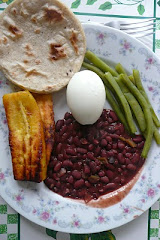
as Karen brings out hot tortillas.
We’re talking literature in the park
and eating tacos. They know the Hi-Line
to street names in Wapato and Yakima.
Wolf Point on the Fort Peck Reservation
knows its way back and forth from here to there
These are Lakota and Dakota men living
on the street, brother and uncle,
teaching us dialect differences, translating.
Don says, Those things that happen
in Stephen King’s novels are too wild, Man.
Things don’t happen like that. They’re telling us.
Street and alcohol, pointing to the unheated
quanset hut where they sleep. Yes,
Stephen King’s a good man, Don says.
Nearer my age than the others,
left arm gone, coat sleeve dangling,
we’re both veterans. He continues,
I like House of Dawn. N. Scott Momaday
he tells a true story. How things happen.
How we all keep the wolf from the door.
Wolf Point starts with a story
and leads to this picnic table in mid-October.
A book open on the table tells the story of Bagese
who becomes a bear in Gerald Vizener’s story, Shadows.
Bagese says tribal stories must be told, not recorded.
And told to listeners, not readers.
Told through the ear and not the eye.
This is traffic and trade.
There’s an argument to be made
that we’re all mixed blood.
That’s what we’re doing around this table,
cleaning up. We’re telling what we’re thankful for,
this back and forth, the break in the road.
The chance of meeting here
and knowing the streets
where each of us comes from.
This is literature from the trading post.
The men are praying for us in Lakota.
They’re translating while I wrap
the last of the tacos in paper towels.
Wolf Point tacos kept warm
in the pockets of sweat shirts.
Jim Bodeen
14 October —19 October 2015
Wolf Point, Montana--Washburn, North Dakota
Wolf Point, Montana--Washburn, North Dakota

LINES BEFORE CRAWLING INTO BED
These are the sounds of the trains
running the prairies, stopping for the night.
These are the cars parked on rails
by the elevators. These,
the deep images of my childhood,
railroad cars coupling and uncoupling.
Steel wheel on steel rail,
braking, surging,
that harsh, high note,
songs come from the dark.
Jim Bodeen
14 October 2014
Havre, Montana
HiWay 2

CHANGING DRIVERS IN TROY, MONTANA
Door of Hope Gospel Church,
in front of me as
I get out
of the truck. Its red trim
on all windows, newly painted
like the Door of Hope it is.
New paint covers humility
with humility, matching
the houses on its block
in quiet proclamation.
Fanny Howe proclaims
in my notebook, Love
means
pressed between God
and God—
Blessed means
pressed there too.
I carry William Tyndale’s New Testament
with me where I go. His 1534 translation
written on the run. “Knock
and the door shall be opened,”
Tyndale’s words. He wanted
a Bible in English, words a plowman
could understand. He
was executed for his devotion.
Denied his place
in 16th Century learning,
his Jesus lives in Troy, Montana,
and so does he. Leaving Troy,
I drive through stone uplifted
a billion and a half years ago,
a man cupping his hands
before the newly painted
window, trying to see inside.
A man standing outside,
pressed against a notebook.
Jim Bodeen
13-14 October
Troy Montana—Havre, Montana

HOW THE GREAT CHANGE
CAME TO THE MOTHERSHIP
Checking in at Hi Dee Ho RV Park
in Sandpoint, I’m not thinking David Thompson
or exploration, but walk to the chain link fence
where the Canadian Pacific Soo Line
calls me with its whistle.
I want the whistle in my dream
come from a North Dakota childhood,
HiLine roots, sleeping in a safe house
where my grandma lived.
I carry a camera that records sounds
I call songs on any resúmé.
Karen directs the mothership
to a numbered spot beside a pickup
loaded with furniture and old tires.
“This is North Idaho,
what did you expect,” she says.
After a shower,
50 cents for seven minutes,
I tell her I turned the water off
half way through. It felt like a waste.
We’ve been with family,
our oldest living relatives,
who came out West on Amtrak.
We took them to the depot
before driving on,
going east ourselves into a heartland
completely emptied of family,
to explore forgotten places
for remnants, for traces
we don’t know we can recognize.
Part of my history is here on HiWay 2.
Grandpa Charlie met the train
when the whistle blew, hauling freight.
I rode in the back of his truck
before we left the North Dakota town
in shame when I still played trombone
in the school band.
If Northern Idaho
is Second Amendment country,
the town I come carries God
calling me through the poem
across 60 years of exile.
God stories carrying me
from omniscience to objectivity.
Carrying me around the world
and back in verse and translation.
In and out of the ordinary.
Back and forth in wonder.
Traveling this way, I learned
to cross over and cross back,
returning as an old man
to a kind of ascendant innocence.
Jesus for plowmen and William Blake
in my time, in my ordinary.

Rural church and rural door.
Itinerant preachers before a hard to find people.
Carrying questions that must be disposed of
before entering, Holding words
before those already practicing re-formation.
Rapid, inescapable. Inter-national.
Once you cross the border,
the Mexican poet says, you don’t go back.
HiWay 2 is two lanes, dangerous,
full of white crosses carrying,
among other things, the voice
of my mother, dream images
that won’t leave me alone.
Theologians say what separates us is crevasse.
Cultural commutes we can’t change clothes for.
And me, I’m road-called. Dirt road, back road—
going back and on my way.
Carrying notebooks and cameras.
Trained by the world
until I can hear every note
coming up from my mother.
Called at that level. And heard.
The logging truck passes us.
Iris DeMent sings poems of Anna Akmatova.
Iris DeMent is the jewel of the gem state.
She’s singing while turkeys cross the road.
Kootenai Casino says,
Take our money and run.
What’s that? Karen asks.
Last stop for cheap cigarettes.
The man at Kootenai Falls tells us
that low water level makes it possible
to walk out to the island
where folds resulting from East-West compression
were deposited a billion and a half years ago.
This is thrust faulting. Where one side
slides over another caused by compression.
Rocks here formed in an ancient island sea.
Fossils are stromatolites,
lichen visible as concentric rings on rocks.
You’re walking on the first life forms
the man says. Are you a geologist?
I ask. No, but we’re all geologists
when we leave here.
And what about these stones, I ask.
Is it legal to take stones for the garden?
You can take as many stones out of here
as you can carry, he says.
This is the suspension bridge we stand before.
Kootenai Falls, the most sacred spot
of the Kootenai People.
Seven bands. Five in British Columbia,
one in Idaho, and one in Montana.
So the man telling the story of the stones
doesn’t know the story of the people of the stones.
Slow down, story ears.
Ice age glaciers dam the river.
This is not a ferry crossing.
Telling-Half-The-Story walks
in a fragile meadow when he says,
Take as many stones as you can carry.
He steps on a world he doesn’t understand.
The storyboard at the Falls gives us an activity.
Look for something in your vehicle
you can fold—a piece of paper, a t-shirt.
Mimic the way rocks fold in stair-step fashion
to form Kootenai Falls.

The Mothership is a dream zendo
connected and un-connected.
A telegraph network in cyberspace.
I do not know. This call—
my work, is transmission,
not creation. This is a recording
of a day’s drive on HiWay 2.
A man sends me a poem by a young woman.
I read it a sentence at a time,
the way it is written.
And through the poem standing alone
enter the Dakota 38,
who take me to the movie,
that takes me to the 38 plus 2,
and the dream of Jim Miller,
who in the movie says this,
In 2005, when I
received this dream,
as any recovered
alcoholic,
I made believe that
I didn’t get it.
I tried to put it
out of my mind
but it was one of
those dreams
that bother you
night and day.
Here we are given a showing.
This is the visual of a call.
This is how Jim Miller
comes into my life.
He brings with him
the Dakota 38 plus 2.
He establishes the reformation
in the Mothership.
“We’re gonna be the first ones
to ask for forgiveness.”
Jim Bodeen
12 October-14 October 2015
Sand Point, SunDance, Havre
HiWay 2

Kootenai Falls
COMFORTED, NOT STILLED
Across the street from the train,
the engines enter the Mothership
warming up before the run
across the prairie.
The jacks are down
stabilizing us,
but not enough
that we’re not rocked
back and forth.
Lulled.
Awakened.
Something, something
Jim Bodeen
14 October 2015
Havre, Montana
HiWay 2

“DO I DARE?” KAREN ASKS,
pulling in to the river access,
braking to a stop, our eyes on golden Larches
reflected in still water of early morning.
I walk under the highway bridge
where the larches light up the camera.
Karen says, There’s a message and a relapse.
Did you see the cave?
Jeffrey Foucault sings Paradise
as I re-enter the cab.
Thank you for believing what I can’t believe.
This is the Middle Fork of the Flat Head River.
This is being alone in Glacier Park in October.
Jim Bodeen
14 October 2014

HIWAY 2 BLUES

US 2 EAST-WEST
The HiLine
heading for the Dakotas
Hiway 2. The lowest number.
Highway with the lowest number.
Any lower would be zero.
Jim Bodeen
14 October 2014
Sundance Camp
MIDNIGHT EARLY IN THE MOTHERSHIP
Trains whistling all night
on the HiLine, Hiway 2
out of Sand Point
out of Bonner’s Ferry
take the road as it comes
Mark Knoppler sings
be ready for the day
Karen Bodeen says
navigate the song
and slow for Larch Pine
Jim Bodeen
14 October 2015

14 October 2015

HIWAY 2 BLUES
Highway’s yellow lines
take on fall colors
October loneliness
Jim Bodeen
13 October 2015

ROBERT’S MONOLOGUE
FROM SANDPOINT, IDAHO RV PARK
Good morning, neighbor, nice rig,
my name’s Robert. We were living
on Three Sisters Mountain
but it didn’t work out.
Linda, she’s the manager,
gave us this rent-to-own
but I gotta get us some propane.
What do you say you do?
I’m a poet
I got a little Polack
in me too. This rig’s
all right but needs work
and I can’t haul it
with this Honda
I need a pickup,
it’s got a pop out
I can fix that.
We came up here
from Shit Cali
to look for my Dad
I never seen him.
Shoulda known
I wasn’t going to find
the father of the year
I got a little boy
He’s two.
He’s a little shit.
My grandma bought land
on Three Sisters Mountain
when you didn’t need
an arm and a leg to get it
and my dad’s living on it now
and he didn’t want us there..
I can do anything.
I like my tools
I rebuilt roller coasters
for Six Flags in Valejo, Cali.
I didn’t know anything
from anything when I got here.
Worked with a guy named Grub
could fix anything.
Grub showed me how
to rebuild cranes,
sandblast propane tanks
and paint him. I like fabbin’
that’s building cranes
from steel, VDD,
variable disc drive.
Electrical comes with cranes.
Dry wall’s easy money.
Jim Bodeen
Sand Point, Idaho
13 October 2015

Klatchie Peak Dream Camp
KLATCHIE PEAK DREAM CAMP WITHOUT KAREN
The big thing in the tent’s that
I keep thinking Karen’s here with me
and she’s not. I keep wanting
to talk with her and she’s not here.
It’s spooky in this notebook alone.
There are stars, and there is Karen.
But she isn’t with me.
I can't reach her.
This happens again and again.
Sometimes the stars have moved.
The sun has not yet
come up over Mt. Rainier.
My Hubba one-man tent
has a white hat
without its rain fly.
I walk out to the trail
and take a picture of the Mountain
but Karen’s not in it.
My tent is surrounded
by High Mountain Hemlock
and only Karen
could know what that means—
they get their bark
when they’re 100 years old.
Karen is the ruby
in Rumi’s Mathnawi.
This Mountain’s beauty
is what I come for
but the gift of beauty
comes from Karen.
From my head to my foot
I have become you
like Rumi says,
Nothing remains of me
but my name. I am a stone
on its way. Before you,
Karen, I was my own enemy.
I reach for you in the tent
and you’re not here. As the sun
prepares to come
over the Mountain
the wind comes up.
Wind helps me work
on the stone, self-existence
finally disappearing.
Jim Bodeen
26 August—14 October 2015
Wonderland Trail-Sundance Camp
Derek Sheffield, Poet in the Burn Zone
Derek Sheffield & Jim Bodeen walked the Sage Hills Trail
site of the Sleepy Hollow Fire, 29 June-6 July 2015,
near Wenatchee, Washington
Subscribe to:
Posts (Atom)

 Posts