FROM THE KITCHEN TABLE, JANUARY, 2026
YAKIMA, WASHINGTON—TO THE WASHINGTON CATHEDRAL,
31 MARCH 1968—LETTER TO PASTOR MARTIN LUTHER KING, JR.
PART II
I. After the Sermon
You’re greeting the congregation, Dr. King,
taking our hands as we file out,
and we’re slow go not letting go of your hand.
This is your last public sermon
and this time we get it.
You’ve just stepped down
from the Canterbury Pulpit
Cathedral Church of St. Peter & St. Paul,
commonly known as Washington Cathedral.
March 31, 1968.
●
15 March 2026
II. Dear Pastor King,
I’m going to call you pastor, Dr. King.
That’s what you are for me, Pastor King, my pastor,
and I’m coming from the pew. I, know, too,
your titles, and the epithets that come with you,
and I’m still inflated by it all, from the Canterbury Pulpit
to your place at the right hand of God.
We’re getting ready for your birthday.
I’m walking before breakfast listening with hearing aids.
I’m 80, and no longer need to embellish. You’re telling us
about Rip Van Winkel, how he slept for 20 years,
sleeping right through a revolution.
King George III. We have other worries now--
Yakima, Central Washington State, it’s cold, and the ink won’t run
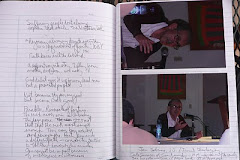
in my pen. I take notes on the recipe card while walking. For the Pecan Pie
I made for your birthday.
On this day, end of March, 1968,
I’m 22 years old, 85th Evac Hospital, Qui Nhon, Viet Nam
during the Battle of Tet begun on New Year’s lasting until
Johnson finally stopped the bombing. I’ll pick up there.
It’s my job to get our guys off choppers and onto planes
and out of the country to Japan, Philippines, or, closer to you
in D.C. at Walter Reed—Ft. Sam Houston for burned bodies.
I can relate to what you say about just to have crumbs,
about the appalling silence and indifference of good people.
I didn’t hear it then. I did, but. It wasn’t exactly chronological.
I had a teacher in high school, 1963, who told us, broke your story--
but I didn’t know, then, you wrote that Letter from Birmingham Jail,
then, 16 April 1963. No, I didn’t. Then, that, that I didn’t know.
When I did know, later, I put your Letter from Birmingham
into my New Testament. It’s right there next to Paul’s letters.
But in March 1968, I’m at the 85th Evac, a GI.
And I’m bunkered with medics and we’re black and white,
and we’re brothers, as you say from The Canterbury Pulpit,
...standing in brutal solidarity...young black men
and young white men, fighting and killing
in brutal soldarity, that is us.
And in a few days,
when you are murdered,
that’s where we are, and that’s where I am.
And when you are killed, GI’s in Vietnam,
we’re all wondering what just happened. You say,
Dante couldn’t imagine it. We’re using other words,
talking in GI. And writing home. Writing home.
Brothers in Black and White. And that’s how
I remember those days—and Bobby Kennedy’s
still alive. No confusion there. “They send us
to Vietnam, and when we’re done here, they’re
going to send us back to the United States.”
What I won’t know for years,
Dr. King—I do slip in and out of those titles,
is that this is what’s in my letters. We’re together
in that hospital, one in bunkered solidarity, telling
this cruel joke on ourselves. “That’s what’s going
to happen.” It’s in my letters to Karen. When I found
those letters she saved, I felt redeemed. You say
in that last sermon...and when they come home
they can’t hardly live on the same block together.
Being part of the cruel joke is part of our blessing.
Dr. King, what I want to tell you
in this letter is this. We’re in the same pew.
We’re in the same block, too. Always have been.
It hasn’t been like this for everybody,
but that’s how it is here, with me, with us.
III. HOLDING ON TO PASTOR MARTIN’S HAND
I’ve been holding onto this one over 50 years, Pastor Martin.
I’m conscious of the man beside me, I am,
but this time, not my time, but we’ve been in line
a long time. I’m talking to you in a letter
and I’ve got grand-kids, grown now,
and I’m talking to them through you,
in your words, through that pulpit over time,
and then there’s my notes from what you
said on that toilet paper from Birmingham Jail.
I’m just coming to that,
They can hear that direct from me.
Dr. King.
Yes. That sermon.
That’s life.
Life in that sermon
that’s not going away never.
Jim Bodeen
15 January 2026


 Posts
Posts






























No comments:
Post a Comment