CHERISHED PATINA AND THE LONG MARRIAGE, ALWAYS OFF-ROAD TRAVEL


TIME AND THE CHERISHED PATINA

An earned varnish, now on the marriage.
More than 50 years of knowing.
Mothership on the road, traveling
to the farm off-grid on 101, northern California.

A rare breakfast in a restaurant, in Willets.

She reads him the directions to the farm,
20-some miles in, off Commercial Street.
Set your car's trip mileage odometer now.
Pass Noyo Theatre on right, City Park on left,
continue straight. When you are 1 1/2 miles
from Willits, you will come to a Y,
with O'Leary's Red Barn Feed Store
of to your right, veer left. You will now be on
Hearst Willits Road, County Road 306.
This road will curve again to your right.
When you are almost out of the valley,
you will come to the junction of 306
and 308 Canyon Road. Continue straight
on 308 Canyon Road. You will cross
a small single lane bridge, 3.9 miles from Willits,
and start up the canyon. Canyon Road
is paved, but gets narrow. So be careful.
About 7.4 miles from Willits
you will come to another Y in the road.
Turn left and go across a cement bridge.
The road now becomes Tomki Road
and will soon become unpaved.
Continue on Tomki Road until you come
to a T Intersection. If you were to go straight,
you would turn into someone's driveway.
If you go left you end up in Tomki Creek.
Therefore, take a sharp right hand turn
up the mountain. You are now
back on Hearst Willits Road.

Go up and down and around and about
on this road--past Foster Mountain Road
(veer left) until you reach the Eel River.
It will be on your left-hand side
with a sheep farm on its north bank.
About this time you'll also see a little cabin
and then a home on your right.
As you continue straight, you'll notice
a big silver bridge to your left--
do not go left over the bridge.
Directly in front of you the road curves left
towards the bridge; you'll see a group
of mailboxes on your right,
and an Emandal sign on a tree, stay right.
The road splits again just a short distance
after the first Y. Stay to the right.
Follow this road past the lower Vineyard,
past the Emandal Sign, past the Staff Housing,
all the way to Emandal. The road ends at the farm.

If you have questions, call,
but realize that cell phone reception ends
once you leave the Willits Valley
and our phone could remain unanswered.

Jim Bodeen
listening to Karen reading
trying to follow instructions
in the Mothership, ducking branches

15 September 2016

Mt. Shasta Rest Stop

MT. SHASTA REST STOP

has a picnic table in shade
and we stop and get out the little Weber grill,
put on four brats with apple and chicken.
Two young men in yellow vests
work the cleanup crew whooping it up
carrying plastic bags, helping each other
with what it is they're charged to do.
Not yet in their 20s we think, watching them.
Soon they smell these brats.
Hot dogs, they say, pointing to the grill.
We have two extra. Would you like them?
They run over as I get the buns ready.
Catsup? Mustard? Both. Karen says,
They've got apple and chicken inside.
One says, I can taste the apple.
The other says to his companion,
You're supposed to say, 'Please', and,' Thank you'.
Didn't you know that?
The man with the dog, smoking a cigarette,
watching us all, walks by, says,
They have just enough intelligence
for a government job.

Jim Bodeen
20 September 2016


Kawa Doja is the Classroom of the Riverbank


Field Collecting on the Eel River
Why stones are watered,
and how the turning of the stones
changes the ways we enter the river.

Jim Bodeen
25 September 2016

CHECKING IN WITH THE MUSE ON THE RIVER

FOUR DAYS ON THE EEL RIVER WITH STONES

We who know we're fastened
to the poem, know something
of our approximation.

Carrying War & Peace since midsummer
the book became as intimate as the wallet
in my back pocket. Book worn well, weathered,
scratching a surface I hadn't known.
I came here to be with these stones,
to see them in their water.
They showed themselves to me,
and for this I am grateful.
Eel River Suiseki. I came to like
the ones scratched with travel,
the ones in calligraphy, like an ancient
Chinese poem I couldn't translate.
Something like the way the paper cover
of War and Peace turned to something like leather.

Kawa Doja is the classroom of the riverbank.
It surprises me how much the riverbank speaks
in the voice of all my teachers, like I am
surrounded by Sensei from then and now.
As I become familiar, not native,
I discover that I have been given
certain permissions. I am granted invitations
to enter the river and bathe. Stones
are given to me, with instructions
that they are to become part of the gift,
that they must always move, that their patina
will surface over time, with water,
with sunshine, and with love.
And then, as if to correct me
for trying to do everything right, to be perfect,
(Imagine that, in me!), the stones come up
the trail in my pack, where I perform
a first cleaning, and they sit with me
as I finish the great story of Tolstoy.
The book has become a kind of diary,
and I find myself taking notes
in the margins, jotting fragments
of my imagination as they cross
my field of vision. And then,
all my fretting over the daiza
and my literal concern for display
came to the fore, as I sat with book and stone
before the campfire in the lawn chair.
The worn cover with the soft pages
presented themselves with the stones,
drying but still damp. Pierre, in his tears,
listening to Karataev, Natasha wiping the brow
of Andrei, still separate from each other,
and Moscow, the mother of all cities, empty.
These pages offer themselves.
Perhaps I may be excused for beginning a poem,
or a prayer, this effort at gratefulness,
by starting with War and Peace.
Unforgivable entrance! But how else
to explain how Pierre came to hear Karataev say,
Lord, lay me down like a stone, lift me up like a loaf.
Or to be called by him, Little Falcon?
As Pierre noted, he knew nothing
by heart except prayer.
Stone, book, story, all of it gathered
before me in the lawn chair by the fire.
I set the still-drying stone on the page,
a perfect tray, and the page absorbs
the water as will someday, the stone.
It will take me longer than that to understand
all that is going on, all that happens
on the riverbank, kawa doja.
This is what I carry now, breaking camp.

Jim Bodeen
18 September 2016
Camp Redwood


CHECKING IN WITH THE MUSE AFTER DINNER,
CAMP REDWOOD, 375 YARDS UP FROM THE EEL RIVER,
LOOKING AT, AND CONTEMPLATING, STONES:

And did you get your work done?
Work? My job was to get Karen to Art Week
at the farm, to help put her in a creative space,
not bouncing a gear in her sewing machine while traveling.
She's been there four days. I can hardly wait to see what's new.
What's new in her. Maybe there's some thread on cloth, too.
To see what's new. Is that fair? I'm in the shade
sitting on a lawn chair under an acorn tree
80 feet high, dropping its harvest on the mothership--
and me--with each breeze. It must have been a good year.
You're still here? For a visitation?
The mothership rests in the sacred circle
of the tree's crown. Been hit? Once.
In the shoulder. Felt it, too, but I haven't
been plunked on the head. When I'm inside
and a nut hits the roof, I jump and duck.
But is your work done? Here's the notebook,
you decide. After lunch I made one more trip
to the river. Pack, video camera, phone,
one bottle of water. With a limit of five stones.
Self-imposed limit. Trekking poles, after yesterday.
Should a man in his 70s be carrying stones
in a pack returning from the river?
I put the camera on river stones as I walked,
let the lens lead. You, with your questions
might not have seen much. Neither did I.
Is this play or work? My question.
It was hot, no shade, and I said out loud,
to nobody, This is all ritual. Formal farewell
to the Eel River. I said that arriving. Stones
were all gray as I walked and I heard sensei
ask, Is that another gray stone, Jim?
And then the camera found one hidden in sand.
I brought it home. Like I said, it was hot,
and I said to myself, Maybe I should get naked
and complete this ritual. I looked around.
No  deer, no dogs--or teenagers, for that matter.
At first I just sat on a rock, like up to my waist.
Tentative. I didn't want California Search & Rescue
coming upon a 71-year old man dead with a bone
sticking out where he was felled by an algae-covered rock.
I found my way among the stones until I could lay down
on my back and belly. Neither hot or cold, now,
with a river running through me.
I hope this is what you mean
by getting my work done.
You're getting literary.
Forgive me. Karen and I watched the movie
before we left home. We talked about the words
beneath the stones. And? Yes, the swim,
or bath, felt more cleansing than the one up river
where I took Karen. Thank you for asking.
Thank you for giving me the work, this task.
The Eel ran faster and cleaner up high,
but I didn't want to leave. This is the Eel River.
The Eel. The river of my teachers.
Carlson and Rivera. I have Rivera's book out now.
I had it at the river. And how many stones?
Ah. You would ask. Seven, or eight.
I know I said five. My tendencies with the stones
are the same as with the poems. After dressing,
I walked back to where I'd placed the stones
in the pack with my glasses and phone.
I sat with the camera and did a short triage,
looking at each stone for color, shape, texture,
and size. I found myself  drawn
to the medium-sized stones. Interesting features:
caves, waterfalls, serpentine. Not what I'd found
yesterday, shape-wise, nothing. I'm drawn to flat-shaped
buttes, images from childhood interest in the West.
If I had an epiphany, it was this: if it spoke to me,
I trusted it also had signature and authenticity.
That it's come from somewhere else,
and this is where its beauty lies. I chose it
for its miles covered on this earth. I held that
before the lens of the camera. I read from Rivera's
suiseki book, going back and forth between
practice and patina. Without having to choose,
I knew it was the hand of practice reaching for me.
I felt it steadying me. Practice showed me
the image of water and turning stones.
With practice I didn't need to worry about patina.
That was it. It would arrive on its own, or not,
through practice. That's all in the movie?
Well, I hope so. Some of it. Some of it's still coming,
still arriving. Wait and see. I didn't have
that kind of courage with you before.
I thought I must be more definitive with you.
I hope I can be that way in the poem.
And your work? My work?
Did you get it done?
You're not quite hearing my devotion?
After Karen, the poem has my soul.
I can't wait for Karen to show.
She needn't bring a thing.
And the poem, if the living is right,
work will be too, and the poem
doesn't even need to get written down.

Jim Bodeen
Camp Redwood, Eel River
17 September 2016

Koi Quilt Water Weave


LOOKING AT A DRAFT OF HER KOI QUILT MOVIE

Karen says, I object to two things.
Your saying I was a gift to the community,
and that long drive into the farm.
Do you really think anyone will watch
long enough to see the quilt?

You wouldn't let me
talk to people about you that way.

Was there anything you like, I ask.
There was, she says. I liked the interview.

For me, I add,
water will never be the same.

Jim Bodeen
24 September 2016


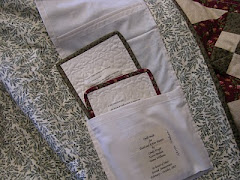
Karen's journey to Emandal Farm
outside of Willits, California
with Landscape Quilter Laura Fogg
during Art Week. Karen's quilt was inspired
by images of her photography
while at Japanese Gardens, Portland, Oregon

EEL RIVER SUISEKI HAIKU


LENA'S SUISEKI STONES

Lena collected the smallest stones.
Stones she brought from the beach
could be cupped in your hand,
landscapes of the way she lived. 
She put them in a dish
on the coffee table as immaculate
as her living room where she read.

My day on the river is complete,
stones loaded in my pack
for the hike up the trail, Lena's
tiny stones in my shirt pocket.

Jim Bodeen
18 September--23 September 2016
Eel River--Yakima


FOUR DAYS ON THE EEL RIVER WITH STONES

We who know we're fastened
to the poem, know something
of our approximation.

Carrying War & Peace since midsummer
the book became as intimate as the wallet
in my back pocket. Book worn well, weathered,
scratching a surface I hadn't known.
I came here to be with these stones,
to see them in their water.
They showed themselves to me,
and for this I am grateful.
Eel River Suiseki. I came to like
the ones scratched with travel,
the ones in calligraphy, like an ancient
Chinese poem I couldn't translate.
Something like the way the paper cover
of War and Peace turned to something like leather.


Kawa Doja is the classroom of the riverbank.
It surprises me how much the riverbank speaks
in the voice of all my teachers, like I am
surrounded by Sensei from then and now.
As I become familiar, not native,
I discover that I have been given
certain permissions. I am granted invitations
to enter the river and bathe. Stones
are given to me, with instructions
that they are to become part of the gift,
that they must always move, that their patina
will surface over time, with water,
with sunshine, and with love.
And then, as if to correct me
for trying to do everything right, to be perfect,
(Imagine that, in me!), the stones come up
the trail in my pack, where I perform
a first cleaning, and they sit with me
as I finish the great story of Tolstoy.
The book has become a kind of diary,
and I find myself taking notes
in the margins, jotting fragments
of my imagination as they cross
my field of vision. And then,
all my fretting over the daiza
and my literal concern for display
came to the fore, as I sat with book and stone
before the campfire in the lawn chair.
The worn cover with the soft pages
presented themselves with the stones,
drying but still damp. Pierre, in his tears,
listening to Karataev, Natasha wiping the brow
of Andrei, still separate from each other,
and Moscow, the mother of all cities, empty.
These pages offer themselves.
Perhaps I may be excused for beginning a poem,
or a prayer, this effort at gratefulness,
by starting with War and Peace.
Unforgivable entrance! But how else
to explain how Pierre came to hear Karataev say,
Lord, lay me down like a stone, lift me up like a loaf.
Or to be called by him, Little Falcon?
As Pierre noted, he knew nothing
by heart except prayer.
Stone, book, story, all of it gathered
before me in the lawn chair by the fire.
I set the still-drying stone on the page,
a perfect tray, and the page absorbs
the water as will someday, the stone.
It will take me longer than that to understand
all that is going on, all that happens
on the riverbank, kawa doja.
This is what I carry now, breaking camp.

Jim Bodeen
18 September 2016
Camp Redwood 


THE QUILT AND THE STONE

She was looking for the river light,
quilting. She was making water out of cloth.
Thread brought everything to the surface.
Her vision fish came from the Japanese Garden
in the West Coast city. He was in the river
uncovering stones, lifting them.
As different as they were,
they were after the same thing,
meditation in the image,
dream impressions from the visible world.

Our oldest ancestor, a proton-powered rock.

What comes from watching NOVA on TV.

The last common ancestor of all life
was not a free-living cell at all,
but a porous rock riddled with bubbly
iron-sulfur membranes that catalyzed
primordial biochemical reactions.
Powered by hydrogen and proton gradients,
this natural flow reactor filled up with organic
chemicals, giving rise to proto-life
that eventually broke out as the first living cells.

It reveals itself in cloth, as fish.
It is the God-science of the poem.

Jim Bodeen
Fall Equinox, 2016


FROM THE COAST, DRIVING INTO RIVER COUNTRY

After dinner, reading in lawn chairs,
the smell of campfire behind us

Oregon State Park named after
a newspaperman, William Tugman

In a grove of trees
with Karen at dusk,
Tolstoy empties Moscow
while Napoleon thinks
magnanimous thoughts

Donald Trump approaches
the gates of Moscow
only a picture of Putin
no queen bee
bookseller with no inventory,
a book jacket in blue jeans

Light storms in waves
Color for Karen's landscape quilts
Oregon coast sand

Waking in trees
keeping us from highway winds
Mothership in deep cover

Tolstoy explores the empty hive
as Donald Trump remembers
whispered praise from Putin

Moscow is the sacred mother
wandering among wounded soldiers
Tolstoy and Whitman

Fine line markers
12 vibrant colors
Sharp tips for details

And a breakfast prayer
from Thich Nhat Hanh's
How to Love

Karen says she recorded
my breathing last night.
I look at her over my Cream of Wheat,
concerned, then ask about it--
full wonder, How beautiful
to have her listening to my breath
while sleeping. Mothership bed
brings us closer
Finishing her cereal, Karen finds
another piece of bacon
under the paper towel

Sitting in camp chair
while Karen showers
Fabric washes her body
in arcs of color

This is where the Eel River meets the sea

I walk the river walk
without accessing the water
No stones here
This Suiseki mecca river
has me counting syllables at 3 am

"Don't bet against the meatball"
Full-blossomed tartar thistle
Pink curves cut against the blade

Jim Bodeen
Mid-September, 2016


THE ODDNESS OF ONE

Almost bedtime now, and not.
So unusual, and strange.
To be here with Karen
and to be without her.

Sitting in lawn chair
so I won't have to crawl up
and be alone. I've been alone
in the Mothership before.
I've been alone in our 52 years.
But we've been together
for 852 miles, and she's not here.
Karen's not here.

Jim Bodeen
14 Sept 2016


Eel River Haiku

Mouth of the Eel
Kawa Dojo
Classroom of the ancients

No time for Tolstoy
Here comes Karen
moving into river country

Stop counting syllables
Enter into relationship with stone
Ancestors know you're on the way

Oh, my God
How did that happen
This color in Karen's cheek!

Daily river wonder walk
Yogurt with Karen in the Mothership
Cloth weaving river

Sunset river walk
homeless man on bicycle
Quiet time with my teacher

I had nothing to say
I was living in my head
Foolish foolish man

Let me serve you breakfast
she says smiling haiku girl
Don't get greedy with the poem


Jim Bodeen
Mouth of the Eel River
Fortuna, Ca
14 September 2016


Hop Harvest, Yakima Valley, Washington State


TOURING THE HOP HARVEST
WITH OUR SON, THE HOP DRYER,
IN THE YAKIMA VALLEY IN SEPTEMBER

Picked on the vine,
hung up, the blossoms
for the brewers.
What our son does in September.

Tim, grab your mother’s hand.
Going up steep wooden stairs.
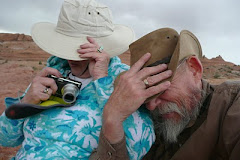
Karen in orange vest
and yellow hard hat.
Chains and pulleys
the sounds of chains,
well-oiled chains,
Do the chains need more oil?
The music of chains
and short solos of each link.
Hops coming through on the vine.
Karen turns and looks at me. Can I?
You can. Light coming through
2x4s in the ceiling.
Fans everywhere,
Escalators for cleaning.
Up and down. Up and down.
It’s all about washing and cleaning the hops.
Heavy stuff falls, rolls down,
Conveyor belts now.
Like fish ladders.
Like slot machines.
Like figuring one’s odds with dice.
And the light coming through the building.
Karen in all of these colors
on her way to a quilting conference.
Keep a hold of your mother’s hands.
What?
Keep a hold of your mother’s hands.
What I say to my son:
I don’t want to lose my toes.
OSHA grandfathers us all.
Descending now.
Stairs like my father’s elevator in North Dakota.
From the same era.
Workers everywhere cleaning up.
It’s all pressure time.
It’s all dice.
Dice and beauty, too.
Light green blossoms
and clanging chains.
Heat and wind from the kiln
for the effervescent flower

and the world’s great thirst.

Jim Bodeen
9/11/2016--22 September 2016