THE POETS AT HIGH CAMP


THE POETS AT HIGH CAMP FOR JACK KRANZ


I.


...nothing draws me to you. Everything pulls

away from me here in the noon. You are the delirious

youth of bee. The drunkedness of the wave, the power of the heat.

    --Pablo Neruda


You carried your own burden and very soon

your symptoms of creeping privilege disappeared.

    --Seamus Heaney


A tattered coat upon a stick, unless

Soul clap its hands and sing, and louder sing

For every tatter in its mortal dress

    --William Butler Yeats


We were on a chairlift on the mountain,

skiing, of all places, and it was my mountain, too,

and we had begun talking about it

at the memorial luncheon of our friend,

after the Catholic Mass. We were the ones

reciting poetry on pine tables in the lodge,

and it was after St. Patrick’s Day. The sun

was out, and you dazed me, infrastructure man,

old friend, and it was you reciting Seamus Heaney

and Yeats. I had retrieved Patrick Kavanah

from my backpack carried to the mountain

the week before. You had returned from

Kabul, from ten years in Afghanistan,

building, but you hadn’t just returned,

you had been back long enough

to build that dream house for Janie,

the one that looked like, well, the one

you modeled after houses in the desert,

with walls of shimmering, and even,

wind-swept and moving, sand—and

we were on the chairlift

in afternoon sun, when almost under

your breath, you mentioned, me hardly

hearing, and asking you to repeat, three times,

the bridge on the Drina. What is it?

What is that? I asked. The Drina,

Ivo Andric. From the workshop

with the women in Kabul. At lunch,


though, it was Seamus

and the Republic of Conscience.

It was Afghanistan, NGOs,

workshop in Kabul, three nuns,

holy ones, and Marina LeGree

teaching young women to climb

through Ascend, Jack, you talking,

She’d fly in and out of Pakistan

from Florida, a finger stick,

sharing a 20-mile border with China.

Women. No security. I was in her workshop

in the Kabul Star Hotel. She took young

women up Mt. Nawshaq, 24,580 feet.

We heard RPG fire, you know

what I mean, faster than

the speed of sound. 36 Taliban men

got up that morning knowing

they were going to die.

They hit the Indian Embassy

100 dead immediately, right…


Right into the Irish poets,

Heaney, Yeats.

(And I’m still carrying Kavanaugh’s Pegasus

from last week—that horse, too. Here!)

This is no country for old men,--

And Neruda’s brown and agile child.


Jack Kranz, builder in Afghanistan

one of ten children, can still memorize the poems,

Jack the first Catholic CO in Yakima

when America flew into Vietnam.

(Jack drove Ken Capp and I to Berkeley

that weekend to hear Rigoberta Menchu

before she was awarded the Nobel

and I returned swirling with Mari Sandoz

and Crazy Horse, archetypal images

of Latin American women,

Malinche, Guadalupe, Sor Juana.

Abrecaminos, open-the-way-ones,

from good woman bad woman,

the one you want Saturday night

the one you want Sunday morning.)

That Jack Kranz, the two of us riding

the chairlift, making our turns

after these decades, Jack talking

about the bridge on the Drina.


What’s that, Jack? What bridge?

Say that again, I didn’t get it.

What skiing is, edge and release,

how the fall line changes during descent,

after our first great losses,

weight on the down hill ski,

and the natural process of unweighting,

what it is like around sandwiches

pulled from backpacks in plastic bags.

The gold mosaic of the wall,

chance windows of poetry or prayer

and weep to their presumptions to hold...

Everything packed into chocolate chip cookie.


And the Russians in Kabul, Jack.

Do you know Svetlana Alex--

Zinky boys, Jack interrupts—Yes--

the coffins.


That whispered thread--

Jack’s voice coming from a wool mask

in wind on a mountain chairlift,

That bridge, on the river.

All of it and everything on the mountain.

I must have that book,

Ivo Andric, ambassador in house arrest.

How I first heard.

And this is what happened next.


II. THERE’S MORE THAN ONE BRIDGE CROSSING THE DRINA

So men learned from the angels of God how to build bridges, and therefore, after fountains, the greatest blessing is to build a bridge and the greatest sin to interfere with it, for every bridge, from a tree trunk crossing a mountain stream to this great erection of Mehmed Pasha, has its guardian angel who cares for it and maintains it as long as God has ordained that it should stand.

Ivo Andric


A voice behind me calls out,

Can I join you on this chairlift up the mountain?


...the words of cures and chains to heal dumbness interrupted.


All the Irish lines

My soul is an old horse,

gone like exhaled breath


Hop on, young man.

Tell me about those boards you’re riding on.

Skis bound into a mono ski? Or snowboard?

A board. I’m a dog. Prairie Dog. Love this board.

Where are you coming from.


Me, Tri-cities. No.

No, no, your soul, where is it from!

Jack this did happen like this.

Not tri-cities, Bosnia.


And why should I walk among the dead?


You’ll be dead for a million years.


Bosnia? No. Not Bosnia.

Do you know the Drina River?


I know General Mattis, too! he says.

He signed my books, two of them,

one for a friend who’s a Green Beret.

He hates being called Mad Dog!


Who? Wait.


Mattis hates the handle. He hates it.

Do you know his call sign?

Call Sign Mattis is CHAOS:


Colonel Has Another Outstanding Solution.


But the Drina, the River Drina.


Oh! Ivo Andric!

I have his book in Serb!

It’s like reading Shakespeare!


But you’ve no accent!

We came when I was three.

The ESL teacher took one listen

and says, Get out of here.

We went back when I was eight.


But the Drina. Did you cross the river. Can I buy you coffee.


We’re from Tuzla.

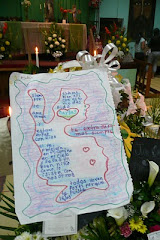
I’ll draw you a map.

Let me see your notebook.

Bosnia is here.

Mom was born here in Croatia.

Dad here in Serbia.

This is a 17th Century map.

Here’s the Drina.

Oh, funny. Not in the book.

There are many bridges

crossing the Drina.

I crossed at Tuzla and went to the zoo.

Then I went to the lake.


My name is Gordon Givric.

I am 27.

He shows me his poem to his girl friend,

reads it to me. Do you write poems, he asks.

His girl friend’s girlfriend says,

You’re the one, Gordon.


Thanks for this, we say to each other.


And I am a black candle burning in a snow storm.


III. FOR JACK KRANZ


He therefor desired me when I got home

to consider myself a representative

and to speak on their behalf in my own tongue.

Seamus Heaney, From the Republic of Conscience


In my reading our positions are permanent.

We are not itinerant or interim.

This is understanding that has been given

from mountain residencies.

It is good work.


Jim Bodeen

16 March—7 April 2023

Good Friday

White Pass, Cascade Mountains, Washington State

MOUNTAIN WAY DESCENT


MOUNTAIN WAY DESCENT


Turn around beauty

Portion of highway practice

Get out of the car


Jim Bodeen

4 April 2023


Storypath/Cuentocamino: : THE BUILDING OF THE MEMORIAL CAIRN

Storypath/Cuentocamino: : THE BUILDING OF THE MEMORIAL CAIRN:   THE BUILDING OF THE MEMORIAL CAIRN That day in January on 12 West just before Trout Lodge, the accident-- patrol car, ambulance, ba...

THE BUILDING OF THE MEMORIAL CAIRN


THE BUILDING OF THE MEMORIAL CAIRN


That day in January on 12 West

just before Trout Lodge, the accident--

patrol car, ambulance, backed up cars,

me too, wondering, skis packed--


I’m reading a Canyonlands

poem when the siren releases us--

I’ll take the upturned car

to High Camp knowing


nothing, and only the next day

read the news. 14 year old boy

from down the road. passenger

unhurt, released. Two months later


to the day, crossing back on 12 East

with my wife, I’m the passenger

in back when we drive by,

fresh memorial flowers flashing


by my eyes driving by.

I was there, moments later.

And that same day he died,

the random murder in town,


three people at a convenient store.

I don’t connect the two in time,

until driving up the mountain

in March, I turn around


to remember him, that boy

from Naches, just this side

of Trout Lodge. I force myself

to go back, pull over,


hang my coat on the right mirror,

isn’t this my vow, to pause

and see--back-crossing

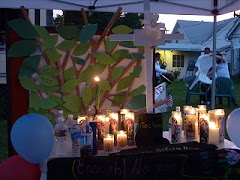
the highway. Lilac colored


cloth flowers below satin-white roses,

and the long black comb,

forgotten or placed?

to the right of the flowers.


What I hadn’t seen

until crossing the highway,

running creek in the steep ravine,

running water, living desert


snow-melt and Biblical.

Random murder in town never fits.

But that boy, and me, walking the ditch.

Falling between silk flowers


and a water-song, cutting

my hand. Here, too,

the unrelated random truths,

the abuse always takes place


where things are supposed to be safe.

The violence, cruel and delivered

without warning, taking many forms.

I did remember the day this boy


died, and I turn back in my notebook

to January 20th. Skiers on the way

up the mountain drive by without

slowing down. They’re in a hurry


for anything untracked. This boy

wasn’t a skier. I search nearby stones

for three to build a cairn

in the stone garden at home,


two small, undistinguished,

one larger, size of a soccer ball.

Resuming this mountain drive, forgetting

my coat hanging on the mirror.


Jim Bodeen

20 January—26 March 2023

Highway 12

White Pass Scenic Byway


LONG WALKING


LONG WALKING


In January, 1968, I took an R&R from 85th Evac Hospital, Qui Nhon, took a train from Tokyo to Zao to ski. Kimonos and Futonjis in room. Flying back into Tan Sanh Nhut, Tet had begun, worlds in chaos. Round the clock months-long continual evacuations, young North Vietnamese under B52 bombs wrapped in gauze. I’ll ski White Pass today, eat cookies at High Camp with my notebook, and read some poems. A powder day.


●


When the long walking began

I just can’t say. In the unborn

belonging and the stupidity of the heart

coming to play in matters of faith,

winter faith matters, seeding itself.

Looking back through two notebooks

and shreds of evidence, tabulating

places, rest stops and mileage.


It’s snowing and workers

are putting up forms, sheet rocking

in snow. The street, snow-filled,

rutted and icy, but better for one’s feet,

because the unevenness of snow

works one’s body into its own

flexibility, and hiking boots
keep one’s ankles steady.


Nineteen years ago I left the classroom

carrying a notebook and a camera.

That’s what I thought about

as tears flowed. Still 58,

days before my birthday,

the same age as Charles Dickens

when he died. Some times

half page a day, sometimes

baking cookies in the kitchen,

scraps of recipes come from my head.

The twisted tree lives its life

while the right tree

ends up in planks

is what the Chinese say.


Another day walking

and after-walking in the notebook,

a blessingway walk, what I say

half-believing. So many

different walks.

Walks of privilege, walks of shame.

El Camino in Spain, Camino de Santiago.

Wonderland trail around Tahoma,

Pasayton Boundary Trail with that added

cut straight south another 15 miles.


The Long Walk of the Navajo.

Trail of Tears of the Cherokee.


Bruce Trail in Canada

Inca Trail in Peru

and Bright Angel Trail

into the beginning of time,

hands on the Vishnu Schist.


Two years walking the housing development

The decades of Tent City.


Poets walking the 19th Century.

Wordsworth and Coleridge in the Alps.

John Keats walking North into Scotland.


44 days and a shipride home.


●


The Trail of Tears cuts through eight states.

South Appalachia. Population

90% reduced from Smallpox.


A constitution and a written alphabet.


The Indian Removal Act of 1829,

Andrew Jackson ignores the Supreme Court.

Homeless in their own country.


Signed the treaty in 1835 opposed by 90%

of their own people. 6000 troops enter their territory

and the roundup begins in gold fever dreams.

Prison camps and river banks.

16,000 Cherokee captives.


The March begins in winter, 1839, in drought,

managing their own removal,

wagons carrying the sick.


A National Historical Trail, this

Trail of Tears, in 1987.

Now with a website,

a National Park Service Film.


From the Diné:

Long Walk of the Navajo.

Tséyi’—Canyon de Chelly--

from Ft. Defiance, Arizona to Bosque Redondo

Fort Sumner, Nevada,

depending on one’s route,

250-450 miles, 1863-65,

10,000 Navajo marched

through the sacred mountains:

San Francisco Peaks, Mt. Taylor,

Huerfano Mountain, Gobernador Knob

and Mount Hesperus.


A discussion question:

Imagine what it would be like

to march this distance?

What helps people maintain strength in different times?

How might the Navajo stay strong?


Allowed to return in 1868.

As a result of the Long Walk,

indigenous peoples were granted

freedom of religion.


●


From the Tierra del Fuego to the northern

most part of Alaska, George Meegan walked 19,019 miles

in 2,425 days from 1977-1983,

making his the longest recorded walk.


●


And returning to what matters,

Quanah Brightman asks,

What’s underneath the land.


Beginning in the summer of 1978,

Professor Lehman L. Brightman,

President of United Native Americans,

makes the longest walk of the year

with little money or food, walking

from Reno, Nevada to the Capitol steps

in Washington D.C. to jeers,

You’ll never get out of Nevada,

while thousands cheer him on.

Supporting Indian resistance, asking,

What’s under the land?

Coal, oil, uranium, gas, water,

to save their Indian way of life.


Crazy Horse, Hoka Hey, Let’s go.


Wearing the patch for the Longest Walk.

Sacred pipe for the Four Directions,

walking that way on Turtle Island.

Walking to defeat legislation,

11 pieces had been introduced

to defeat Indian Rights.


A Blessingway Walk.

We live by an understood law.

This is how we have always lived,

confronting people who look

at a sheet of paper to know how to act.


“This is not the first time the Indian People have walked.”


We have to have people to walk.

We may be brothers after all.

We shall see.


●


Coffee finishing as I come

into the house after walking

short block of the neighborhood.

I glance at yesterday’s offering,

adding, Oh, I had pickles

with tuna on my saltines

yesterday. This is my life

reading psalms, all this opening

to God revealing all that is

dark within me. This God

is a quiet one. Photosynthesis

goes on. The leaves,

yes the leaves clean up

continuosly, the air,

But you will light my lamp,

Lord. You have penetrated

the darkness that I called for.


Gail is out with her little dog.

I can’t talk. We all have colds

and we’re testing for Covid.

Let us know. Let us know

how he is. As for the psalms,

they have opened for walkers

and you have given me this day.


God breaks the teeth of evil

and those who carry lies.

He’ll do it again and again,

walking, after-walking,

walk on, walk with the anxieties,

work with the ancestors

carrying Torah in their bones.

Those three psalms, 3, 37, 87,

read them with coffee.

Arrows hit their mark once again,

and every step marks compassion

for the poor tucked into your headband.


All of this elevation come from skis,

the drift if unweighting, unbound memory.


Jim Bodeen

25 March 2023


THE DAY CY RIEF WROTE THE CREATIVITY UNIT

THE DAY CY RIEF WROTE THE CREATIVITY UNIT

IN THE TEACHER’S LUNCHROOM


he was confronted by his female colleague

for not writing behavioral objectives for students.


I’ll do it, he said, grabbing a handful

of blank xerox paper on the counter

and binding the empty pages with his fork.


Jim Bodeen

15 March 2023