The Monk Reading My Face


NATIVE BEGINNINGS

I.

There was a street between us,
and a fence in our yard. God
was across the street
where I was baptized,

but I talked to him
from inside our yard
where my pony, Spot
ran wild, and my father

cried inside the kitchen
with his feet in hot water.
My father cursed, crying out,
and I called his cursing

prayer. Behind our house,
beside a barn, I kept camp,
sat cross-legged, with a pipe
from a souvenir store

purchased in the Badlands.
Call this play or persona.
Call the smoke signals
that came back, messengers

from the Mandan spirit world.
Explain them away any way you’d like.
I go through the coulee dream field
straight to an omniscient God

who grants me audience.
Sixty years later, when I return,
both houses are gone,
ours, and the house of God,

both rebuilt. I find a wall
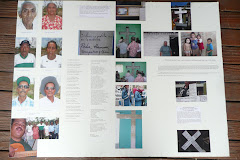
of photographs in the church
with images of the pastors,
and the years of their call,

seeing the face and the name
of the man in the collar
who must have been the one
who helped shape this story.

II.

Out west in store-bought clothes
for the first time, in a new house,
the pastor saw something
he never talked about with me,

and wrote in my New Testament
upon Confirmation, I hope
God calls you into the ministry—
you’ll fit.     and signed his name.

              That
would have been a disaster.
But I applied to that religious school.
Right before it became time to leave,

I bought a car and went to work
to pay for it.
That word, fit,
arrived all loaded up

and rearing to be explored.
This was fate
arriving as shiny as that car.
Word of God

in smoke signals
but I would have to live it out now.
Black Elk showed up over and over.
Thumbless, he walked me through.

III.

They say you must refuse
the call in order for it to be one.
They say, too,
God will get your attention when it’s time.
He kicked my ass good.
Whupped me up side of the head.
Paralyzed and blind in one eye.
Fit to be tied, sober, couldn’t move.

IV.

Woke up in Southern Chile
in the machi’s hut full of smoke,
machi reading my urine
sitting beside the blond woman

in his blue soccer jacket.
Urine more important than the girl.
Well, ok, maybe.
He wanted her by his side. Who was she?

V.

So many voices against our vanishing.
So many thresholds in our ordinariness.
Our clumsy left hands not knowing
which way the key goes in,

our awkwardness with chop sticks
sitting at our host’s table.
How are we gonna get the noodles
up to our mouths if not in the left hand?

 VI.

Leonard Cohen’s song
Who by high ordeal?
Somehow linked to God
Performative prayer

Rabbi Amnon, Mainz.
Security is veneer,
Un’taneh Tokef.
Listen unknowing

30-year seed song
Built around opposing pairs
Who shall I say is calling?
A call anointing—

Not despair, recast.
Sanctified your name.
Look who thinks he is nothing!
Record all living beings!

Stored up for those who love you:
that very piyyut.
Let holiness rise.
This day’s holiness.

It is full of awe.
Speech part of story
God is talking attendance
And the child never gives up

Each return cancels
Lost in divine all
Forget self. Worship.
Reach by common trial.

VII.

The practice of monks
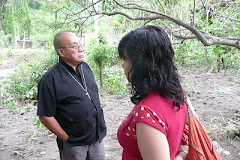
Gatekeeper reading my face
Yours with the face
of the eschaton.

With just a few words
the man told him to lighten up,
and his hands took the pressure off
the writing of the poem. With no

pressure, there was nothing
to hold words bound to page,
and the exact nature of pain
had a location to land.

We were talking
impersonal principles,
we were talking
about otherness.

Consider the stone
in the river. The artist
is the one who finds it
after these millions of years,

older than any tree, or thing,
among the oldest of the ancestors.
Absolute other—
towards that. The voice says,

Before putting your hand
into the river, take off
your wedding ring.
You might scratch the stone.

Another so different
from oneself, one could
never imagine making it
as part of oneself. The shield

from the jeweler pinned
to vest, part of the protection
of a failed mask recognizing
vocation come to show dance.

Jim Bodeen
2 November—10 December 2015


Bowbells All Community Service, 2006 Centennial


SUNDAY CHURCH SERVICE IN BOWBELLS HIGH SCHOOL GYMNASIUM
WITH ALL-CHURCH COMMUNITY CHOIR, SITTING WITH MOM & KAREN

            Before the Service

During half time at basketball games I shot baskets
in stocking feet before the community in this gym.  
This place was a promise. We had an all-school assembly
with a man selling virtues of canned rattlesnake meat.
I played Frosty the Snowman on this stage in first grade. My cousin

Sharon, three years my senior, played French Horn in the band,
became class valedictorian. Walking through the school before
the service, the library opens to questions. These books on shelves:
31 Letters & 13 Dreams by poet Richard Hugo. Diving into the Wreck,
by Adrienne Rich, beside E. A. Robinson. Small enough, too,

to hold me, take me back. I’ve been gone 51 years.
The school was hooked up to Internet Access in 1999
“…to squirm among this difficult magnificence
where we are most our own,” Hugo writes
in “Camping the Divide.” Bill Jenson, from another

place, too, comes up to me in the library.
Class of ’62, a pilot in Viet Nam in 1968-69.
“Tomorrow this town will be a ghost town,” he says.
I pull a book from the shelf, and ask Mom to sit at the round
table here in the library to help me read Act III of Our Town.

I give Mom the part of Emily, just buried, at her funeral
among the dead. Karen reads Mrs. Gibbs,
Howie Newsome, and Simon Stimson.
I take the part of the Stage Manager.
“Live people don’t understand, do they Mama,” Mom reads.

Most of what Emily says is daily news for me.
The All-Community Choir is practicing before the service,
And I am in my seat, good boy at last.
Wandering between gymnasium, library, and classrooms,
makes it easy to get lost. I’m walking through time, standing

in front of a clean old chalk blackboard—old school—
washed for summer, I search the teacher’s desk for chalk,
writing The Red Wheelbarrow side by side with lines
from some lines about Crazy Horse of mine. I write our names,
William Carlos Williams, Jim Bodeen, adding

American poet under each name. Back in the gym
I watch two middle-age women to whom I gave May Day Baskets
And Valentines. Women whose names I named in poems
As a man, wondering if they had enough love for me.
These two women, along with Karen, all three in this small

town gymnasium, became the three women of my adult life.
I remember a photo of my father in a basketball uniform
in the library. It is his face, not mine. But I’m in the gym,
sitting on a folding chair, listening to the choir.
“It’s so sad,” the woman sitting next to Mom says,

“Someone so young.” Karen read that line minutes ago.
These necessary things my family does for me. All I do is listen.
Then last fall we moved to Park River, about 60 miles…
It was time for us to move off the farm. We wanted
to be closer to the kids. We didn’t want to go to the city.

Mom talks to Elton Peterson, in his 80’s. “I have a son
who helps me in the store, a daughter in Mohall
who won’t talk to me, and a daughter who teaches
in the university who’s too smart for her own good.”
And this: …and her husband passed away,

and her and I are about the same. We can do anything,
but not everything, and not fast. I ask Karen,
What did you think of reading Our Town?
“It sounds like your mother talking.” I ask,
“Are you somebody I’m supposed to know?”

            The Bowbells All Faith Worship Service

“Lord, you have been our dwelling place in all generations.
Be our dwelling place this morning. We flourish and wither.
To see as Moses did,” the pastor reads. Even at worship
I’m other, writing in a notebook, homework for no school.
Pastor Todd Erickson, graduate class of 1994,

from Bowbells, living in Kenmare, begins with a joke.
“Living in Kenmare, I’m sorry. I root for Honkers.”
His 4-month old son killed two years ago in an accident.
We praise God, he says. He makes a joke through tears.
“Hey mom, how come you look forward to seeing

old ladies you said you can’t stand?”
His reading is from I Kings. 1-13. Elijah. Glory days.
Altars at Bael. 400 prophets of Bael, building an altar.
“Don’t you wish we could go back to glory days?”
After the fire came a whisper, What are you doing here,

Elijah? Observation. Interpretation. Application.
The valley experience follows the mountain experience.
No fear. And here. Here’s fear. “I nicknamed her Hillary.”
Ooh. I wince. But then this. God came only in the silence.
God is only in nothingness, void. God on his own terms.

Are you listening? Taken away by circumstances.
Forever precious. Glory days with the word.
And until then, celebrate every day.
The Jepson girls from Bowbells say,
“Take a look around. What do you see?”

            After the service

See through it as a picture, or a mirror.
Gordy Everson, from my mom’s side of family.
Ron Swanson. Joyce Ekstrom. Names from dreams.
Doris Haxton Cron. Class of ’50. Married to Clarence.
Doris stayed w/Mom’s family for two years, when the school…

“Joyce, there’s someone I want you to meet,” I say.
“This is my wife, Karen. Karen, this is Joyce Ekstrom.
Joyce and I exchanged Valentine’s.
I left May Day Baskets on her porch.”
I needed to make a gift exchange after 50 years—

To name the beginning myth, lost arrow head.
Valentine in public view. Fire seed.
To show Karen the fidelity inside my poem
and the journey of the story. This controlling truth
Pursues me. I do the best I can. At best, it’s awful,

not. Not.—Mom comes from the other side.
Joyce sees the Everson between Lucille and Bodeen.
Joyce is interested in this name that means nothing to me.
We meet her mom who is 93 years old. Mom tells
a story of her husband. Family stories safer than valentines.

Walking to the Jeep, Mom says, “Joyce is the girl
who Jim liked when he was a boy.”
And I feel that I’m the boy being talked about
In bathrooms. We sit in silence.
Eating with Karen and Mom, I say,

“I don’t think I’m the only one who was interested.”
Joyce was valedictorian of the class of 1963.
The man she married wasn’t from Bowbells.
She married outside the gene pool. Why did Karen choose me?
I don’t think her marriage went unnoticed.” I want Karen

to know however I understood her beauty,
it connects to story. A story in charge of my life, directing me.
Whatever my life is, there was no equivocation.
I went straight from here to you. This is all
there ever was of me, all I ever had to give.

In a notebook, in times like these, I’m beyond failure
or arrival, inside charged conditions. All that can be done,
will be done here, on the page, and it will live.
It will live beyond one’s life if one
has strength and courage to let it happen.

Karen marries into story, too. Unfettered poetry.
Including finalities in goodbye. Unfinished lives.
Ed Cline says, “You’re Jim, Wayne Bodeen’s boy.
I sold grain to him. They’ve got 17 guys
doing it over here now.”  More people from Bowbells,

than living here, now. Coming here you better
come in an RV or have a place. No places to stay here.
Later, on the way home, in a Pizza Hut in Shelby, Montana,
on Highway 2, I write, We lived between railroad tracks
and Canada, train whistles woke me, I dreamed Indian graves.


Jim Bodeen
31 July 2006-19 October 2006
Revised January, 2007
Bowbells, North Dakota—Yakima, Washington


Bowbells, North Dakota Lucille Bodeen Centennial Album 2006


Featuring Lucille Bodeen, this video recreates Lucille's return to the Bowbells Centennial in 2006, from her own photo album. Part biography, part pilgrimage, Lucille opens the way for her son and daughter-in-law, who accompany her on the journey. Bowbells, North Dakota is situated in the NW corner of the state, and is the county seat of Burke County.


Mom raised me to carry the North Dakota story after we left in 1956. I 10. I became mom's biographer. This video explores the 2006 return with eyes from 2015. Mom's been gone four years. What remains from 2006 surfaces clear, opening the way for the poems which have been locked up for nearly a decade. And Mom is pure gold.


LOOKING AT PHOTOS FROM THE BOWBELLS CENTENNIAL

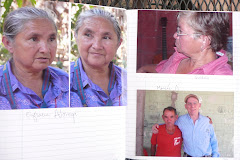
Crossing time, time traveling,
Karen holding the camera on the book
opening to take me by surprise.
No prepping for this exercise,
you take what comes up.
Mom looks so good
and there’s so much trouble inside of me.
Oh, she’s so surrounded by love
she attracts it, it comes to her.

Mom with her hand on Coupie’s knee.
If that doesn’t get you, I don’t know what…
and that morning driving with Mom
out to Papa’s farm. These photos
are just about ten years old now.
Now I’m an old man. I wasn’t then.
I’d forgotten about that morning
in the library with Karen and Mom,
pulling that copy of Our Town
off the shelves, reading Act III together.
I can’t remember who took what part.
Karen had Simon Stimson, and a couple of others.
Simon had died. All that alcohol in him.
Alcohol in the family story, too.
I did walk those railroad tracks again.
Shit Creek, meadowlarks and the bb gun
return me to my roots. That hour
with Alvin Hass when he told that story
of Dad pulling Coupie from the lake,
remembering that for me
when the present moment was gone,
that’s enough right there, isn’t it,
to validate a person’s entire life.
Bowbells, North Dakota.
Tucked up there in the corner of the state.
Oil country. Dry land farming.
Country churches and country schools.
That library with a copy of Richard Hugo’s Letter Poems.
Somebody doing their job with those books.
Gave me the chills. Gives me the chills again this
morning.
Mrs. Gibbs not letting Simon Stimson have the last word.
Emily’s voice every day of our lives.
We don’t have time to look at one another.
It all goes so fast. Do any human beings
ever realize life while they live it?
The three of us in that library.
Everybody who’s ever read that play.
Gone through these classrooms.
Mom in that photograph.
She was the Stage Manager all along.

Jim Bodeen
3 December 20150


USHERING THE OTHER INTO STUDIO SPACE


USHERING THE OTHER INTO STUDIO SPACE

Hyper ethereal lives under the open sky
into exile through windblown mountain passes
Shih-shu, rock and bark poetry,
idle drowning, poems with a breath of pine wood.
If it all seems ordinary to you, well, it should.

The push-knock school of revision.
Chia Tao, a wandering Immortal.
Typing the titles of Gary Snyder's poems,
fingers slip to the wrong keys
and I've arrived at a new Bodhi ritual.

Hyper ethereal lives under an open sky.
Windblown mountain passes present themselves
as gateways to stories. Images
of Lord Krishna and Jesus accompany
childhood narratives. Everything feels like

call and re-call in ceremonial time,
ancestral. Becoming aware of the self as a walker,
constantly walking was the revelation of knowing
the stranger in the living room. Was he, then,
a stranger to himself? Perhaps

that's the wrong question. Allowing
the other into studio space being the real work,
the man is all right with his routines. He
knows he'll soon be found out in small talk,
that yucca gate with no fence blow down.

Jim Bodeen
1 December 2015

SONNETS OF BURGEONING CHANGE


TRAIL TALK

Failure with conversation
Fresh  after festival days
Shut up now in the notebook

Jim Bodeen
29 November 2015


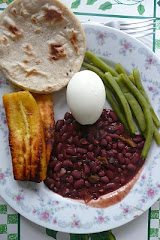
TACOS AT WOLF POINT PARK


LINES AND DRAWINGS FROM THE KITCHEN TABLE

Drop me a post card, sometime,
Donald says, as we say our goodbyes
After tacos in the park, after Uncle’s prayers.
Feel their hearts, Uncle says,

Donald translating. The language lesson
Deepening, hearing the L, hearing the D,
In Sioux dialect. Drop me a post card,
Sometime. The Highline is a rail

Road between Dakota and Yakama.
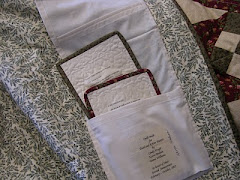
The quilt is from women off the Avenue
And my granddaughter looks at our film
Wanting to know which one is Uncle,

Which one is Red Boy, because she wants
To have names right on her drawing.
We’re pilgrims stopped at a picnic table
After Wolf Point saying thanks.

Jim Bodeen
25 November 2015


THE SONNETS OF BURGEONING CHANGE

21 November 2015

The garden put down (finally) for winter.
Bonsai trees protected in layers of bark and leaf.
Twice in one day for coffee with friends.
What happened to the day?
My older friend tells me of an 8-day journey
He took when he was 21 and in the Army in Okinawa.
With another GI. It was 1960 or 61, and the two of them
Ended up in Kyoto. They went out looking for girls
And ended up in Kyoto, Japan’s ancient capital,
Another world, and he was never the same.
The friend is my jeweler, a shield maker.
He walked through temples and pine trees
And his eyes never returned to the barracks.
He pins an elk’s tooth in a copper thimble to my vest.

Jim Bodeen
21 November—25 November 2015

23 November 2015

Karen stands in her coat and scarf
By the chair in the medical office
Waiting for her appointment
On the morning of our 47th wedding anniversary.
The sun is a silver disc in the eastern sky
And she mistakes it for the moon.
Ours is routine medicine I begin to write
As the nurse calls her name in mid-sentence.
Before sunrise Gary Snyder read
From a recording of  Dangerous Peaks
In the living room, bringing his voice,
Each practiced syllable, up the 5, for us all.


PRACTICE WITH THE POEM

Say the word out loud, even while silent,
Reading to oneself. Hear it in the ear
As it was written down in the speaker’s voice.
Even one’s own words, on paper, a kind
Of betrayal. Circumambulation of the body
Stretching, after bouncing on the ball.
All limbs holding, going up to, beyond,
Seven steps along the way, breathe and relax.
Muscles working in a circular pattern, moving
In and out of three places where a poem
Is held to the eyes. Ocular entrance
And new-found territory in cellular life.
Present to the re-sounding word.
Each beat, pulsing, re-pulsing against silence.

Jim Bodeen
This Week in November


North Dakota Slow Time


Crazy Cloud/Mother Quilt explore North Dakota "deep time" in the Mothership.  Memory, poetry, family roots connect in a solitary campout in Theodore Roosevelt National Park, Medora, NoDak. Images and sounds from North Dakota Historical Center in Bismarck add to dreaming and understanding. 


WHAT IT IS WALKING, WALKER


            0530 hours
            20 October 2015
            Cottonwood Camp
            Theodore Roosevelt National Park
            Little Missouri River
            Medora, North Dakota

The Mothership isn’t exactly the 2-Step,
Crazy Cloud. It’s a Dodge Ram 3500.
Steak tacos and Mexican Rice for dinner.
Museum in the morning before heading West
And maybe a walk at first light, before sunrise.

How it is with Storypath/Cuentocamino.
Shut down everything but the road
For the notebook and discovery within.
The books I carry in my backpack
Blessing the other in all ways. Cameras

as another set of eyes.
Emptying the ears with sage
Coming forth with the invocation of music
Iris DeMent sings the poems of Akhmatova
And the plains will never be the same.

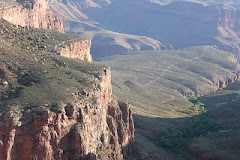
Badlands be ancestral storyline. These
Trackless woods and the on board library.
South of the Corps of Discovery,
We read the winter journals of Meriweather Lewis 
In the wonder of knowing the homecoming story. 

It can be done, except in notebook narratives. Alone here,
Karen and I. The only ones here.
Campground five miles in from Ranger Station.
No hookups. No water. Solar power.
Lewis and Clark winter in Mandan,

1804 turns into 1805. Almost 100 years
Will go by before any will remember.
Roosevelt arrives in 1883 for a buffalo hunt,
Invests in cattle, operates two large ranches.
Maltese Cross and Elkhorn. Buffalo

Almost gone, Roosevelt will create
Five national parks, 51 national bird reservations,
Four national game preserves
And 150 national forests. Earth Lodge People,
Hidatsa,Mandan lived here nomadically

For 500 years. Hidatsa learn about corn
From the Mandan. These two combine
With Arikara Nation to the South.
TheSmall Pox will arrive in 1837.
This is the contact point—the way

It was told to me. The day Death
Came and stayed. In the Mandan
Origin Story:  Lone Man was walking along
And became aware of himself.
The land was new where he was going.

Here on the Little Missouri River.
In 1845, Mandan and Hidatsa move 40 miles
Upriver to form Like-A-Fishhook village.
Arikaras join them in 1862. The government
Forces them to Fort Berthold in 1885.

Today that nation is known as Three Affiliated Tribes.
This is called walking in sagebrush before sunrise.
This is the notebook in the Mothership in song.
My people, conscripts and loose ends from Denmark,

Will migrate north working their way from Bismarck.
The story will be told as a new deal. Lights will come one.
Fracking will come into the vocabulary
And be hailed as creating employment,
Fracturing bedrock using a slurry of sand,

Chemicals and water to extract oil.
Spilled frakking fluids will be mentioned in brochures
as being more dangerous than spilled oil.
Oil is cheaper to collect than natural gas
So they burn off excess gas until a way

To build collection infrastructure I found.
Gas flares in 24-hour facilities light up
The dark skies of North Dakota. Stars are out,
Too. First light from the East.
My God it’s beautiful. Fingertips freezing.

Jim Bodeen
Mothership Log

North Dakota Badlands


INTO DEEPER SILENCE

Camped on the Little Missouri
late October,  the young Ranger
tells us the park’s winterized
and water shut off. Five miles in,

we’re the only ones at Cottonwood.
Theodore Roosevelt National Park at Medora.
Carne asada and Mexican Rice.
Grasses all yellow and brown

contrast with tinted greens in sage.
Animal tracks on the River.
A lone buffalo just before the campgrounds.
Slow traveling and museums

from Mandan to Bismarck
exhaust the imagination.
Meriwether Lewis in my head again.
What happens to the mind inside

deep travel. Impossibility of return?
Extinction as graphic as the dinosaur.
Crossing the ocean floor of North Dakota,
why have I never imagined underwater

creatures larger than the camper on the pickup?
On the top wall of the museum, a movie
shows the planet giving birth to continents
over time—598 million years in 1 minute, 46 seconds—

the fetus of our world being born. I film
it four times. My wife records it on her telephone.
Hearing language of Hidatsa and Mandan
by native speakers with translations.

Williston Basin and Bakken Formation
become more familiar than family.
Circumference and depth. And just below
Bakken, one more possibility,

Three Forks—banned for now from drilling.
Gas flares light up North Dakota skies. Tonight,
though, it’s quiet in the Park—just us and critters,
and we’re turning towards home. Another

confrontation rich with tribal chance.
The Corps of Discovery, almost forgotten
for 90 years, made the journals vulnerable,
 without accompaniment. So much we don’t know, so…

Jim Bodeen
20 October 2015
Cottonwood Campground
Theodore Roosevelt National Park