Accompaniment with the Trees: Particular Pleasures


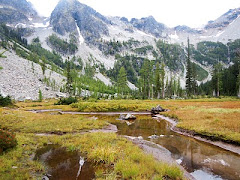
Particular Pleasures: EightMile Lake Hike, Alpine Lakes Wilderness


The summer garden asks for different things. A different kind of attention to water. Each tree with its own thirst, its differing hunger.  The poet had called them out from their silence during the time of war and occupation. The memories of trees was greater than what any of them knew. They had  voices, but how to access them?


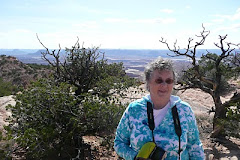
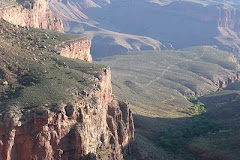
Backpacking trip to EightMile Lake in the Alpine Lakes Wilderness through fires of recent years, Burned-out trees, and charred roots stand for portraits and as witnesses, for solitaries passing through. Listening and meditation walk. Conversation with books in the backpack: David Hinton, Fenton Johnson, Belden C. Lane.

WORK SMALL, SHORTEN THE TOP


STONE WATER LIFT

Rock walk surface work
Stone gives up its portrait
Quiet inside talk

Jim Bodeen
16 June 2015


RESOLVE


WE WILL TALK ABOUT TEMPERATURE AND THE HEAT WAVE,
BEING THAT IT’S 106 DEGREES IN JUNE


The object is always more important, more interesting, more capable (full of rights): it has no duty whatsoever toward me, it is I who am obliged to it.
            —Francis Ponge “Banks of the Loire”


I.                   The pine tree has entered the garden.
Black pine, White, Jack Pine, Mugo—Mountain or scrub mountain.
The pine trees have arrived, come from the coast of Japan.
The pine tree is here, a result of all of my failures.
The pine tree has a foothold in my soul.

The pine tree has arrived in the brush and ink of Basho.
Basho left everything behind for the poem.
He saw those pines during his great disvestiture.
The pine forest has arrived.
Long after Basho, true.
The pine woods.
The pine woods is also here.
The pine woods is here in the form of a notebook.
The notebook being a manuscript of Francis Ponge.

The pine tree is photosynthesizing this morning.
The pine tree that is occupying my mind has taken root in the garden.
The occupation of the pine tree
along with the etymological journal has begun.
There is so little time.
There is nothing but time.
Time and the pine tree and the occupation.
Let it begin.

Pinus thunbergii. Pinus Mugo.
Pinus strobus, the white pines.

More pines coming.
They’re on their way in the language
of everyday use. They arrive
in the songs of Tony Childs.
Responding to water and song.

II.                Heat wave lessening. Water trees before dusk.
Cool them off.
Maybe heat will remain under 100 degrees.
Coming down from 106 to 101 yesterday.
Beckett’s last works, dream-conscious.
Saddened by fame, cigarettes and alcohol.
Maybe his mother’s in his head.
Merton’s last words, “And now I will disappear.”
Francis Ponge. He begins with a two-fold guarantee:
need for expression and opposition to language.

Francis Ponge in the pine woods.
A carnation. “Beacon in a buttonhole.”
Walking the woods. August, 1940, near Suchere.
After exodus, along the roads.
Just re-united with family.
The pocket notebook his only paper,
enough for the manuscript,
THE PLEASURE OF PINE WOODS.

Objects, too, under pressure.
Witness of sentient beings.
Sentient beings everywhere.       
Unacknowledged. Seen but not heard.
Becoming like them, reclusive, yet.
Magical stones, avoiding drabness.
Objects in the everyday world.
The time of the pine wood.
           
III.             OCCUPY.  Reside or have one’s place
            of business in (a building).
Fill or preoccupy (the mind or thoughts).
                  transitive verb 1. to engage the attention or energies of.
 occupy (v.) mid-14c., “to take possession of,”
also “to take up space or time,
employ(someone), “irregularly borrowed from Old French
occuper “occupy (a person or place), hold, seize”  (13c.) or directly
from Latin occupare“take over, seize, take into possession,
possess, occupy” from ob “over”
(see ob-) + intensive form of capere “to grasp, seize, (see capable).
The final syllable of the English word is difficult to explain,
but it is as old as the record; perhaps from a modification
made in Anglo-French. During 16.-17c. a common euphemism for ‘
have sexual intercourse with” (sense attested from early 15c.),
which caused it to fall from polite usage.
“A captaine? Gods light these villaines wil make the word as odious
as the word occupy, which was an excellent good worde before
it was il sorted.” [Doll Tearsheet in 2 Henry IV”]

obsess, (verb) obsesses: obsessed; obsessing
1. To dominate or to occupy the thoughts, feelings,
or desires of someone:to beset, to trouble, or to haunt
persistently or abnormally:
Suspicions about his neighbor's honesty obsessed Matthew.
2. To occupy someone's thoughts constantly,
compulsively, and exclusively:
The desire for revenge about the way she was treated so badly
by her fellow workers obsesses Marge's sister.
3. Etymology: from Latin obsessus, past participle of obsidere,
"to besiege, to occupy". Literally, "to sit opposite to".
from ob. "against" + sedere "to sit".

OCCUPATION

His primary occupation was as editor.
His father’s occupation.
A way of spending time.
A game of cards is a pretty harmless occupation.
The Roman occupation of Britain.
The workers remained in occupation until October 16.
A property suitable for occupation by older people.

Inhabit, populate, settle, engage, employ, distract, entertain, divert, invade, occupy, suppress, seize, conquer, storm, annex, subjugate, subdue, besiege, agitate, blacklist, boycott, bring down, chase, defect, demonstrate, destable, dislodge, foment, march, occupy, oppose, oust, overthrow, subvert, raise hell, occur to, flash, dawn, think, strike

If a thought or idea strikes you, it enters
your mind suddenly or unexpectedly.


IV.             Pinus is an ancient Latin name.
Strobus, a spinning top.
The resin made pitch, tar, resin, and turpentine.
Sailors used pine pitch to caulk their vessels
and to keep their pigails together.
The pine family, or Pinaceae, includes
conifers, pines, firs, and spruces, easily confused.
Pinecones are the mature female reproductive organs of the tree.
Pine needles are joined in bundles
of two to five by a papery sheath at base.
American pines include the lodgepole pine,
so named by Lewis and Clark.
Ancient pines in China and Japan are much revered.

Candling Pines in the garden/Training Pine Bonsai
Buds called, or known, as candles,
are trimmed just as needles begin to separate from stem.
Pinch or trim with scissors.
Vary the amount of candle removal with indirect
proportion to candle size.
Leave the weak ones, prune the aggressive ones.
Or,candle them all, or, allow the candle to come
to its moment of perfection,
then candle. Finally, take your tree to the teacher. Ask.

V.                Pine tree tops bend snow-blue in Gary Snyder’s poem.

Ponge wondering over the ten days. 
Is this it? Is this all I’ve done?
Ten days, Sixteen pages, comprising, composing.
The limited paper. He needs to check some definitions.
Uninterrupted and relentless effort.
Tempted, he says, to call it, the time of…
And he does say, “…after an eternity of nonexpression
in the mute world, it is eager now…” the mute world,
to be expressed, that he “has given it hope.”

Saying this, surrounded as he is,
August, 1940, in the pine woods,
checking connotations and etymologies,
he can’t yet see how those trees will need his voice
75 years from now, in this time, our time.

VI.             “So let’s return as quickly as possible to the search for everything
that can be said about pine woods and only of them.”
       —Francis Ponge

My own sorry efforts.
Refusal to listen.
Don’t start with pines. Stay away from the Black Pines.
Stay at home with Junipers, American.
The Black Pine represents Japanese aristocracy.
You’re too old anyway.

Everything said was true,
and I wasn’t ready when I walked into the room,
and I drew the number of that beautiful tree,
Corkbark black pine, Pinus thunbergii.
The buds had already died.
Initiation not discussed.
I didn’t know.

Moving from teacher to teacher,
hearing the stories of Masahiko Kimura,
his trees are known wherever stories
are told of transformation,
I, too, am moved,
but I keep an arm’s length
from those doing the telling.
I can access photographs.
Tweezers in shirt pockets reveal the uniform.

Modern bonsai is evolutionary
with humble roots,
brought home by GIs after World II.

The teacher I find talks like this:

When they’re small, prune hard.
It’s very easy to fall in love with a tree
at Home Depot with no potential for bonsai.
I’ve done it. “Roots, trunk, taper.”
Branches coming down.
Small branches are our friends.
Big branches not our friends.
We want our branches
to divide and stay small.
Leave the front open.
Your tree wants to invite you in.

Oceanside cliffs and strong winds
off the Japanese coast
creates these masculine trees.

In our own small way
we will try to emulate
these conditions, cutting
candles, pruning needles
with our fingers.

Jim Bodeen
4-14 June, 2015


THE GARDEN BOX

Constructed of pine by a woodworker and bonsai artist, a walker. Fourteen inches by fourteen inches. The depth purposely set at four inches to serve as a container, or pot for plants, in this case for bonsai trees, and their training. An alternative to the expensive ceramic pots from China. The bottom of the box made with one inch slats separated from each other with one-eighth inch gaps leaving ample room for distributive drainage. Wood screws. Beveled. Finished borders. Holes drilled in the bottom for wiring trees to the pot, in this case, a box. Design principles copying the ceramic pots, if a bit deeper. The four inch walls at a 45 degree angle. The craftsman-artist makes these boxes at cost for his fellow club members.

My first experience with the box after preparing it for the trees and mixing the soil of pumice and small red rock, was to plant three small spruce trees come in the mail as seedlings from the Arbor Society, and kept in nursery pots for two years. Two blue spruce and a Norwegian Spruce. Oh, and a cutting from a Sequoiadendron Giganteum that is doing fine! My initial impulse was for more of a grove of trees than a forest, but the trees themselves showed me other possibilities. As a boy I knew groves of trees from walking railroad tracks. A country boy in North Dakota. Piled rocks were graves from Mandan warriors and so they remain to me this morning. I place two fist-sized rocks found in the mountain river and hand-rubbed for the developing patina, in amongst the trees where two Chinese monks sit reading poems.

As my grandkids came around me in the back yard I began to think of a different kind of sandbox. The sandbox gave way to the idea of a park. From the park came more parks and different kinds of parks, wilderness areas where no gardener would be allowed to enter with the tiny scissors sharp enough to take digits of fingers as they’ve been known to do. Here there were playgrounds and sanctuaries. I began to prepare garden boxes for the children, empty but for the prepared soil. At first I would give them cut branches from the Korean Pear tree, flowering roses from the Old World Heritage rose bush, tiny animals from the toy room, and a couple of small rubber frogs from my own collection. They were given instructions and pruners. You have access to anything in Grandpa’s garden, but it must be the right size to create the park you want to play in. You can take from any of the rocks and any of the flowers and trees. They built rivers and lakes. Hiding places where adults would never find them. Bridges and hidden caves underneath the bridges. Animal sanctuaries and farm lands. They had neighborhoods and houses. Lego’s found their way in. A trail system was one of their favorites. They were showing me ideas for my own boxes. They were showing me how boring my ideas had been.

The spruce trees were growing and outgrowing their box. I resisted the cutters, and the wires, too. A woman friend reminded me of the broken feet of the Chinese women in times past. She asked me if the bonsai came from the same period. I didn’t know, but I knew it all came from the dark place, that the emperor wanted to see the size of his empire in one sitting, without having to travel. What is the price for beauty? Why could I not focus more on the principles of bonsai itself? Where was my respect for the tradition?

Wire with soft hands, the master says. Don’t damage the bark of the tree with the wire. Wire keeps the branch from breaking, and allows movement. There is nothing without movement.

Jim Bodeen
8 June 2015


STANDING WITH THE BLACKBERRIES

“But The poet on his professional walk learns something; he takes from the blackberries food for thought. ‘This is how,’ he says to himself, ‘the patient efforts of a flower—a delicates one—succeed, and generously…”
            —Francis Ponge, Ten Poems of Francis Ponge translated by Robert Bly

And so it was at the game last night, first local game
of the season. June, with its June night summer sky
and no wind, wearing hardly any clothes myself
just in case something comes up. Fireworks after,
my granddaughter frustrated because she couldn’t
get the video going with her telephone. How could
our ancestors understand that sentence? I have been
outside with the hose, cooling down trees before
the heat of the day. Blacks, pinks and khakis
all together, they present us with the spectacle
of family members of all ages…What about
the professional walk? You lover, you amateur.
Francis Ponge loves etymology, and its counter-
part, its amateur walk. Robert Bly loved these
poems and I have just come across ten of them
tossed from library shelves. I have been one
with the blackberries. This is a mute object
of expression workshop. Blackberries—urban
ones in Seattle, apprenticed with them early,
I remained. During those years when they
were beyond my reach as the poem, I cut
 myself and was cut, cutting also the vines,
going into them, past where I could be seen.
Here I declared myself. It was in Seattle,
on a hill in Ballard, above 3d Street NW,
across from the house of my father-in-law,
overlooking the Olympic Mountains.
A half century ago. They were trying
to get rid of the blackberries, everyone,
it seemed, was trying to get rid of the blackberries.
I stood with them in solidarity before
I had the word. Cut and stained
I wrote that poem bringing home berries
from which I made jelly and syrup.

Jim Bodeen
6 June 2015


BACKYARD

“From now on, may nothing ever cause me to go back on my resolve.”
            —Francis Ponge, Banks of the Loire

Let’s begin then, in my backyard
with a line written 74 years ago
on the banks of a river in France.
The poem came off the UPS truck two days ago
and entered my life at that time.
Just two days. Certainly it’s a prayer
and comes from the same source
as the psalms of David. The poem
seated itself immediately in my notebook
even though I had several friends in mind
with whom I immediately
wanted to share it. The poem.
I was reading the poem this morning
in the cubicle at the doctor’s
waiting for him to come in. I forgot
about him as I began transcribing
the poem into my notebook.
I was somewhat taken back
 when the door opened interrupting
my meditation. The book itself,
Mute Objects of Expression,
translated by Lee Fahnstock,
bound in lovely, folded cover sheets
for strength and durability, cut
to make a small, square book,
an object of art in itself,
created well after the fact,
cover illustration by Anne Gilman,
perhaps the trunk of a tree
with cursive writing super-imposed
over it, itself the trunk of a tree
underneath a canopy of words
serving as the title. The apex
of this book come from the trunk
bearing the name, Francis Ponge,
who wrote this poem, this proem,
in a notebook, probably not
a great deal different than the notebook
in which this writing takes place
this morning, from a doctor’s office,
a backyard garden. Ponge
writing on the banks of the Loire,
from Roanne, during the occupation.

Jim Bodeen
4-7 June 2015


Two Highways 97 and 31--Central Washington and South Central Oregon


TWO HIGHWAYS OUTBACK—97 & 31—CENTRAL WASHINGTON, 
SO. CENTRAL OREGON

Out of Yakima on 97 South. When Karen sees the wild horses in high outback to my left, I pull over to the shoulder of the road. As the automobile gained prominence in the early 1900s, horses were no longer essential to the Yakama nation, and many horses of all breeds were released on to the land. Feral horses migrated and reproduced—and reproduced in such numbers, that they’re now a threat to even the salmon, having overgrazed and survived in a hostile environment. Bunch grass has been replaced by invasive cheat grass. A solution remains as elusive as their sudden beauty.

The video camera sits between Karen and I. We’re twenty minutes from home. We’re sharing this 2-lane highway with trucks this morning, and the shoulder is too narrow to be safe. Trucks shake the mother ship, coming between us and the horses on the hills above us. I put the camera down. Looking at Karen before pulling back on the highway, I see two horses grazing in the ditch out the passenger window..

We’re listening to Joe Pug, his songs new to us, promising. Here it is close to home, this world of wonders. Some youngsters approaching 40 have sent him our way. He’s the real thing. Unplugged. Bright Beginnings, Burn and Shine, I Do My Father’s Drugs, and songs as hymns: Hymn #35, Hymn #76. Like that. I Do My Father’s Drugs would have me as the father, right? And the way I hear the song, and it’s a good one, the drugs are the wars we’re still carrying—Viet Nam being at the top of the list along with our entitlements, the most ecstatic of all being our generation’s hold on power.

Pug is confession, rejection and witness. “When freedom is routine…When every revolution is sponsored by the state……" In one line he sings, “I do my father’s drugs…I fight my father’s war…” In another, "When all the streets in Cleveland are named for Martin Luther King…” And this: "I've come to meet the Sheriff and his posse/ to offer them a broadside of my job..."

Big trucks, wild horses. Music. Riding with Karen. Goldendale in front of us, and then the descent to the Columbia, massive wind machines competing for our attention in the mythic landscape of the grand river. Crossing the river itself, and Oregon. 97 South is a scenic byway itself, most of the traffic following the Interstate into Portland. Here it’s Wasco, Kent, and the ghost town of Shaniko. We’re traveling parallel to the Deschutes River where I took our daughters river rafting on their 21st birthday. Then it’s the Metolius, and into Bend, stopping at High Desert Museum on the other side. We don’t stop at Newberry National Volcanic Monument, We’re here. We’re without children. We're without a dog. Saying this on paper stops composition.

The night before we leave, I go out to the Mothership after Karen has gone to bed. Parked and ready to go. I open the Mothership Log, different than the notebook, different than the small composition book in the back pocket of my Levi’s. Each notebook called here, giving me different access to different things. A different way of being with Karen, for one.

It’s Monday, opening day of baseball season. Mariners opened in Seattle with Félix on the mound. Felix, from the Latin, meaning happy. Moving into luck, too. The feminine is felicity. In medieval liturgies, Felix culpa, O Happy Sin. Scars of wear we’ve been. Worn with pride in Heaven, some say. This from a note in Belden Lane’s Backpacking with the Saints. Felix is on the mound against the Angels. He strikes out 10. Mariners win 4-1.

We’re on our way to Mammoth Mountain, California in the Sierra Nevadas to see Tim. Skis packed in Thule up above. A spring snow storm just dumped a ton of snow giving us the best conditions of the year in mid-April in the middle of a drought. We were to leave this morning but a granddaughter was sick, so we kept her. First day back from spring break for teachers and students. Yesterday was Easter. Chuck and his family her. Gave Chuck a shower last night. 36 days until he gets his new knee. It’s been a long haul since his surgery in January. Long way to go.

So many good things today because of the delay.

Two Fenton Johnson books arrived in mail. Both here. Keeping Faith: A Skeptics’s Journey Among Christian and Buddhist Monks, and an earlier memoir. Just read an important essay by him in April Harper’s. Xeroxed it for friends. Karen made gorgeous copies. Johnson begins with 15 lines of Whitman. “Facing West From California’s Shores:”
               
                But where is what I started for so long ago?
                And why is it yet unfound?

Chapter One. In Search of the Unfound. He begins at Merton’s monastery.

But the Mothership is about going it alone, and with Karen. Karen as much partner these days as muse. Partner and blessing. The Fenton Johnson article in Harper’s, The Dignity and Challenge of Going it Alone, is not about living the carefree life, but its opposite, and Johnson’s solitaries are Siddhartha Guatami under the Bodhi tree, Moses on the mountain demanding of God, Jacob wrestling with his angel, Judith with her sword blade raised over Holofernes, John baptizing in the Jordan, Jesus fasting in the wilderness and in the agony of the garden, Magdalene among watching women, and Basho setting out for the deep north—for starters.


WALKING HIGH DESERT MUSEUM WITH KAREN

She says, Turn here, and I say,
Which way? We’re not yet
 to streambeds.

Watching her
with her camera
and smart phone,
composing.
The merlin falcon,
built for taking birds
from the air,
hitting speeds
of 240 miles per hour—
yellow feet—
day-time birds
have feathered feet
to quiet their approach,
sacrificing a bit of speed
to cut the sound.
Cars and electricity
the great killers of birds.
This is Karen the witness.

She is winding water.
She is the stream dropping
into flat country,
swinging from side to side.
She is a twisting loop
of meanders. Not from here.
The River Menderes in Turkey.
Ancient rooted River Maiandros
to the Greeks, doubling back.
Karen the river orphan,
depositing on one side,
scouring on the other.

Here she is again,
photographing mare and foal,
barbed wire sculpture, witness
to trees: water, air, and sunshine,
needing only these, the mother-root.
Here she is still water
holding water to her breasts
for those who thirst.
I follow her
as I am able.
This is Karen turning us.
“Turn here,” she says,
and I say, “Which way?”

9 April—23 May, 2015

We stop for ice cream and butterscotch out of La Pine. School is in session, so the young woman at Dairy Queen must be older than she looks. In addition to the quart of soft serve, I ask for a cup of butterscotch sauce. What? she asks in disbelief. A cup of butterscotch sauce in a separate cup. For this evening in the mothership, I say. Butterscotch Sundays. She’s never heard of such a thing, she says. She says, I can’t do it.  I’m not asking for something for nothing, charge me a couple of bucks and ring it up. Oh my God she shouts to the short order cook behind her. “This didn’t happen,” she says handing me the sauce. She’s smoking a cigarette in her car when we drive off. I’m telling Karen about this. After dinner, camp set up, preparing the sundaes, I discover that the sauce she’s given me is for the dipping cones. One solid chunk of plastic-like butterscotch in a DQ cup that will never be poured over ice cream. The young woman proved to be right. This didn’t happen.

OUT OF LA PINE WE TURN AROUND

Karen has found another way.
Highway 31 bypasses Klamath Falls.
We don’t have to go back too far,
she says, and  I pull off

into a stand of trees
with room to turn around.
There it is to the right, she says,
followed by a State Highway sign,

Oregon Outback Scenic Highway.
Ribbon of asphalt, best experienced
by low speeds. We hit rain,
than snow, windshield wipers

working hard. High desert,
this great basin, one of the largest
in North America, harboring
inland sea during last ice age.

Built in 1932, 120 miles long,
the highway turns spring into winter.
We have clothes but don’t
want to put them on here.

Karen says, “I don’t like the way
you’re driving. You make me nervous.
You’re looking around.
Eyes everywhere but on the road.”

Crossing in and out
of national forests, we miss
as much as we see. Between Silver Lake
 and Valley Falls, the Mosquito Festival.

The handmade sign tells us, 
Slow Down to 45, Elk and Deer
Being Killed by Cars!
Karen wants to go even slower.

We’ll miss how the mosquito
got to Oregon, The Cowboy Dinner tree,
 “Ana’s Reservoir is up ahead.
We’re stopping. Chance of snow, 90%.”

April/1 June 2015


MILEPOST 29—THESE ARE THE PAISLEY CAVES
FORT ROCK HISTORICAL MARKER
AFTER THE VOLCANO EXPLODED

Debris falls around the circular cone
filling with water, until pressure
bursts open its southern wall.

Luther Cressman, archaeologist,
finds dozens of sagebrush sandals
dating from 9,000 to 13,000 years ago,

at that time, the oldest
Native American artifacts
found in the new world.

1 June 2015

Karen is telling me, “There are hot springs down the road.” My response: “I got you where you told me to go.” Ana’s Reservoir isn’t as large as it was before the drought. The zoom on the camcorder finds it. I hook up but later find the water’s frozen. We’ll find the hot springs in the morning before we stop for breakfast, but we won’t stop. Our hoses would have been frozen by morning. Lucky thing I check. I don’t always.

Brats and hot dogs on the portable Weber Grill. We’re the only ones in camp. I look through notes in notebook from earlier in the day. The meanders at High Desert Museum. “The river does two kinds of work. It transports water, and transports earthen freight. Extra energy is spent re-shaping its course.” Karen’s reading emails from home on her IPad. The wife of a friend has died. Our daughter adds up the vet bills. This has been a day of turning around to go another way
in the same direction. A day of stopping early. A no-where place. A best place. Hours of this before us. A place where we can say, “We left home this morning.”

This is how it is in the Mothership. This is how it is with Karen. Another day together. Karen’s connected, IPhone and IPad. In addition to books that ride with us always, Red Pine’s Cold Mountain, David Hinton’s Chinese Poetry Anthology, and Home Ground, as staples along with the notebooks, I pack a couple of books I’m working on at home, Jane Hirshfield’s Ten Windows with me tonight. “Our human attention has many ways of engaging the primary world in any moment—perception, identification, comparison, associated drift, memory, the attraction/aversion of fear and desire, the old evaluative habits of predator in the presence of prey.”

“That’s Summer Lake?” I ask. “That’s Summer Lake,” Karen says. “It’s almost dried up. We’re almost due east of Crater Lake."

We’re warm in the Mothership, I’m up at 0530 drinking a cup of coffee, writing in the notebook. A good night. Two layers of aluminum insulation I put down last summer sweeten our nights. These are 1/8” layers of aluminum insulation laid down in truck bed and underneath the mattress make a big difference in below freezing temperatures, and the furnace knows its cue. We get a night of winter camping and a snow storm on Tim’s Mountain. 10-20 inches of new snow on Mammoth in the middle of a drought. It’s dark and snowing. Mammoth Mountain another 500 miles or so.

And Jane Hirshfield in this morning’s notebook:

“…a supple, turning aliveness, the hawk’s swoop voracity of the mind when it is both precise and free.”

“…there is something entirely unshackled in each of these poets. You feel they could say anything from within the liberated energies of creative seeing.”

“Soft machinery of the dark. Fish in carts after being taken from their grand rooms.”

“…while writing a poet is unchained from sadness and free.”

How can I stop? And why would I want to?

It’s snowing and I’m in the cab. Ready to head for Mammoth Mountain and the Sierra Nevadas. Karen’s in the Mothership buttoning up. Courtesy of West Valley Library, I put in the first of two cds by Bill Frisell titled Mystery of Birth. This morning we will pass by the hot springs where tourists stop, where they’re advertising says, “…it’s eco-friendly and geothermal cabins warm your soul. Couples find time for one another while soaking in outdoor rock pools…a sacred place for serenity, healing and renewal.” A few miles past the hot springs, fresh snow falling, we’ll stop for a cattle drive, as cowboys on horses, drive the cattle across Highway 31. We won’t have stopped yet for breakfast in the Mothership.

Jim Bodeen
April—May—1 June, 2015


June Statement


WALKING OUT OF THE BONSAI MEETING EARLY
DURING THE DISCUSSION OF THE FIBONACCI SEQUENCE
AS A GUIDE IN DESIGNING BONSAI
CONSISTING OF A SERIES OF NUMBERS,
EACH OF WHICH IS THE SUM OF THE PREVIOUS TWO NUMBERS

Just outside the door of the Arboretum,
a newly planted Golden Berberis,
Berberis Thunbergii,
still with the nursery tag,

three plump bunnies
having it for dinner.

Jim Bodeen
31 May 2015


STATEMENT

The Battle of Little Big Horn
Was fought in 1876
69 years before
I was born in 1945
69 years ago

 Jim Bodeen
11 May 2015-1 June 2015

The Eschaton and the Subtleties


AMEN

It’s good to say
It’s good to hold off some, too
Hold off as long as you can

Jim Bodeen
25 May 2015


LOOKING AT A MAP
TO SEE WHERE I’VE BEEN,

To see where my wife
has taken me. She is the navigator
using the new technology. Sitting
on the blue railing at the school

waiting for grandchildren
to come running out to meet me,
the man who moved into my old house
walks up, taking me away

from the blue line and the arrow
that says, You are here. He has taken
out the heritage roses, throwing them
with yard waste. He wants

to tell me of the community garden
he’s putting in. You must have a navigator
whether the starship is headed
for Sacramento or the Sierra Nevadas.

Your job is to follow her.
You go where she tells you to go.
I look up at the man telling me
about the lettuce and tomatoes,

smiling, affording me
this opportunity to praise his efforts.
The ones nearest the gate,
were Damasks, musky,

pungent—he might have seen
their bronzed hips, a second fruit,
really, in this rendering—Romans
covered the marriage bed

with their blossoms.
We live in different times.
It’s true, I miss the old maps
sitting between us, pulling over

at roadside, looking together.
Those maps, too, are gone.
May I follow her even against my will.
But here come the kids.

Jim Bodeen
22 May 2015


NOT ALWAYS SO

After a morning in the garden
do nothing slower

Jim Bodeen
20 May 2015


WAITING FOR THE SCHOOL BUS
AT THE MUSEUM

Back from the other side
with my brother, I’m in the park
where I spent all those years.
I’m writing in my notebook,
reading this book, gradually,
and somewhat against my will,
being pulled into this poem.

Waiting for Katie.
Being Katie’s grandpa.

Listening to Leonard Cohen’s
Souvenirs From the Grand Tour all morning.
Making copies for friends, trying to adjust
to being here, again—being here,
just that. Altered space, indeed.
This park. I grew up here, too,
running all those miles in circles.

Karen’s at Vonnie’s.
Chuck wakes in Overlake Hospital
and sends me a Helen Keller quote
on purpose. He gets these every morning,
sends them to me. My brother,
a spiritual guide. Almost fell asleep
at the wheel, but for the big honk
of the 18-wheeler on alert
for the likes of me. Chuck’s walking
and I’m asleep at the wheel.
Twice I fall asleep during the game.
Like it’s me waking from anesthesia.
I guess I am. I guess I am.
And now the museum.
Waiting for the bus.

After two days of rain in the desert,
the Yakima trees, yard, flowers
and bonsai look good. I feared
for that ginkgo left on the deck.
But oh the rocks, all that rain
falling on them from that great distance
had me in in serpentine river swoon.
Walking like this for eight months.
Nothing but walking. Useless
but for putting our feet,
one at a time in front of us,
except for Chuck, his one foot.
The walk is our practice.
The walking.
We don’t even need the knees,
Sonny Terry.
Sonny Terrie and Browni McGee.
You walk for me and I’ll see for you.
May Chuck get one more day away.
May we find home in all that we see
in front of our slow-moving feet.

I guess for me, moving to a basalt rock,
it has to be brought home every time.
Home. Making home. Home-making
as they used to say in school
showing us how to boil water.

This rock.
“Nothing has been apart from its existence in God,”
Belden Lane writes in Backpacking with the Saints.
“Everything in creation is hungry for relationship.”

“I saw how foolish I had been.”

Why not start everyday right here?

Reading that is dangerous.
Religious and mystical.
Earthy and prophetic.
Reading that is dangerous.

Sitting on a basalt rock.
Moved from the mountains,
placed here at the museum.
Reading the backpacking book
as the white-haired woman
walks up the steps
( I have white hair myself),
asking me if I’m waiting
for the tour, and why not
wait inside where it’s comfortable,
just as I’m reading this sentence,
“Challenging books lose their bite
when they’re read at home in comfortable chairs.
“Why don’t you come in and get warm? she adds.
I say to her, “I want to wave to the kids.”
I say to the basalt rock, ”For holding me,
for giving yourself up for our recent past,
for allowing yourself to be visible
as something other than what you are,
for being here—here’s the bus.”

For listening, Great and quiet one, for your gravitas.

Children’s underground is a bit much and we’re all
a bit outgrown from repeated visits, but yes,
“What do you have in canned goods?” I ask Kate,
adding that the grandkids would like
some of those hoarhound candy sticks.
Things pick up on the tour of historical Yakima.
Making apple boxes was an industry at each orchard.
Our guide stands between us and the famed apple box labels.
I take a picture of Kate standing beside the basque wagon,
remembering the night Karen and I slept in the one
restored by the Wyoming poet. Colors on those labels,
our guide tells us, tells of the quality of the fruit.
I didn’t know that I say, taking photos of orchardists,
our valley’s first Euro-American poets
naming the apples: Yakima Savage Brand, Pacific Chief,
Heap-Good , Eskimo Brand, Eatmor, Pom-Pom,
“Whay-me-le-poome,” and Don’t Worry Apples.
I stop, too, at the Hop Pickers Camp for my son,
reading to myself, “YOU HAVE BEEN WARNED.”
My son has taught me so much about the hops.
“A good crew could produce as many as 26 bales a day.”
The early Oldsmobile gets my attention,
remembering my mother getting one
with her driver’s license at 60, and Olds 88,
with the bumper sticker about being a North Dakota driver.

The woman in red takes the kids right by the printing presses
and the First Amendment on her way to the fire engine.
They’re both in red,  and here I ask her,
“Are you going to take the kids to the printing press?”
“Would you like to?” she asks,
and knowing I’m not the featured poet,
I say I would like that very much.
The 10x15 platen press from the Yakima Herald,
mirrors the Chandler-Price I picked up
from Selah, which, after being rescued,
became Blue Begonia Press, inked
only for the poem and its cotton witness.
On time limit, I talk only
about the Bible and the poem.
Beginning with letters, and letters pressed
into paper, I use the words
impress and impression, asking the kids
to spread their fingers and pressing them
into their hearts, asking them to repeat
these words: love, amor, heart, Corazon,
aprender, learn, and then, rapidly, repeating,
Tenemos, Queremos, Podemos,
each time making impressions on our hearts.
We have to, we want to, we can.
Kids loving the Spanish.
I don’t say what it is we do all this for.

And I’m no longer what I was.

It’s lunch time and we’re all third graders
in line for cones. Three lines,
strawberry, chocolate and vanilla.
I’m saying grace in the notebook.
Make me useless in all things, Lord.
This, my daily prayer,
and I’m such a slow learner.

Make me useless, Lord.

Coming from my background,
this is hard for me.
We grew up believing
work was our only way out.

There’s the famous story people still tell
about Mr. William Stafford, the poet.
How he’d read some poems and a fellow
comes up to him afterwards, asking him
if he could see one of those poems.
Mr. Stafford handed him a poem
that he took and read, and handing it back,
said right back to him, “I could
have written that,” and Mr. Stafford
replying with that great courtesy
he was famous for, “But you didn’t.”

Being useless is kind of like that,
but not. You think it would be easier.

It leaves you saying no all the time.
Saying no to everything, even charity,
if you can believe that. Saying no
to things you’d think you’d be good for.
Things others think you’d be good for.
But no, To be useless you must be
present to it, present all the time.

Eating these ice cream cones now.
Just this. Sitting on these planter boxes
where  roses are just busting out,
roses working hard to blossom,
me licking my cone, writing in the notebook,
kids coming up to me,
asking what I’m doing.
Two truths working here.
One truer than the other.
If I give the big one,
“Doing nothing,”       
I get myself in trouble
with this poem, lose the thread.
I say instead, “Writing this poem,”
and that’s an answer
kids can live because
they saw me doing it
in the museum.

Wouldn’t they like, someday,
to hear the larger truth?

Katie and I, we spend the whole day together.
Looking at things in this museum.
We’ve been here before.
She remembered coming in the wagon
when she was two. She and her cousin
used to give me the time of it, getting them home.
I used my phone in the museum
to take pictures of us in the reflections
of the glass. It made it look like
I was paying attention, too.
Strict attention.
Bowing before different rules,
the useless ones,
waving the children back on the bus.

And then to this day.
So much of it still here.
Not even close to being over.
All this music.

Jim Bodeen
14 May 2015


MORE THAN ONCE,

I have been taken
from the room

of the known
and the recognized.

Taken, in all instances,
during moments of fierce

applause. Perhaps
it has been on account

of the eschaton
having been activated

without my knowing.
Being taken like this

from poets and Christians,
different times, circumstances,

most alarming, isolating,
left altered and disturbed.

Men talking of the Mulla Nasrudin,
and the subtleties. There

were these three men
in an airplane…This, too,

was not the worst. No
matter how bad it gets

My mother’s presence
at the end telling me so.

What have you lost, Mulla?
My keys.
                
                  Did you drop

them here?
                    No. At home.

Why in heaven’s name
look here? Because

there’s more light.
Belly laughs

from delighted men.
Can I borrow your clothesline?

Not now. I’m drying flour
on the line.
                   How possible
to dry flour on a line?

Not so difficult, when
you don’t want to lend it.

Taken like that
from sanctimony

and greed, along
with accompanied lust for it all.

The eschaton is fact
visible over time, beyond cover-up.

This alone sustains me.

I was a dead man.
I did not die.

Jim Bodeen
10 May 2015


The Navigator


WALKING HIGH DESERT MUSEUM WITH KAREN

She says, Turn here, and I say,
Which way? We’re not yet
 to streambeds.

Watching her
with her camera
and smart phone,
composing.
The merlin falcon,
built for taking birds
from the air,
hitting speeds
of 240 miles per hour—
yellow feet—
day-time birds
have feathered feet
to quiet their approach,
sacrificing a bit of speed
to cut the sound.
Cars and electricity
the great killers of birds.
This is Karen the witness.

She is winding water.
She is the stream dropping
into flat country,
swinging from side to side.
She is a twisting loop
of meanders. Not from here.
The River Menderes in Turkey.
Ancient rooted River Maiandros
to the Greeks, doubling back.
Karen the river orphan,
depositing on one side,
scouring on the other.

Here she is again,
photographing mare and foal,
barbed wire sculpture, witness
to trees: water, air, and sunshine,
needing only these, the mother-root.
Here she is still water
holding water to her breasts
for those who thirst.
I follow her
as I am able.
This is Karen turning us.
“Turn here,” she says,
and I say, “Which way?”

Jim Bodeen
9 April—23 May, 2015


SHE IS THE NAVIGATOR

       —for Karen

of the Mothership, and when
she sees the sign to the Desert Museum
outside of Bend, images
surface. We were here

with our children, remember?
Weasels, warblers, beetles,
drawn here to this riparian
wonderland—habitat connectors,

edges. And she is drawn here, too,
a wonder to watch in her curiosity.
Where plant communities meet
is where she finds herself, orphan

mother of all, conduit and direct route
to and from. Edge’s dream,
one like her, going on,
navigating ways outside of words.

Jim Bodeen
28 April-3 May 2015


AND THEN IT WAS SPRING

Karen likes to walk in barefeet.
She didn't like the forest floor.
The two large Chinese pots hold
High Mountain Hemlocks
from Vancouver Island.
200-250 years old. They get their bark at 100 years.
Many of the rocks have spent part of their long lives
with our short ones. Tufa rocks
from Mono Lake in the Sierra Nevadas.

It was a crack house and it burned to the ground.
That I had a small role
in the burning of that house thrills
the storied soul. The last line
breaks in so many ways,
and I wanted neither
police nor theologians on my tail.

Jim Bodeen
3 May 2015


OFF PISTE AT 11,000 IN THE SIERRA NEVADAS

“There’s a pucker factor here,”
my son says. “But you’ll be ok—

It’s only the wind
trying to blow you

off the cliff.
Turn your skis

into what can’t be seen.”

Jim Bodeen
11 April—3 May 2015
Mammoth Mountain--Yakima


COOL THE WATER, WAKE THE TEA

Tell how the house burned
Without invoking revenge
How to strike the match

Jim Bodeen
2 May 2015