Holy Week on the Mountain


HEAT, RADIANT
 
Big room cold, cots small,
shivering, and kids asleep.
When I crawl in with you, Karen,
your body wraps me warm
with a half century of recognition.
 
Jim Bodeen
9 April 2013
·


EASTER SUNDAY
 
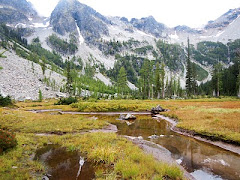
We are in the mountains during the time of melting snow
and it is Easter; we are settling into bunk beds
in a single room with grandchildren, brought here
to see our son, their uncle, caretaker of this lodge,
to ski with him, too, on this mountain near the grand park
where he makes his home. We carry clothes and supplies
on a large sled over a snow field at night
holding flashlights, mysterious and romantic
for my wife and I, as well as the children.
After turning off the lights in the room,
I am writing in my notebook lit by a flashlight
installed as a new app on my telephone,
all of this is as new to me as this mountain.
The old notebook lit up in the dark room like a tent
accommodates me to the new and the strange,
as my granddaughter asks the question
that will keep me awake for some time,“
Grandpa, why do you write with your left hand?”
 
There are seven of us, my wife and I,
three children, plus my son and his friend.
It is Easter, and before leaving home, we worship together
in Yakima, on the other side of the mountains.
Our family, when together, takes up several pews,
and we stand out, not in piety, but in a kind of wondrous
transparency, multigenerational brokenness.
That this is so makes us oddly visible
in the Lutheran congregation, where we are also
identified with the small immigrant community,
where my wife’s path, has brought us together
with women and children. We were in the mountains
with them, too, for a decade. Kids in diapers
while I was trying to be important. One day
I woke up and we were backpacking
and setting up tents. Ten of these kids
have taken my piece of mind. I have put
them on skis, but they don’t have full access
to what a wilderness school could give.              
 
The Mexican pastor thinks I’m a Communist.
He was brought here by an innocent and guilty church.
His visa is about to expire, R1, Religious,
and he could be sent back to where
he no longer belongs. I am looking for him
in the church basement before Easter service,
waiting for the immigration attorney
who will walk us through an expensive dual path
that may circumvent church bureaucracy
allowing he and his wife to remain in this country,
even if he’s cut loose by the church.
We have spent the winter, he and I,
reading Luke’s Gospel, San Lucas,
in a bilingual edition. When I talk about
reading the Bible with campesinos
in El Salvador, he talks about guns in Chiapas.
We put on skis together, and I misunderstand
his verb for turning. All day
I conjugate what I hear as sorpear,
a word that doesn’t exist,
showing him how to turn. He can’t turn left,
Que uecesitas es mas confianza en su pierna comunista,
I tell him, You need to trust your Communist leg,
in order to navigate the mountain.
 
But let me tell you about this family of women,
a mother and four girls, charged with the light of God.
Waiting for the attorney, I find myself greeting them,
giving them besos de aire on the cheek, all five of them,
as if we’d known ourselves as family all our lives.
They arrive one morning this year during coffee
in the church basement. They stand out
in their We’ve come-from-here awkwardness,
like immigrants, recién llegados themselves,
no one even slightly like them in the community,
and so full of God one can’t quit looking at them,
carrying their loss as joy, exotic in their blessing.
 
This morning I think the pastor meant Sortear,
for turning on skis. La suerte decida cómo hacerlo
y empleando diversion medios fortuidos,
so some luck is involved, as with riesgo,
dificultad, evitarlo, o astucia.
Danger. Trust that left leg, peligroso,
the Communist one. Later he gives me
his verb again, laughing,
surfear, to surf, over water, surfeamos.
But these women-girls,
these mother-led girl-women,
surrounded and protected by God
in their laughter and language,
bright giggles surfacing from an ancient root
as their mother walks them on right past
her own bright story fearless of the uncertainty calling her.
 
Exotic in their beauty. Why,
I ask myself, would anyone leave
the Church in the basement
for any word coming from a pulpit?
Surprised by words, I am, upstairs,
arriving late to join my family,
grandson asking, What’s the difference
between peace and piece? only one spelling
available to a 7-year old. I draw a picture
of a heart and a slice of pie,
writing the words in my hymnal
and passing it to him, finding a bit
of satisfaction myself, in both words.
And my own pastor, the young man
and my friend, too, is good
with that impossible task,
a sermon on Easter morning.
 
From the East, Ohio, where elections
are decided, it’s as though he’s stumbled
onto William Stafford, walking in the woods,
overhearing the passing remark,
In scenery I like flat country.
In life I don’t like much to happen.
My friend says, walking into us
like Christ in Luke on the sermon on the plain,
Lower your standards.
I’m writing in my notebook now,
not paying attention to what he’s saying,
a kind of Sunday morning bell choir.
 
The Easter sermon. Jim Harrison imagines
Jesus eating fried potatoes with his friend
who drives an old Dodge. It’s a grim poem.
My friend begins with the kids, bringing them
before the congregation, looking into the box
where they buried the word Alleluia
40 days ago. Children carrying the word
turned into banners to strangers in the pew.
He tells the congregation, If you have high expectations,
Lower them with me—some of you have heard 50 Easter sermons.
No one expects resurrection—it’s like forgiveness.
Pastor has my attention.
What if God doesn’t care how we believe?
We aren’t called to believe the resurrection,
we’re called to live the resurrection.
 
Bowing my head, still in wonder, I ask myself,
What if God doesn’t care what we believe about anything?
Three years ago saying goodbye to each other
in El Salvador, this young preacher
hands me Wendell Berry’s poem.
Practice resurrection, Berry says.
The pastor's voice is now his own. The door
to our questions has been opened.
The young man’s voice is an old one.
This Easter sermon—brought to you
by a man building a home with the word.
 
"Why do you write with your left hand, Grandpa?"
my granddaughter asks? The flashlight
inside the telephone goes off. In the dark
I fall asleep remembering the year before she was born.
Standing in a patch of weeds outside an apartment
without flowers, our family holding hands
talking about things going on inside us
we cannot see. Tomorrow
and tomorrow after that, the little ones
will ski with their uncle. It’s spring,
the sun will shine and we’ll put on sunscreen.
We won’t talk about any of this,
and we’ll take 500 snapshots.
I'll call my son a lovely man
and a wonderful son. We'll talk
of how cool we are and all that we do on snow.
 
Jim Bodeen
31 March 2013—6 April 2013
Crystal Mountain/Yakima, Washington


IN THE BASEMENT WITH THE OTHERS

SERMON ON THE PLAIN
 
He went down among them and stood on a level place.
            Luke 6: 17
Luego bajó con ellos y se detuvo en un llano.
            San Lucas 6: 17

What’s he saying?
I can’t hear.

What’s he doing now?
Where did he go?

I can’t see a thing.
Listen.

No pierden sus ojos de este hombre.
No despeguen sus ojos.

I think he’s here with us.
He came closer and disappeared.

Into us?
I think so. Just listen.

¿A dentro nosotros?

Jim Bodeen
30 March 2013—4 April 2013

“IF ALL THAT LUKE SAYS ABOUT THE GREAT REVERSAL
IS TRUE, THERE IS ONLY ONE WAY OPEN TO US: SOLIDARITY”
            Justo L. González

A los hambrientos los colmó de bienes,
y a los ricos los despidió con las manos vacías.
            San Lucas 1: 52

John’s on his way and Mary already singing.
We’re in a basement,
a small group of blessed ones.
While I never had Easter eyes,
 
I fall over and over with pilgrims.
He has filled the hungry
and sent the rich away empty.
The great reversal in Mary’s song

carries me through winter.
No one can see the future
but it’s already here.
Violence reproduces itself.

Only peace can disarm violence.
How to get there, but with the women,
trying to learn their language,
walking on the side, watching.

Jim Bodeen
31 March 2013

IN THE EARLIER TIME
OF JULIA ESQUIVEL

They threatened resurrection.
Now it's austerity.

Jim Bodeen
3 April 2013

READING IN THE BASEMENT WITH OTHERS
 
“Were not our hearts burning inside us while he talked with us on the road…?”
        Luke 24: 32
—¿No ardía nuestro corazón mientras conversaba con nosotros en el camino…?           
        San Lucas 24: 32
 
This must be my life
Slow one on mountain skis
Wintering my eyes
 
Jim Bodeen
31 March 2013
 
DIVINE READING FOUND:  LECTIO DIVINA IN THE POEM
 
“When you devote yourself to the divine reading…seek the meaning of divine words which is hidden from most people.”
          Origen, 3d Century

In the mountains, a friend gives us the word—
Living word—read, meditate, pray and contemplate—
not to be studied, the Word of God—
not theological analysis, but Christ as key.
Entering peace, not studying it.

From Origen to Ambrose to Augustine—
to Benedict and Lectio Divina,
a 4-step program written up by Guigo,
John XXIII speaks for it opening Vatican II.
A text that combines these traditions comes from Paul in Romans X:
God’s words in the believer’s mouth or heart.
Ora et labora, pray and work.
Benedict says idleness is the enemy of the soul.
Bernard of Clairvaux says in reading you’ll find it in meditation.
Knock in prayer open in contemplation.
Four steps as shown by John of the Cross,
an infusion of love through listening and firing the soul.

Letting go of our agenda and opened again,
mouths filled with God.
Don’t let the reading be too long.
Reading is listening. Reading is waiting. Prayer is an opening.
Not to be contained. Not to be controlled.
Shrinking from noise and agitation.
To be alone with him who loves us,
as Teresa says, in healing the family tree.

Jim Bodeen
15 March—30 March 2013

TELL IT AGAIN, GRANDPA


HAND THEM THE CAMERA.
LET THEM ASK THE QUESTIONS.
 
Ski with the kids.
No one knows what will happen.
All of the known structures fell
in that one dream of calving

icebergs, decades ago.
Traveling evanescence tumbling.
It’s like anything else
this real, it will be denied

in practical terms. Practical
ones, practicing what will reason.
Why, why, why, why.
Listen to Paul Simon sing.

Forty days gets oohs and ahs
from the Bible itself.
We stop for water and bathroom breaks at 40.
What we’re counting is numbers

on the backs of chairlifts.
They give Jesus credit for 40.
He’s been out there 2000 years.
These kids count to 50,

and stop for hot chocolate.
Call it play if you like.
Children playing with real lives.
Given worlds made by adults.

Jim Bodeen
27 March 2013


GRANDFATHER ON THE MOUNTAIN WITH CHILDREN

He knows he's always on probation.

Jim Bodeen
25 March 2013
 
RENUNCIATION?

Where the world gets made.

Jim Bodeen
25 March 2013


THIS TIME, SWEETLY

After the great No,
which is a gate
to the wonder of renunciation,
everything you believed
falls away. 

Ski with the kids.

Jim Bodeen
24 March 2013


TELL IT AGAIN, GRANDPA

Big Horn Sheep lick salt
on Highway 12 stopping the car
on our way down the mountain.
Dheezus, my granddaughter,

sleeps in the back seat.
She had a good day on skis.
Tell me again, Grandpa,
the time when Uncle Tim

couldn't hold his pee
on the way up the mountain.
Tell me, Grandpa,
how you gave him

the empty pop bottle
and he filled it up
and the pee kept coming.
I pull the car to the shoulder

of the road. It's hailing.
The sheep are one more surprise.
Dheez made every turn I asked her
to make. I told the story

of my son peeing into the pop bottle
every time Dheez asked me to tell it.
Tim was 5, just like you Dheezus.
He said the pee got real warm

when it wouldn't stop
and it came out the top of the bottle.
He said, Dad, the bottle's full
and the pee just keeps coming.

The sheep step off the highway
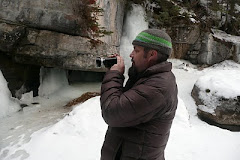
looking at me from trees. My camera
is a telephone. Call it up
on days all bottles are empty.

Jim Bodeen
March 23, 2013


Spring Light Sprung


·   
       
Spring sun sprung
Outback backing light
Sourcing self wind-chimed

Jim Bodeen
21 March 2013

 ·

BASEBALL, MOM, GOD


HOW MOM CONTRASTS AS A BASEBALL FAN
WITH THE FAMOUS PROFESSOR WHO WROTE HIS BOOK
ON BASEBALL AND GOD ALL THE WHILE
HEADING UP THE UNIVERSITY, PRACTICING LAW,
TEACHING A CLASS, EVEN WHILE ADVISING DEBATE COACHES

Once I asked Mom about the man
who sat in front of her at the stadium.
What does he do, Mom?
Jimmy, what an awful thing to ask at a ballgame.

Jim Bodeen
20 March 2013


OPENING CONVERSATION WITH MY SISTER
ON RECEIVING HER GIFT OF THE BOOK
ABOUT BASEBALL AND GOD

It arrived as a suggestion on my Amazon account.
I have never ordered a baseball before.
I also want to tell you that right after Mom died,
we took the boat to Des Moines for two nights.
I had two glasses of wine knocked out of my hands.
Craig described it as other worldly.
No one was around.
They flew out of my hands.
I think the book came from Mom.

This is a poem.
I’m going to steal it.
I’m not quite sure how.
It doesn’t matter whether you set alarm or not.

You can’t steal what is given to you.
 
I’ve been reading theology all winter.
Skiing the mountain, reading Luke’s Gospel.
I’m afraid I sound closer to God than I am.
And now it’s baseball season
and I’m still skiing. Mom’s in my ear.
How do I really feel about pitchers and catchers.
You’ve gone too far this time, Jim.
It’s snowing and blowing on the mountain.
Yet another friend has told me
I’m not going to be skiing forever.
Someday this poem will let me go too,
but I will remain inside the Magnificat singing and weeping.
She’d shake her head if I mentioned Mary.
Every time I talked with Mom about God, she shuddered.
Her rejection of the church was never a rejection of Jesus.
It did coincide with her season tickets to the Mariners.
It gave me great satisfaction to call it
the failure of Christianity.
I haven’t been to a ball game since Mom died,
and before that, not after her move six years ago.

The wine flew out of your hands you say.
Craig calls it right, otherworldly.
And the book comes from Mom.
I can’t steal what is given you say.
Let me try and thank you. My report on the book
comes from Mom’s seats in Section 331.
Mom is the umpire calling balls and strikes.
What’s in or out of bounds, not my concern.

Jim Bodeen
20 March 2013
 

Part of the Mountain Sustaining Us


EVEN ON SKIS

Watching Mom
Travelling like Lucille

Jim Bodeen
17 March 2013

 
PATTERNS OF LUCILLE

He watched his mother closely

Jim Bodeen
16 March 2013


OUR MOUNTAIN HOUSE

Small and vast
My wife and I
keep running into each other
After many years

putting dishes in the sink

Jim Bodeen
15 March 20123


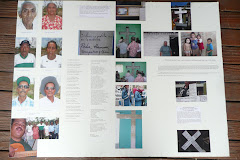
THESE OPEN NOTEBOOKS

He wanted to show the mountain
as the other that was always with him.
Always with us. Even alone.
He wanted to take the mountain
away from those who said
you always had to come down.
He wanted to be as far from the empire
and as close to the empirical.
He didn’t want to go anyplace.
He wanted to walk through it all. 
           
This was his practice
and his way of praying.
He wasn’t asking for anything.
This is the life he was given
the day he was given the word.
The day he accepted it.
He wasn’t sure what it was at first.
Things became clearer
during that last interview
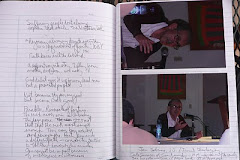
when he brought out his notebook
with the photos and the poems.
His notebook as a kind of public symbol.
Setting it before the university
on the coffee table.
Showing his pictures.
Showing his poems.
The man in the tie began to smile,
and then to laugh.
He kept on going.
“Look at this one.”
“Can I read you this.”

It was even worse
with professionals in robes.
They didn’t ask.
They just kept saying,
“You have to come down
from that mountain.”
“You can’t stay up there forever.”
Moses in chains.
Moses before the land of milk and honey.
Moses in that one moment of anger.

Given all this.
Birdsong. Bonsai.
That young man and what he did that one week.
Just this.
Coming at him, walking into it.
Nothing level or plum.

Jim Bodeen
13 March 2013

Charged to Remember

THE WAY IT IS FOR HIM

He was against forgetting
as much as he was for it.

Jim Bodeen
12 March 2013


STOP SIGN AT CUSTER AND FAIRBANKS
AVENUES IN MY TOWN KIDDYCORNER
TO GARFIELD ELEMENTARY SCHOOL
WHERE MY DAUGHTER TEACHES

Nobody stops at this stop sign.
They drive right on through.
Just like it wasn’t there.
Between the T and the O.
The smiling face of Alfred E. Neumann.
Me worry? What is that?
And the hand with the finger
pointing at the joker. That too.
Of course it’s been tagged
with the gang banger’s
family signature. But nobody stops.
Nobody talks about it.
Until last week, in Tacoma.
A young man who’d just won a scholarship,
he was talking about the day he was jumped out
of his gang in the parking lot of the school
where my daughter teaches. Schools nowadays
go into lockdown practicing for killers
in their schools, expecting the worst.
But this is a story about freedom.
A scholarship. Going to college.
Bumped out of the gang
after the cousin dies in his arms
saying, Go to school.
Last conversation I had
with someone I could call a brother.
This is the lockdown story the school never heard.
We took pictures together,
I asked him about the stop sign.
Alfred E. Neumann, he said,
Yeah, I know that sign.
That was my old neighborhood.
That parking lot. I was bloody and broken.
I dropped to the ground.
I was free. Out of the gang.
I no longer lived in fear.

Jim Bodeen
1 March—9 March 2013


STOP--THE MOVIE THAT STARTS AT THE STOP SIGN


CHARGED TO REMEMBER

Because the State Supreme Court
told lawmakers they must fully fund education,
Republicans want to cut the court in half
and have justices draw straws
to see which ones will go. They say

those salaries will pay for lots of teachers.
Yakima County Sheriff, Ken Irwin                ,
says the American people drew the line
in the 1930s against machine guns
during those bank robberies,

but that’s where the line remains,
he says, defending semi-automatic weapons.
Yesterday my wife and I drove
into the lower valley to visit our old pastor
Harold Sigmar, in his mid-90s. We took

him out for a hamburger and one beer.
He directed us along the Yakima River
and I returned his Bonhoeffer book underlined
and written in margins for his commentary.
I can still make him laugh but frankly

I wasn’t very funny. He moved me
talking of his daughters and their caretaking.
We share four decades plus, and it’s documented.
My friends are mostly hermit scholars,
poets, monks, holy men, odd

only in the way we tell a story. Our job,
such as it is, is to speak truth as we see it,
far, as we are, from power.
Little fictions on our take of things.
We’re given to early rising.

Birdsong out my window right now.
After seeing my old friend, I stopped
at a nursery and bought a tree,
lovely Kousa Dogwood from Korea.
I don’t make anything up.

Jim Bodeen
8 March 2013